


Titanium Plates
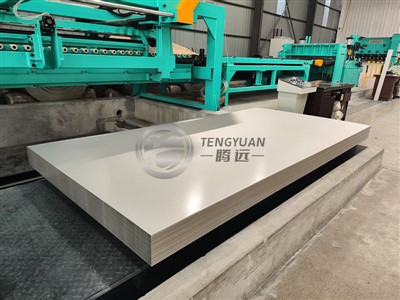
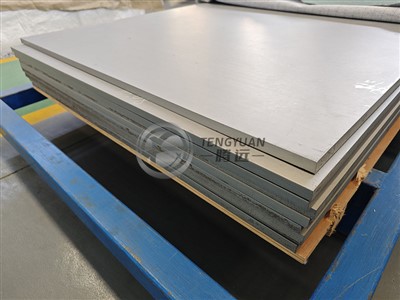
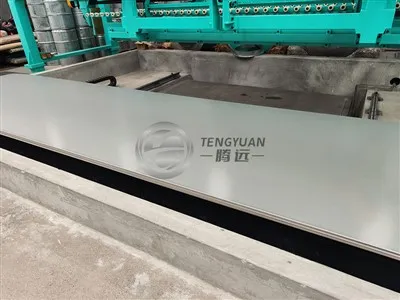
Your Leading Titanium Plates Supplier
Baoji Tengyuan New Metal Material Co., Ltd. was established in 2013 and is located in Bawanghe Industrial Park, Jinqu Town, Meixian County, Shaanxi Province. It is a professional company engaged in the materials and manufacturing of titanium and titanium alloys, nickel and nickel alloys.Our Products includes the following: U-shaped titanium profile, L-shaped titanium profile, Titanium square tube, Rods for manufacturing 3D printing powder,Titanium rods,Titanium plates,Titanium Wire,Titanium Pipe.







Why Choose Us?
Our factory
The company has a garden style factory area and over 14000 square meters of standardized workshops. We has more than 200 number of employees, the annual output reaches 20,000 tons.
Production equipment
The company has four production workshops: Melting workshop, precision casting workshop, EB (electron beam cold bed furnace) furnace workshop, and tube billet workshop.
Product application
The products are widely used in industries such as aerospace, marine engineering, petrochemical industry, military products, chemical equipment, pharmaceutical equipment, mechanical engineering, metal 3D printing, and electronic products.
Production market
We have customers from both domestic market and oversea market. Our main sales market: Europe, Southeast Asia, Russia, South Korea, Japan.

Types of Titanium Plates
Commercially pure titanium plates
These plates are made from pure titanium, with a composition of 99.5% or higher. They offer excellent corrosion resistance, high strength-to-weight ratio, and good formability. Commercially pure titanium plates are commonly used in industries such as aerospace, marine, chemical processing, and medical.
Titanium alloy plates
Titanium alloys are created by adding specific alloying elements to pure titanium, enhancing its properties. Common titanium alloy plates include grade 5 (ti-6al-4v), grade 2 (ti-6al-4v), and grade 12 (ti-0.3mo-0.8ni). These alloys offer improved strength, corrosion resistance, and heat resistance compared to commercially pure titanium.
High-strength titanium plates
These plates are specifically designed for applications that require exceptional strength and durability. They are typically made from high-strength titanium alloys such as grade 5 and grade 23. High-strength titanium plates are used in industries such as aerospace, defense, and sports equipment manufacturing.
Titanium clad plates
These plates consist of a layer of titanium bonded to another metal or alloy, such as stainless steel or copper. Titanium clad plates combine the benefits of titanium’s corrosion resistance with the mechanical properties of the base metal. They are widely used in industries where corrosion resistance and strength are both important.
Customized titanium plates
In addition to standard types, titanium plates can also be custom-made to meet specific requirements. This includes plates with specialized dimensions, thicknesses, or surface finishes to suit unique applications.
Features of Titanium Plate
Exceptional strength-to-weight ratio: Titanium plates are renowned for their remarkable strength-to-weight ratio, making them ideal for applications where strength and lightness are paramount. Despite being significantly lighter than steel, titanium exhibits exceptional strength, ensuring structural integrity in various engineering and industrial applications.
Outstanding corrosion resistance: One of the most notable features of titanium plates is their exceptional corrosion resistance. Titanium is highly corrosion-resistant in many environments, including seawater, acidic solutions, and chlorine. This corrosion resistance makes titanium an excellent choice for marine, chemical processing, and offshore applications where exposure to corrosive elements is inevitable.
Superior biocompatibility: Titanium is inherently biocompatible, is well-tolerated by the human body, and exhibits minimal reactivity with bodily tissues and fluids. This feature makes titanium plates highly suitable for medical implants, such as orthopaedic implants and dental prosthetics, where biocompatibility is critical for long-term implant success.
Excellent heat resistance: Titanium possesses excellent heat resistance, retaining its mechanical properties even at elevated temperatures. This feature makes titanium plates suitable for high-temperature applications, such as aerospace components, gas turbine engines, and exhaust systems, where materials are subjected to extreme heat and thermal cycling.
Formability and machinability: Despite its formidable strength, titanium plates offer good formability and machinability, allowing easy fabrication and customization to meet specific project requirements. Whether bending, welding, or machining, titanium exhibits favourable mechanical properties that facilitate efficient processing and manufacturing.
In most applications, titanium plates can be waterjet cut or stamped to specific sizes, allowing for high-volume production of finished components. Because this material is reactive to heat, it must be cold cut to prevent chemical property changes. Various industries make use of titanium plates, including:
Aerospace — Jet engines, protective assemblies, airframes, and firewalls
Power generation — Protective assemblies and firewalls
Automotive — Cut or stamped engine parts such as wrist pins and springs
Petroleum — Deep-sea production risers, topside water management equipment

Specification
|
Standard |
ASTM B265 and GB/T 3621 |
|
Processing method |
Plate rolling or Rolling of coil and strip |
|
Surface |
Pickled surface or glossy surface |
|
Shape |
Titanium plate |
|
Length and diameter |
Customized |
|
Packaging |
According to size and your requirements |
|
Price |
Prices vary according to different models and purchase quantities |
|
Minimum order quantity |
1000KG |
|
Payment method |
Telegrap |
Custom process

Packaging & Shipping

