


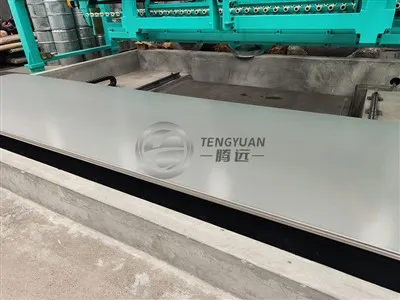
Industrial Pure Titanium Plates
Your Leading Industrial Pure Titanium Plates Supplier
Baoji Tengyuan New Metal Material Co., Ltd. was established in 2013 and is located in Bawanghe Industrial Park, Jinqu Town, Meixian County, Shaanxi Province. It is a professional company engaged in the materials and manufacturing of titanium and titanium alloys, nickel and nickel alloys.Our Products includes the following: U-shaped titanium profile, L-shaped titanium profile, Titanium square tube, Rods for manufacturing 3D printing powder,Titanium rods,Titanium plates,Titanium Wire,Titanium Pipe.




Why Choose Us?
Our factory
The company has a garden style factory area and over 14000 square meters of standardized workshops. We has more than 200 number of employees, the annual output reaches 20,000 tons.
Production equipment
The company has four production workshops: Melting workshop, precision casting workshop, EB (electron beam cold bed furnace) furnace workshop, and tube billet workshop.
Product application
The products are widely used in industries such as aerospace, marine engineering, petrochemical industry, military products, chemical equipment, pharmaceutical equipment, mechanical engineering, metal 3D printing, and electronic products.
Production market
We have customers from both domestic market and oversea market. Our main sales market: Europe, Southeast Asia, Russia, South Korea, Japan.
Types of Industrial Pure Titanium Plates
Cold rolling titanium plates
Cold rolling of titanium plates involves passing the metal through a set of rollers at room temperature. This process offers different advantages. Cold rolling results in a smoother surface finish, with tighter dimensional tolerances and improved flatness. It also increases the yield strength and hardness of the titanium, making it suitable for applications that require high strength. Additionally, cold-rolled titanium plates exhibit excellent surface uniformity and can be easily formed and fabricated.


Hot rolling titanium plates
Hot rolling of titanium plates involves heating the metal above its recrystallization temperature and then passing it through a series of rollers to reduce the thickness and shape it into the desired dimensions. This process offers several benefits. Firstly, hot rolling allows for a greater reduction in thickness, resulting in thinner plates. Secondly, it improves the mechanical properties of the titanium, such as strength and toughness. Lastly, hot rolling helps to refine the microstructure of the metal, enhancing its overall quality.
Titanium Grades
Titanium Grade 1
As the softest, most ductile commercially pure titanium grade, this is particularly easy to work with thanks to its excellent formability. Its high corrosion resistance makes it especially well-suited to marine and chemical processing applications. Grade 1 titanium is also able to withstand high-impact environments.
Titanium Grade 2
The most widely available and versatile pure grade, this type of titanium is slightly stronger than Grade 1 and is often used in medical and architectural applications, as it can be easily formed and welded.
Titanium Grade 3
While less formable than Grades 1 and 2, commercially pure Grade 3 has higher strength and Grade 3 is used less frequently than Grades 1 and 2 but is ideal for applications requiring moderate strength and high corrosion resistance, such as medical and aerospace projects.
Titanium Grade 4
The strongest of the commercially pure, unalloyed grades, this material is also highly formable and weldable, as well as corrosion resistant. It’s commonly used in industries that require high strength, such as aerospace and medical.
Application of Industrial Pure Titanium Plates
Aircraft structural components
Titanium is an excellent material for aircraft structural components such as wing spars, landing gear, and engine mounts. Its high strength-to-weight ratio makes it ideal for these applications, as it allows for the manufacture of lightweight yet strong components that can withstand the stresses and loads experienced during flight.
Engine components
The engine is one of the most important parts of an aircraft, and it needs to be made from materials that can withstand high temperatures and pressures. Titanium is perfect for this job, thanks to its high melting point and thermal stability. It’s used to make components like blades, disks, and casings, which are essential for keeping the engine running smoothly while maintaining its shape and integrity.
Fasteners
In the aerospace industry, even the tiniest components need to be incredibly strong and reliable. That’s why titanium fasteners are so popular – they’re lightweight, corrosion-resistant, and tough. They’re used to secure everything from the wings to the fuselage, ensuring that every part of the aircraft stays in place during flight.
Heat exchangers
Finally, titanium is used to manufacture heat exchangers that are used in aviation cooling systems. Its high thermal conductivity means that it can efficiently transfer heat away from critical parts, keeping the aircraft cool.
Production Process Industrial Pure Titanium Plates
Hot forging of titanium plates
This forging process is carried out above the metal’s recrystallization temperature. Hot forging allows titanium plates to achieve excellent plasticity and high strength, while also improving their internal microstructure.
01
Hot rolled
This process involves rolling the titanium at temperatures above its recrystallization temperature. Hot rolling imparts good toughness and plasticity to the titanium plates. It also significantly reduces their thickness to achieve the desired dimensions.
02
Cold rolled
This rolling process is performed at temperatures below the metal’s recrystallization temperature. Cold rolling significantly enhances the strength and hardness of the titanium plates, while also providing superior surface quality and dimensional accuracy.
03
Annealing
This is a heat treatment process in which the metal is slowly heated to a specific temperature, held for a sufficient period, and then cooled at a suitable rate (usually slow cooling, sometimes controlled cooling). Annealing eliminates residual stresses within the titanium plates, improves their plasticity and toughness, and ensures a more uniform internal structure.
04
Pickling
This process involves immersing the workpiece in an aqueous solution of sulfuric acid or other acids to remove surface oxides and other films from the metal. Pickling cleans the surface of the titanium plates, removes oxide layers and impurities, and enhances their surface quality and subsequent processing performance.
05
Specification
|
Standard |
ASTM B265 and GB/T 3621 |
|
Processing method |
Plate rolling or Rolling of coil and strip |
|
Surface |
Pickled surface or glossy surface |
|
Shape |
Titanium plate |
|
Length and diameter |
Customized |
|
Packaging |
According to size and your requirements |
|
Price |
Prices vary according to different models and purchase quantities |
|
Minimum order quantity |
1000KG |
|
Payment method |
Telegrap |
Custom process

Packaging & Shipping

