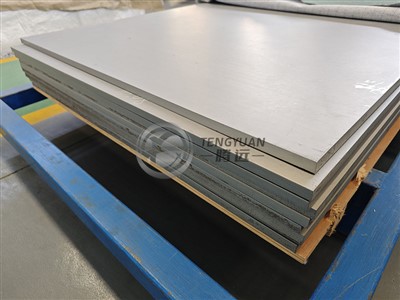
Titanium alloy rods have gained significant attention in various industries due to their remarkable properties. As a reliable supplier of titanium alloy rods, I am often asked about the magnetic properties of these materials. In this blog post, I will delve into the magnetic characteristics of titanium alloy rods, exploring what makes them unique and how these properties impact their applications.
Understanding Titanium Alloys
Before we discuss the magnetic properties, it's essential to understand what titanium alloys are. Titanium is a chemical element with the symbol Ti and atomic number 22. It is a strong, lightweight, and corrosion - resistant metal. Titanium alloys are formed by combining titanium with other elements such as aluminum, vanadium, molybdenum, and iron. These alloying elements enhance the mechanical properties of titanium, making it suitable for a wide range of applications.
Magnetic Properties of Titanium Alloy Rods
Titanium itself is a paramagnetic material. Paramagnetism is a form of magnetism whereby certain materials are attracted by an externally applied magnetic field, and form internal, induced magnetic fields in the direction of the applied magnetic field. However, the magnetic susceptibility of titanium is relatively low compared to ferromagnetic materials like iron, nickel, and cobalt.


When it comes to titanium alloy rods, the magnetic properties can vary depending on the specific alloy composition. For example, some titanium alloys may have a slightly higher magnetic susceptibility due to the presence of ferromagnetic alloying elements. But in general, most titanium alloy rods used in industrial applications exhibit weak paramagnetic behavior.
The weak magnetic nature of titanium alloy rods is one of their advantages in many applications. In industries where magnetic interference can cause problems, such as in the electronics and aerospace sectors, titanium alloy rods are preferred. For instance, in electronic devices, magnetic materials can interfere with the operation of sensitive components. Titanium alloy rods, with their weak magnetic properties, can be used in the construction of device frames or support structures without causing such interference.
Applications Based on Magnetic Properties
- Aerospace Industry
- In the aerospace industry, weight and magnetic properties are crucial factors. Titanium alloy rods are used in the construction of aircraft components such as wings, landing gear, and engine parts. Their low magnetic susceptibility ensures that they do not interfere with the sensitive avionics systems on board. The lightweight nature of titanium alloys also contributes to fuel efficiency and overall aircraft performance.
- Medical Industry
- Titanium alloy rods are widely used in medical implants. The weak magnetic properties are beneficial in medical imaging procedures such as MRI (Magnetic Resonance Imaging). If an implant were highly magnetic, it could cause significant image artifacts during MRI scans, making it difficult for doctors to accurately diagnose patients. Titanium alloy rods, being only weakly paramagnetic, minimize such issues.
- Chemical Industry
- In the chemical industry, corrosion resistance is of utmost importance. GR12 Titanium Rods for Chemical Industry are a popular choice. Their weak magnetic properties are also an advantage, as they do not attract magnetic particles that could contaminate chemical processes. This helps in maintaining the purity of the chemicals being processed.
- Marine Industry
- For ships, corrosion resistance and non - magnetic properties are essential. GR12 Titanium Rod for Ships is used in various ship components. The non - magnetic nature of these rods helps in preventing the accumulation of magnetic debris and also ensures that they do not interfere with the ship's navigation and communication systems.
Factors Affecting Magnetic Properties
- Alloy Composition
- As mentioned earlier, the specific alloying elements in a titanium alloy rod can significantly affect its magnetic properties. For example, if an alloy contains a higher percentage of iron, its magnetic susceptibility may increase. Manufacturers carefully control the alloy composition to achieve the desired balance of mechanical and magnetic properties.
- Heat Treatment
- Heat treatment processes can also influence the magnetic properties of titanium alloy rods. Different heat treatment cycles can change the microstructure of the alloy, which in turn can affect its magnetic behavior. For example, some heat treatment processes may cause the formation of certain phases in the alloy that can either increase or decrease its magnetic susceptibility.
- Impurities
- The presence of impurities in the titanium alloy rod can also have an impact on its magnetic properties. Even small amounts of ferromagnetic impurities can increase the overall magnetic susceptibility of the rod. Therefore, strict quality control measures are in place during the manufacturing process to minimize the presence of such impurities.
Testing the Magnetic Properties of Titanium Alloy Rods
To ensure that titanium alloy rods meet the required magnetic property standards, various testing methods are used. One common method is the use of a magnetic susceptibility meter. This device measures the magnetic susceptibility of the material by applying an external magnetic field and measuring the induced magnetic field in the sample.
Another method is the use of magnetic particle inspection (MPI). Although MPI is mainly used to detect surface and near - surface defects in ferromagnetic materials, it can also be used to some extent to study the magnetic behavior of titanium alloy rods. If there are any magnetic inhomogeneities or regions with higher magnetic susceptibility in the rod, they can be detected using MPI.
Our Offerings as a Supplier
As a supplier of titanium alloy rods, we offer a wide range of products with different alloy compositions to meet the diverse needs of our customers. Our GR12 Titanium Rods for Corrosion Resistant are known for their excellent corrosion resistance and appropriate magnetic properties for various applications.
We have a strict quality control system in place to ensure that all our titanium alloy rods meet the highest standards. Our manufacturing processes are designed to minimize impurities and control the alloy composition and heat treatment to achieve the desired magnetic and mechanical properties.
Conclusion
The magnetic properties of titanium alloy rods play a crucial role in their applications across various industries. Their weak paramagnetic nature makes them suitable for use in environments where magnetic interference can be a problem. Whether it's in aerospace, medical, chemical, or marine industries, titanium alloy rods offer unique advantages due to their magnetic characteristics.
If you are interested in purchasing titanium alloy rods for your specific application, we would be more than happy to discuss your requirements. Our team of experts can provide you with detailed information about the magnetic and other properties of our products and help you choose the most suitable titanium alloy rod for your project. Contact us to start a procurement discussion and find the best solution for your needs.
References
- ASM Handbook, Volume 2: Properties and Selection: Nonferrous Alloys and Special - Purpose Materials.
- Titanium: A Technical Guide, Second Edition by John C. Williams.
- Journal of Materials Science and Engineering articles related to titanium alloys and their magnetic properties.