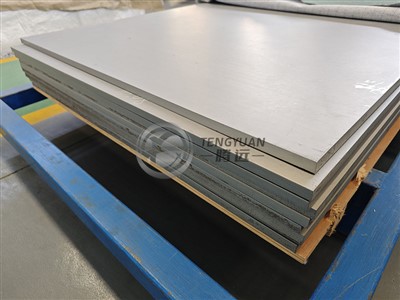
When it comes to the world of titanium rods, GR12 titanium rods are a well - known choice in various industries, including shipbuilding and the chemical industry. As a supplier of GR12 titanium rods, I am often asked about the advantages of these products. However, it's also important to have an open and honest conversation about their disadvantages. This blog post aims to explore the potential drawbacks of using GR12 titanium rods.
High Cost
One of the most significant disadvantages of GR12 titanium rods is their high cost. Titanium, in general, is an expensive metal, and GR12, which is an alloy of titanium, is no exception. The extraction and processing of titanium are complex and energy - intensive processes. The raw materials for GR12 titanium, such as titanium sponge, are costly to produce. Additionally, the alloying elements used in GR12, which include molybdenum and nickel, also contribute to the high price.
For small - scale projects or businesses with tight budgets, the high cost of GR12 titanium rods can be a major deterrent. It may force them to look for alternative materials that can provide similar performance at a lower cost. For example, some might consider GR5 Titanium Rods, which are also widely used in the industry but might have a different cost - performance ratio.
Difficult Machining
GR12 titanium rods are notoriously difficult to machine. Titanium has a low thermal conductivity, which means that during machining operations such as cutting, drilling, or milling, heat generated at the cutting edge does not dissipate easily. This leads to high temperatures at the cutting tool - workpiece interface, causing rapid tool wear.
The high strength and toughness of GR12 titanium also make it challenging to cut through. Specialized cutting tools and techniques are required to machine GR12 titanium rods effectively. These tools are often more expensive and need to be replaced frequently due to wear. Moreover, the machining process is slower compared to other metals, which increases the overall production time and cost.
Susceptibility to Hydrogen Embrittlement
Hydrogen embrittlement is a phenomenon where hydrogen atoms diffuse into the metal lattice, causing it to become brittle and more prone to cracking. GR12 titanium rods are susceptible to hydrogen embrittlement under certain conditions.
In environments where hydrogen is present, such as in some chemical processes or in the presence of moisture and certain chemicals, hydrogen can be absorbed by the titanium. This can occur during manufacturing processes like welding or in service conditions. Once hydrogen is absorbed, it can reduce the ductility and fracture toughness of the GR12 titanium rod, increasing the risk of sudden and catastrophic failure.
To prevent hydrogen embrittlement, special precautions need to be taken during manufacturing, storage, and use. This may include proper surface treatment, controlling the environment, and using hydrogen - resistant coatings. These additional steps add to the complexity and cost of using GR12 titanium rods.
Limited Availability of Skilled Workers
Working with GR12 titanium rods requires a certain level of expertise. Due to the difficulties in machining and the need to prevent issues like hydrogen embrittlement, there is a limited pool of skilled workers who are experienced in handling these materials.
In many regions, finding workers who are trained in the proper techniques for welding, machining, and installing GR12 titanium rods can be a challenge. This can lead to delays in projects and may also increase the risk of errors during the manufacturing or installation process.
Corrosion in Specific Environments
Although GR12 titanium is known for its excellent corrosion resistance in many environments, it can still corrode in specific conditions. In highly acidic or alkaline environments with high concentrations of certain aggressive ions, the passive oxide layer on the surface of the GR12 titanium rod can be damaged.
For example, in some chemical plants where there are high concentrations of chloride ions, the passive layer can break down, leading to localized corrosion such as pitting or crevice corrosion. In such cases, alternative materials may need to be considered to ensure the long - term integrity of the components.
Impact on Weldability
Welding GR12 titanium rods is not without its challenges. Titanium has a high affinity for oxygen, nitrogen, and hydrogen at elevated temperatures. During the welding process, if the rod is not properly shielded from the atmosphere, these elements can react with the titanium, forming brittle compounds and reducing the quality of the weld.


Specialized welding techniques and equipment are required to ensure a high - quality weld. The welding process also needs to be carefully controlled to prevent issues such as porosity, cracking, and reduced mechanical properties in the welded joint.
Recycling Challenges
Recycling GR12 titanium rods is more complex compared to some other metals. The presence of alloying elements in GR12 titanium makes the recycling process more difficult. Separating the alloying elements from the titanium and ensuring the purity of the recycled material requires advanced recycling technologies.
Moreover, the high cost of recycling equipment and the need for specialized knowledge in titanium recycling can be barriers to widespread recycling of GR12 titanium rods. This can have an environmental impact as well, as it may lead to more titanium waste ending up in landfills.
Conclusion
Despite these disadvantages, GR12 titanium rods still have their place in many industries. Their excellent corrosion resistance, high strength - to - weight ratio, and good mechanical properties make them a valuable choice for applications where these properties are crucial, such as in GR12 Titanium Rod for Ships and GR12 Titanium Rods for Chemical Industry.
As a supplier of GR12 titanium rods, I understand the concerns that these disadvantages may raise. However, I am also committed to providing high - quality products and offering technical support to help our customers overcome these challenges. If you are considering using GR12 titanium rods for your project, I encourage you to contact us for a detailed discussion. We can work together to evaluate the suitability of GR12 titanium rods for your specific application and find solutions to address any potential issues.
References
-ASM Handbook, Volume 2: Properties and Selection: Nonferrous Alloys and Special - Purpose Materials.
-Lütjering, G., & Williams, J. C. (2007). Titanium. Springer Science & Business Media.
-Titanium: A Technical Guide. ASM International.