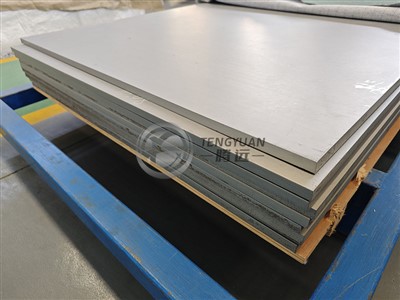
Hey there! As a supplier of GR5 titanium plates, I often get asked about how to join these bad - boys together. GR5 titanium, also known as Ti - 6Al - 4V, is a super popular titanium alloy. It's got high strength, good corrosion resistance, and a decent strength - to - weight ratio. That's why it's used in so many industries, like aerospace, medical, and marine.
Let's dive right into the different methods of joining GR5 titanium plates.


1. Welding
Welding is one of the most common ways to join GR5 titanium plates. But it's not as simple as welding other metals. Titanium is super reactive to oxygen, nitrogen, and hydrogen at high temperatures. If these elements get into the weld, it can make the weld brittle and reduce its mechanical properties.
TIG Welding (Tungsten Inert Gas Welding)
TIG welding is a great choice for joining GR5 titanium plates. In TIG welding, a non - consumable tungsten electrode creates an arc to melt the base metal. An inert gas, usually argon or helium, is used to shield the weld area from the atmosphere.
Here's how you do it:
First, you've got to clean the surfaces of the GR5 titanium plates really well. Any dirt, grease, or oxide on the surface can cause problems in the weld. You can use a stainless - steel wire brush or a chemical cleaner.
Next, set up your TIG welding machine. You'll need to select the right welding current and voltage based on the thickness of the plates. For thinner plates, you'll use a lower current, and for thicker ones, a higher current.
During the welding process, make sure the shielding gas is flowing properly. You might even need to use a trailing shield to protect the hot weld area as it cools down. This helps prevent oxidation.
Plasma Arc Welding
Plasma arc welding is another option. It's similar to TIG welding, but it uses a constricted arc. The plasma arc is more concentrated and can penetrate deeper into the metal. This makes it suitable for thicker GR5 titanium plates.
The setup for plasma arc welding is a bit more complex than TIG welding. You need to control the plasma gas flow, the shielding gas flow, and the welding parameters carefully. But if you get it right, you can get high - quality welds with good penetration and a narrow heat - affected zone.
2. Brazing
Brazing is a joining method where a filler metal is melted and flows into the joint between the GR5 titanium plates. The filler metal has a lower melting point than the base metal.
When brazing GR5 titanium plates, you need to choose the right filler metal. Titanium - based filler metals are often used because they have good compatibility with GR5 titanium.
The process starts with cleaning the surfaces of the plates, just like in welding. Then, you apply the filler metal to the joint area. You heat the joint using a torch or an induction heater until the filler metal melts and flows into the joint.
One advantage of brazing is that it doesn't heat the entire plate as much as welding. This means there's less distortion in the plates. However, the strength of the brazed joint might be lower than a welded joint, especially in high - stress applications.
3. Mechanical Fastening
Mechanical fastening is a simple and straightforward way to join GR5 titanium plates. You can use bolts, nuts, and rivets.
When using bolts and nuts, make sure you choose the right size and grade. Titanium bolts are a good choice because they have similar corrosion resistance and mechanical properties to GR5 titanium plates. You need to drill holes in the plates accurately and use the right torque when tightening the bolts.
Riveting is another option. Rivets are inserted into holes in the plates and then deformed to hold the plates together. Riveting is often used in applications where a permanent joint is needed, but the strength requirements are not as high as in some welded or brazed joints.
Considerations for Joining GR5 Titanium Plates
- Heat - Affected Zone: When you join GR5 titanium plates using welding or brazing, there's a heat - affected zone around the joint. This area can have different mechanical properties than the base metal. You need to be aware of this and consider how it might affect the performance of the final product.
- Stress Concentration: In mechanical fastening, stress can concentrate around the holes or fasteners. This can lead to premature failure of the joint. You can use techniques like countersinking or using washers to reduce stress concentration.
If you're looking for other types of titanium plates, we also offer GR12 Titanium Plates for Corrosion Resistant, GR12 Titanium Plates for Ships, and GR12 Titanium Plates.
If you're interested in purchasing GR5 titanium plates or have any questions about joining them, feel free to reach out. We're here to help you with all your titanium plate needs. Whether you're a small - scale manufacturer or a large - scale industrial company, we can provide you with high - quality GR5 titanium plates and offer advice on the best joining methods for your specific application.
References
- "Titanium: A Technical Guide" by John C. Williams
- "Welding Metallurgy and Weldability of Titanium Alloys" by John C. Lippold and David L. Kiser