Hey there! As a supplier of GR1 Titanium Welding Wire, I often get asked about its density. So, let's dive right into it and explore what the density of GR1 Titanium Welding Wire is all about.
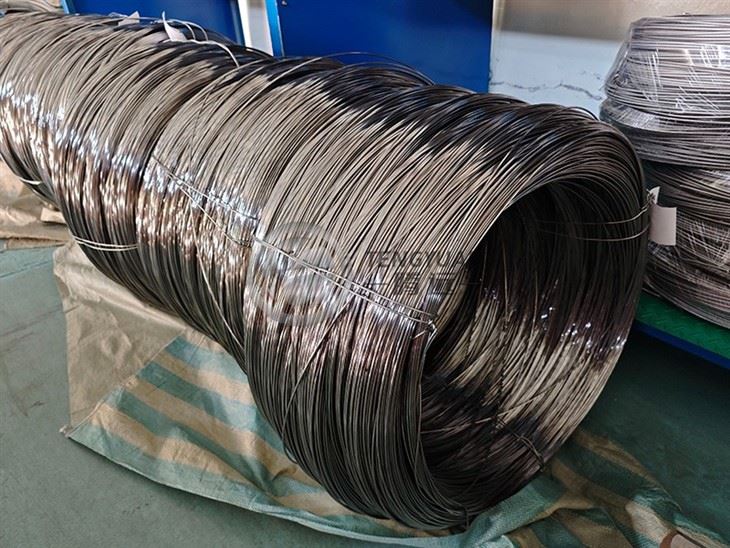
First off, what is GR1 Titanium Welding Wire? GR1 Titanium Welding Wire is a type of industrial - pure titanium wire that's super useful in various welding applications. You can learn more about it on this page: GR1 Titanium Welding Wire. It's known for its excellent corrosion resistance, good ductility, and relatively low strength compared to some other titanium grades.
Now, let's talk about density. Density is basically how much mass is packed into a certain volume. For GR1 Titanium Welding Wire, the density is approximately 4.506 g/cm³. That might not mean much at first glance, but it has some pretty important implications in the real world.
One of the key things about this density is how it affects the handling and use of the wire. Since titanium has a relatively low density compared to some other metals like steel, GR1 Titanium Welding Wire is lighter. This can be a huge advantage in applications where weight is a concern. For example, in the aerospace industry, every gram counts. Using GR1 Titanium Welding Wire helps reduce the overall weight of the welded structures, which in turn can lead to better fuel efficiency and performance.
Another aspect is related to the welding process itself. The density of the wire influences how it melts and fuses with the base metal. Because of its specific density, GR1 Titanium Welding Wire has a predictable melting behavior. When you're welding, you want the wire to melt evenly and mix well with the material you're joining. The density plays a role in ensuring that this happens smoothly, resulting in high - quality welds.
Let's compare it with another popular grade, the GR2 Titanium Welding Wire. You can check out more details about it here: GR2 Titanium Welding Wire. GR2 has a slightly higher strength than GR1, but their densities are quite similar. GR2 Titanium Welding Wire also has a density around 4.51 g/cm³. The small difference in density between GR1 and GR2 might not seem like a big deal, but it can have an impact on certain applications.

For instance, if you're working on a project where you need a bit more strength but still want to keep the weight down, GR2 might be a better choice. However, if weight is your top priority and you don't need the extra strength, GR1 is the way to go.
Now, you might be wondering about the manufacturing process and how it relates to the density. The density of GR1 Titanium Welding Wire is maintained during the production process. Manufacturers carefully control the composition and processing parameters to ensure that the wire has the right density. They start with high - quality titanium raw materials and use processes like hot rolling and cold drawing to shape the wire. Each step is monitored to make sure the density remains within the desired range.
In terms of storage and transportation, the density also matters. Since the wire is relatively light, it's easier and more cost - effective to transport compared to denser materials. And when it comes to storing the wire, you don't need as much space as you would for heavier metals.
But it's not all smooth sailing. The density of GR1 Titanium Welding Wire also comes with some challenges. One of the main issues is its reactivity. Titanium is a highly reactive metal, especially at high temperatures. When welding, the wire can react with oxygen, nitrogen, and hydrogen in the air, which can affect the quality of the weld. To overcome this, special shielding gases are used during the welding process to protect the wire and the weld pool from these elements.
The density of GR1 Titanium Welding Wire also affects its market price. Titanium in general is more expensive than some common metals like steel. The cost of production, including ensuring the right density and quality, contributes to the higher price. However, the benefits it offers in terms of performance, corrosion resistance, and weight savings often make it a worthwhile investment in many industries.
If you're in the market for GR1 Titanium Welding Wire, or you're just curious about it, don't hesitate to reach out. Whether you have questions about the density, the applications, or the best way to use it in your projects, I'm here to help. You can also take a look at other related products like GR2 Titanium Wire to see if they might be a better fit for your needs.
In conclusion, the density of GR1 Titanium Welding Wire is an important characteristic that affects its performance, handling, and cost. It's a key factor in many industries, from aerospace to marine applications. If you're thinking about using this wire for your next project, make sure to consider the implications of its density and how it can work for you. And if you're interested in purchasing, feel free to get in touch for more details and to start a great business relationship.
References:
- "Titanium: A Technical Guide" by John C. Williams
- Industry reports on titanium welding applications