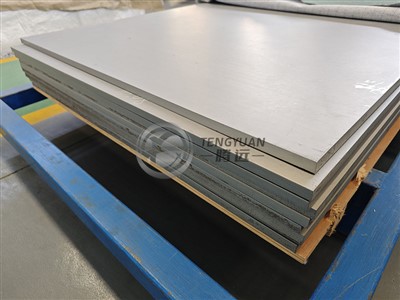
In the realm of industrial materials, h-shaped titanium profiles stand out as a remarkable innovation, offering a unique combination of strength, lightness, and corrosion resistance. As a seasoned supplier of h-shaped titanium profiles, I've witnessed firsthand the diverse applications of this versatile material across various industries. In this blog post, I'll explore some of the most common uses of h-shaped titanium profiles and how they contribute to the success of different projects.
Aerospace Industry
The aerospace industry demands materials that can withstand extreme conditions while maintaining a high strength-to-weight ratio. H-shaped titanium profiles are an ideal choice for this sector due to their exceptional mechanical properties. Titanium is known for its high strength, low density, and excellent corrosion resistance, making it perfect for aircraft components.
In aircraft construction, h-shaped titanium profiles are used in the fuselage, wings, and landing gear. These profiles provide structural support, helping to distribute loads evenly and ensuring the integrity of the aircraft. For example, in the wings, h-shaped titanium profiles are used to reinforce the spar, which is a critical load-bearing component. The use of titanium reduces the overall weight of the aircraft, leading to improved fuel efficiency and performance.
Moreover, titanium's resistance to corrosion is crucial in the aerospace industry, where aircraft are exposed to harsh environmental conditions, including high humidity, saltwater, and extreme temperatures. H-shaped titanium profiles can withstand these conditions without deteriorating, ensuring the long-term reliability of the aircraft.
Chemical Industry
The chemical industry involves the handling and processing of various corrosive substances, making corrosion resistance a top priority. H-shaped titanium profiles are highly resistant to a wide range of chemicals, including acids, alkalis, and salts, making them an excellent choice for chemical processing equipment.
In chemical plants, h-shaped titanium profiles are used in the construction of reaction vessels, storage tanks, and piping systems. These profiles can withstand the corrosive effects of chemicals, preventing leaks and ensuring the safety of the plant. For instance, in a sulfuric acid production plant, h-shaped titanium profiles can be used to construct the reaction vessels, which are exposed to highly concentrated sulfuric acid. The use of titanium ensures that the vessels remain intact and functional over an extended period.
Additionally, titanium's non-toxic nature makes it suitable for use in the food and pharmaceutical industries, where the purity of the products is of utmost importance. H-shaped titanium profiles can be used in the construction of equipment that comes into contact with food and pharmaceutical products, ensuring that there is no contamination. H-shaped Titanium Profile for Chemical Industry
Marine Industry
The marine environment is one of the most challenging environments for materials, as it is characterized by high humidity, saltwater, and strong winds. H-shaped titanium profiles are well-suited for marine applications due to their excellent corrosion resistance and high strength.
In shipbuilding, h-shaped titanium profiles are used in the construction of hulls, decks, and superstructures. These profiles provide structural support and help to improve the overall strength and durability of the ship. For example, in the hull of a ship, h-shaped titanium profiles can be used to reinforce the frames, which are responsible for supporting the weight of the ship and its cargo. The use of titanium reduces the risk of corrosion, which is a major concern in the marine industry, and extends the lifespan of the ship.
Furthermore, titanium's low magnetic permeability makes it suitable for use in naval vessels, where stealth is a critical requirement. H-shaped titanium profiles can be used in the construction of naval ships, reducing their magnetic signature and making them less detectable by enemy sensors. H-shaped Titanium Profile for Ships
Construction Industry
In the construction industry, h-shaped titanium profiles are increasingly being used for their aesthetic appeal, strength, and durability. These profiles can be used in a variety of applications, including building facades, structural frameworks, and interior design elements.
For building facades, h-shaped titanium profiles can be used to create unique and modern designs. Titanium's natural luster and ability to be finished in various colors make it an attractive choice for architects and designers. Additionally, the profiles' high strength and corrosion resistance ensure that the facade remains in good condition for many years, even in harsh environmental conditions.
In structural frameworks, h-shaped titanium profiles can be used to provide support for large buildings. The profiles' high strength-to-weight ratio allows for the construction of lighter and more efficient structures. For example, in high-rise buildings, h-shaped titanium profiles can be used in the columns and beams, reducing the overall weight of the building and increasing its seismic resistance.
Medical Industry
The medical industry requires materials that are biocompatible, corrosion-resistant, and strong. H-shaped titanium profiles meet these requirements and are therefore used in a variety of medical applications, including orthopedic implants, dental implants, and surgical instruments.
In orthopedic surgery, h-shaped titanium profiles can be used to construct bone plates, screws, and rods. Titanium's biocompatibility allows it to integrate with the human body without causing an immune response, making it an ideal material for implants. The profiles' strength and corrosion resistance ensure that the implants remain in place and function properly over an extended period.
Dental implants made from h-shaped titanium profiles are also becoming increasingly popular. Titanium's ability to bond with the jawbone provides a stable foundation for artificial teeth, improving the patient's quality of life. Moreover, the corrosion resistance of titanium ensures that the implants do not deteriorate in the oral environment, which is rich in bacteria and acids.
Conclusion
As a supplier of h-shaped titanium profiles, I'm proud to be part of an industry that benefits from the unique properties of this remarkable material. The diverse applications of h-shaped titanium profiles across various industries demonstrate their versatility and value. Whether it's in aerospace, chemical, marine, construction, or medical applications, h-shaped titanium profiles offer solutions that are strong, lightweight, and corrosion-resistant.


If you're interested in using h-shaped titanium profiles for your project, I encourage you to reach out to me for more information. I can provide you with detailed product specifications, pricing, and delivery options. Let's work together to find the best h-shaped titanium profile solution for your needs.
References
- ASM Handbook Committee. (2000). ASM Handbook Volume 2: Properties and Selection: Nonferrous Alloys and Special-Purpose Materials. ASM International.
- Boyer, R. R., Welsch, G., & Collings, E. W. (1994). Materials Properties Handbook: Titanium Alloys. ASM International.
- Schweitzer, P. A. (2010). Corrosion-Resistant Piping Systems. McGraw-Hill Professional.