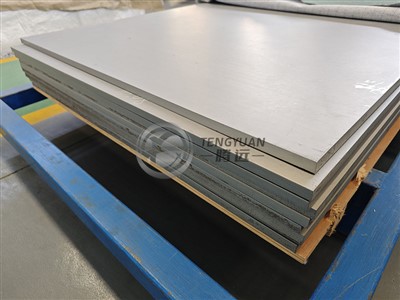
Hey there! As a supplier of GR2 titanium plates, I often get asked how these plates stack up against stainless steel plates. So, I thought I'd break it down for you in this blog post.
Weight and Strength
First off, let's talk about weight. GR2 titanium is incredibly lightweight compared to stainless steel. Titanium has a density of about 4.5 g/cm³, while stainless steel can have a density ranging from 7.5 to 8 g/cm³. That means GR2 titanium plates can be up to 40% lighter than their stainless - steel counterparts. This is a huge advantage in applications where weight is a critical factor, like in the aerospace and marine industries.
In terms of strength, GR2 titanium has an excellent strength - to - weight ratio. It can withstand high levels of stress and strain. While stainless steel is also strong, titanium's strength at a lower weight gives it an edge. For example, in aircraft construction, using GR2 titanium plates can reduce the overall weight of the aircraft, leading to better fuel efficiency and performance. You can check out GR2 Titanium Plates for Ships to see how this lightweight yet strong material is used in the marine sector.
Corrosion Resistance
One of the most significant differences between GR2 titanium plates and stainless steel plates is their corrosion resistance. GR2 titanium forms a thin, protective oxide layer on its surface when exposed to oxygen. This layer is highly resistant to corrosion, even in harsh environments such as saltwater, acidic solutions, and high - temperature settings.
Stainless steel, on the other hand, can corrode over time, especially in chloride - rich environments like seawater. The chromium in stainless steel forms a passive layer that provides some corrosion resistance, but it's not as effective as the oxide layer on titanium. In chemical processing plants, where the equipment is exposed to corrosive chemicals, GR2 Titanium Plates for Chemical Industry are often the preferred choice because of their superior corrosion resistance. This means less maintenance and longer service life for the equipment.
Cost
Cost is always a consideration when choosing between materials. GR2 titanium plates are generally more expensive than stainless steel plates. The production process of titanium is more complex and energy - intensive, which drives up the cost. However, when you factor in the long - term benefits such as reduced maintenance, longer lifespan, and better performance, the higher upfront cost of titanium can be justified.
For applications where the cost is a major constraint and corrosion is not a significant concern, stainless steel might be the more practical choice. But for industries where performance and durability are crucial, like aerospace and high - end chemical processing, the investment in GR2 titanium plates is often worth it.
Machinability
Machining GR2 titanium plates can be a bit more challenging than machining stainless steel. Titanium has a low thermal conductivity, which means that heat generated during machining tends to stay in the cutting area. This can lead to increased tool wear and higher cutting forces. Specialized tools and machining techniques are required to work with titanium effectively.
Stainless steel is generally easier to machine. It has better thermal conductivity, and standard machining tools can be used in many cases. However, with the right expertise and equipment, machining GR2 titanium plates can be done efficiently. If you're in an industry that requires custom - made parts, make sure your machining partner has experience working with titanium.
Weldability
Both GR2 titanium and stainless steel can be welded, but there are some differences. Welding titanium requires a controlled environment to prevent contamination. The weld area needs to be shielded from oxygen, nitrogen, and hydrogen to ensure the integrity of the weld. Specialized welding equipment and techniques are used for titanium welding.
Stainless steel is more forgiving when it comes to welding. It can be welded using common welding methods such as TIG (Tungsten Inert Gas) and MIG (Metal Inert Gas) welding. However, proper pre - and post - welding treatments are still necessary to ensure the quality of the weld.
Applications
GR2 titanium plates have a wide range of applications. In addition to the aerospace and marine industries, they are also used in the medical field. Titanium is biocompatible, which means it can be used in implants such as hip and knee replacements. In the automotive industry, GR2 titanium plates can be used in high - performance parts to reduce weight and improve performance.
Stainless steel is also used in a variety of industries. It's commonly used in kitchen appliances, construction, and food processing equipment. Its relatively low cost and good mechanical properties make it a popular choice for many general - purpose applications.
Conclusion
So, how do GR2 titanium plates compare to stainless steel plates? Well, it really depends on your specific needs. If you need a lightweight, corrosion - resistant material for high - performance applications, GR2 titanium is the way to go. But if cost is a major concern and corrosion is not a big issue, stainless steel might be more suitable.
As a supplier of GR2 titanium plates, I'm here to help you make the right choice for your project. Whether you're in the aerospace, marine, chemical, or any other industry, I can provide you with high - quality GR2 titanium plates. If you're interested in learning more about our GR2 Titanium Plates for Corrosion Resistant or have any questions about our products, feel free to reach out. We can discuss your requirements and see how GR2 titanium plates can benefit your business.

References
- ASM Handbook Volume 2: Properties and Selection: Nonferrous Alloys and Special - Purpose Materials
- Titanium: A Technical Guide, Second Edition by John R. Davis