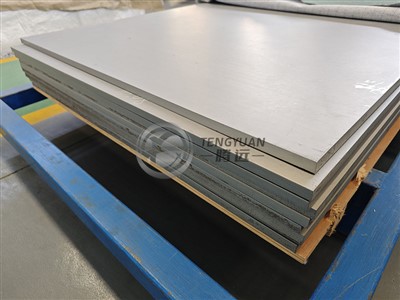
As a supplier of GR2 Titanium Plates, I often get asked about the suitability of these plates for various applications, especially in chemical processing plants. Chemical processing plants are harsh environments where materials are constantly exposed to corrosive chemicals, high temperatures, and high pressures. In this blog post, I'll explore whether GR2 titanium plates are a good fit for such demanding settings.
Properties of GR2 Titanium Plates
GR2 titanium is an unalloyed titanium grade, also known as commercially pure titanium. It is one of the most widely used titanium grades due to its excellent combination of properties.
Corrosion Resistance
One of the most significant advantages of GR2 titanium plates is their outstanding corrosion resistance. Titanium forms a thin, stable oxide layer on its surface when exposed to oxygen. This oxide layer acts as a protective barrier, preventing further corrosion. In chemical processing plants, where corrosive chemicals such as acids, alkalis, and salts are commonly used, this corrosion resistance is crucial. For example, in the production of fertilizers, where sulfuric acid and phosphoric acid are involved, GR2 titanium plates can resist the corrosive action of these acids, ensuring long - term durability of the equipment.
Strength and Ductility
GR2 titanium plates have good strength and ductility. They can withstand moderate mechanical stresses without deforming or breaking. This is important in chemical processing plants where equipment may be subject to internal pressures from the flow of chemicals or external forces during installation and operation. The ductility of GR2 titanium also allows for easy fabrication, such as bending, welding, and machining, which is essential for manufacturing custom - designed equipment.
Temperature Resistance
GR2 titanium can maintain its mechanical properties over a wide range of temperatures. It has good strength at elevated temperatures, making it suitable for chemical processes that involve high - temperature reactions. At the same time, it also performs well in cryogenic applications, which may be required in some specialized chemical processes.
Applications of GR2 Titanium Plates in Chemical Processing Plants
Heat Exchangers
Heat exchangers are widely used in chemical processing plants to transfer heat between different fluids. GR2 titanium plates are an ideal material for heat exchanger construction. Their high thermal conductivity and excellent corrosion resistance ensure efficient heat transfer while preventing the corrosion of the heat exchanger surfaces. For instance, in the petrochemical industry, heat exchangers made of GR2 titanium plates can handle the corrosive fluids involved in the refining process, such as crude oil and its derivatives.
Reaction Vessels
Reaction vessels are used to carry out chemical reactions. They need to be made of materials that can withstand the corrosive nature of the reactants and products, as well as the high pressures and temperatures generated during the reactions. GR2 titanium plates can be used to fabricate reaction vessels for a variety of chemical processes, including the production of pharmaceuticals, plastics, and specialty chemicals.
Piping Systems
Piping systems are used to transport chemicals within the plant. GR2 titanium plates can be used to make pipes and fittings. Their corrosion resistance ensures that the pipes do not corrode from the inside, preventing leaks and contamination of the chemicals being transported. Moreover, the strength of GR2 titanium allows for the construction of pipes that can withstand the pressure of the flowing chemicals.
Comparison with Other Materials
Stainless Steel
Stainless steel is a commonly used material in chemical processing plants. While it also has good corrosion resistance, it is not as resistant as GR2 titanium in some aggressive chemical environments. For example, in the presence of concentrated hydrochloric acid, stainless steel may corrode rapidly, while GR2 titanium can maintain its integrity. Additionally, GR2 titanium is lighter than stainless steel, which can reduce the overall weight of the equipment and the structural load on the plant.
Carbon Steel
Carbon steel is a low - cost material, but it has poor corrosion resistance in chemical environments. It requires extensive corrosion protection measures such as painting or coating, which may not be sufficient in the long run. GR2 titanium plates, on the other hand, do not require such additional protection, reducing maintenance costs and downtime for equipment.
Considerations and Limitations
Cost
One of the main limitations of using GR2 titanium plates in chemical processing plants is the cost. Titanium is generally more expensive than other common metals such as stainless steel and carbon steel. However, when considering the long - term benefits of corrosion resistance, reduced maintenance, and longer service life, the higher initial cost may be justified.
Compatibility with Some Chemicals
Although GR2 titanium has excellent corrosion resistance, it may not be suitable for all chemicals. For example, it can react with hydrofluoric acid and hot concentrated sulfuric acid under certain conditions. Therefore, before using GR2 titanium plates in a specific chemical process, it is necessary to conduct a thorough chemical compatibility analysis.


Other Related Titanium Products
If you are also interested in other titanium products, we also offer GR1 Titanium Plates for Corrosion Resistant and GR1 Titanium Plates for Ships. These products also have their own unique properties and applications. And of course, our GR2 Titanium Plates for Corrosion Resistant are specifically designed to meet the needs of various industries with high - level corrosion resistance requirements.
Conclusion
In conclusion, GR2 titanium plates can be effectively used in chemical processing plants. Their excellent corrosion resistance, strength, ductility, and temperature resistance make them suitable for a variety of applications, including heat exchangers, reaction vessels, and piping systems. Although there are some limitations such as cost and chemical compatibility, the long - term benefits often outweigh the drawbacks.
If you are involved in the chemical processing industry and are considering using GR2 titanium plates for your plant, I encourage you to contact us for more information. We can provide you with detailed product specifications, technical support, and competitive pricing. Our team of experts is ready to assist you in finding the best solutions for your specific needs.
References
- "Titanium: A Technical Guide" by John C. Williams.
- "Corrosion Resistance of Titanium in Chemical Environments" - Journal of Corrosion Science and Engineering.
- "Materials Selection for Chemical Processing Equipment" - ASM Handbook.