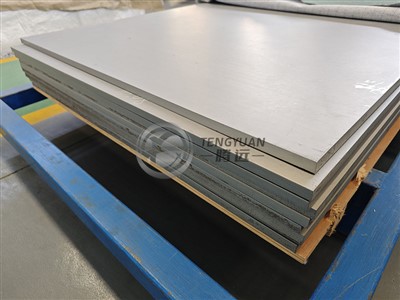
Titanium alloy plates have emerged as a remarkable material with a wide range of applications across various industries. One question that often arises is whether titanium alloy plates can be used in the marine engineering field. As a supplier of high - quality titanium alloy plates, I am well - positioned to explore this topic in depth.
Properties of Titanium Alloy Plates
Titanium alloy plates possess several key properties that make them highly suitable for marine engineering. First and foremost, titanium alloys have excellent corrosion resistance. In the harsh marine environment, where saltwater, humidity, and various chemical substances are present, corrosion is a major concern for any material used in marine structures. Titanium alloys form a stable oxide layer on their surface when exposed to oxygen, which acts as a protective barrier against corrosion. This property significantly extends the service life of marine components made from titanium alloy plates, reducing maintenance costs and the need for frequent replacements.
Another important property is their high strength - to - weight ratio. Marine engineering often requires materials that can withstand heavy loads while keeping the overall weight of the structure in check. Titanium alloy plates offer a great balance in this regard. They are as strong as some steels but are much lighter. This characteristic is particularly beneficial for ships, submarines, and offshore platforms, as it can improve fuel efficiency, increase payload capacity, and enhance maneuverability.
Titanium alloys also have good fatigue resistance. In the marine environment, structures are constantly subjected to cyclic loading due to waves, currents, and the movement of the vessel itself. Fatigue failure can be a serious issue, leading to structural damage and potential safety hazards. The fatigue resistance of titanium alloy plates allows them to endure these cyclic loads over long periods without significant degradation, ensuring the long - term reliability of marine engineering structures.
Applications in Marine Engineering
Shipbuilding
In shipbuilding, titanium alloy plates have a wide range of applications. For example, they can be used in the construction of hulls, superstructures, and various internal components. The use of GR5 Titanium Plates in shipbuilding can improve the overall performance of the ship. GR5 titanium alloy, also known as Ti - 6Al - 4V, is one of the most widely used titanium alloys. It has high strength, good weldability, and excellent corrosion resistance, making it ideal for critical parts of the ship that are exposed to the harsh marine environment.
Titanium alloy plates can also be used in the construction of propellers and shafts. These components are constantly in contact with seawater and are subjected to high - speed rotation and heavy loads. The corrosion resistance and high strength of titanium alloys ensure their long - term performance and reliability. Additionally, the reduced weight of titanium alloy propellers and shafts can lead to improved fuel efficiency and reduced vibration, enhancing the overall comfort and performance of the ship.
Offshore Platforms
Offshore platforms are exposed to extremely harsh environmental conditions, including strong winds, high waves, and corrosive seawater. Titanium alloy plates can be used in the construction of various parts of offshore platforms, such as the support structures, pipelines, and equipment housings. GR12 Titanium Plates for Ships are particularly suitable for these applications. GR12 titanium alloy, which contains titanium, molybdenum, and nickel, has good corrosion resistance in both reducing and oxidizing environments. It can withstand the corrosive effects of seawater and various chemicals used in offshore oil and gas production.


The use of titanium alloy plates in offshore platforms can also improve their resistance to stress corrosion cracking. Stress corrosion cracking is a serious problem in offshore structures, as it can lead to sudden and catastrophic failures. The excellent corrosion resistance and mechanical properties of titanium alloys help to prevent this type of failure, ensuring the safety and reliability of offshore platforms.
Desalination Plants
Desalination is an important process for providing fresh water in areas with limited water resources. Titanium alloy plates are widely used in desalination plants due to their excellent corrosion resistance in saltwater environments. They can be used in the construction of heat exchangers, pipes, and other components of the desalination system. GR12 Titanium Plates for Chemical Industry are often used in desalination plants because of their good resistance to chloride - induced corrosion, which is a common problem in saltwater desalination processes.
Challenges and Considerations
While titanium alloy plates offer many advantages for marine engineering, there are also some challenges and considerations that need to be addressed. One of the main challenges is the high cost of titanium alloys compared to other materials such as steel. The production process of titanium alloys is complex and energy - intensive, which results in a relatively high price. However, when considering the long - term benefits such as reduced maintenance costs, extended service life, and improved performance, the higher initial investment in titanium alloy plates can be justified.
Another challenge is the difficulty in processing titanium alloy plates. Titanium alloys have a relatively low thermal conductivity, which can lead to high cutting temperatures during machining. Specialized tools and machining techniques are required to ensure high - quality processing. Welding titanium alloys also requires strict control of the welding environment to prevent contamination and ensure good weld quality.
Conclusion
In conclusion, titanium alloy plates can indeed be used in the marine engineering field. Their excellent corrosion resistance, high strength - to - weight ratio, and good fatigue resistance make them well - suited for a variety of applications in shipbuilding, offshore platforms, and desalination plants. Although there are challenges such as high cost and difficult processing, the long - term benefits of using titanium alloy plates often outweigh these drawbacks.
As a supplier of titanium alloy plates, I am committed to providing high - quality products and technical support to meet the needs of the marine engineering industry. If you are interested in using titanium alloy plates for your marine engineering projects, I encourage you to contact me for further discussions and procurement negotiations. We can work together to find the most suitable titanium alloy solutions for your specific requirements.
References
- Lütjering, G., & Williams, J. C. (2007). Titanium. Springer Science & Business Media.
-ASM Handbook Committee. (2000). ASM Handbook: Volume 2: Properties and Selection: Nonferrous Alloys and Special - Purpose Materials. ASM International.