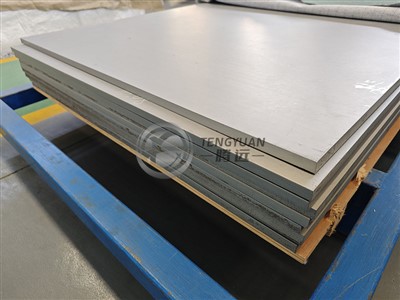
When it comes to high - performance materials in various industries, GR5 titanium rods stand out as a top choice. As a reliable GR5 Titanium Rods supplier, I am often asked about the thermal conductivity of these rods. In this blog, I will delve into the concept of thermal conductivity, explain the factors affecting the thermal conductivity of GR5 titanium rods, and discuss its implications in different applications.
Understanding Thermal Conductivity
Thermal conductivity is a fundamental property of a material that describes its ability to conduct heat. It is defined as the quantity of heat (in watts) that passes through a unit area (in square meters) of a material per unit thickness (in meters) per unit temperature difference (in Kelvin). The SI unit of thermal conductivity is W/(m·K).
A material with high thermal conductivity can transfer heat quickly, while a material with low thermal conductivity is a poor heat conductor and can act as an insulator. For example, metals like copper and aluminum are known for their high thermal conductivity, which makes them suitable for heat - exchanger applications. On the other hand, materials such as rubber and plastic have low thermal conductivity and are used for insulation purposes.
Thermal Conductivity of GR5 Titanium Rods
GR5 titanium alloy, also known as Ti - 6Al - 4V, is a two - phase (α + β) titanium alloy. It is one of the most widely used titanium alloys due to its excellent combination of high strength, good corrosion resistance, and low density.


The thermal conductivity of GR5 titanium rods is relatively low compared to many common metals. At room temperature (around 25°C or 298K), the thermal conductivity of GR5 titanium alloy is approximately 7.5 W/(m·K). This value is significantly lower than that of copper (about 401 W/(m·K)) and aluminum (about 237 W/(m·K)).
The relatively low thermal conductivity of GR5 titanium rods can be attributed to several factors. Firstly, the crystal structure of titanium alloys plays a role. GR5 titanium has a complex two - phase structure, which disrupts the flow of heat - carrying electrons and phonons (quantized lattice vibrations). Secondly, the presence of alloying elements such as aluminum and vanadium in GR5 titanium also affects its thermal conductivity. These alloying elements introduce lattice distortions, which scatter the heat - carriers and reduce the overall thermal conductivity.
Implications in Different Applications
Aerospace Industry
In the aerospace industry, GR5 titanium rods are widely used in aircraft components such as landing gear, engine parts, and structural frames. The low thermal conductivity of GR5 titanium can be an advantage in some applications. For example, in engine components, it helps to reduce heat transfer from the hot engine parts to the surrounding structures, which can improve the overall thermal efficiency of the engine and protect the adjacent components from overheating.
Medical Industry
GR5 titanium is also a popular material in the medical field, especially for orthopedic implants and dental implants. The low thermal conductivity of GR5 titanium is beneficial here as well. When the implant is in contact with the human body, it minimizes the transfer of external heat or cold to the surrounding tissues, reducing the risk of thermal damage to the cells and improving the biocompatibility of the implant.
Chemical Industry
In the chemical industry, GR5 titanium rods are used in equipment such as reactors, heat exchangers, and pipelines. Although the low thermal conductivity may seem like a disadvantage in heat - exchanger applications at first glance, it can actually be beneficial in some cases. For example, in corrosive environments, the low thermal conductivity can help to reduce the thermal stress on the material, which can extend the service life of the equipment. Additionally, if you are looking for titanium rods for chemical industry with different properties, you can check out GR12 Titanium Rods for Chemical Industry.
Marine Industry
In the marine industry, GR5 titanium rods are used in shipbuilding, especially for components that are exposed to seawater. The low thermal conductivity can help to prevent the formation of thermally induced stress corrosion cracking. Moreover, for specific ship - related applications, GR12 Titanium Rod for Ships might be a suitable alternative.
Factors Affecting the Thermal Conductivity of GR5 Titanium Rods
Temperature
The thermal conductivity of GR5 titanium rods is temperature - dependent. Generally, as the temperature increases, the thermal conductivity of GR5 titanium also increases. This is because at higher temperatures, the lattice vibrations become more intense, which allows for more efficient heat transfer. However, the relationship between temperature and thermal conductivity is not linear, and the rate of increase may vary depending on the specific temperature range.
Microstructure
The microstructure of GR5 titanium rods can also affect their thermal conductivity. Factors such as grain size, phase distribution, and the presence of defects can influence the movement of heat - carriers. For example, a finer grain size can increase the scattering of heat - carriers, leading to a lower thermal conductivity. On the other hand, a more homogeneous phase distribution can improve the thermal conductivity.
Manufacturing Process
The manufacturing process of GR5 titanium rods can have a significant impact on their thermal conductivity. Processes such as forging, rolling, and heat treatment can alter the microstructure of the material, which in turn affects its thermal conductivity. For example, a well - controlled heat treatment process can optimize the phase composition and grain structure of GR5 titanium, resulting in improved thermal conductivity.
Comparison with Other Titanium Alloys
When comparing GR5 titanium rods with other titanium alloys, the thermal conductivity can vary. For instance, some pure titanium grades may have slightly higher thermal conductivity than GR5 titanium due to their simpler crystal structure and fewer alloying elements. However, pure titanium often lacks the strength and corrosion resistance of GR5 titanium.
GR12 titanium alloy, which is another commonly used titanium alloy, has different thermal conductivity characteristics. GR12 is a near - alpha titanium alloy with good corrosion resistance, especially in reducing acid environments. If you are interested in GR12 titanium rods for corrosion - resistant applications, you can visit GR12 Titanium Rods for Corrosion Resistant. The thermal conductivity of GR12 titanium may also be different from that of GR5, depending on its specific composition and microstructure.
Conclusion
In conclusion, the thermal conductivity of GR5 titanium rods is an important property that has significant implications in various industries. Its relatively low thermal conductivity at room temperature is due to factors such as its complex crystal structure and the presence of alloying elements. While it may seem like a disadvantage in some heat - transfer applications, it actually offers benefits in many other scenarios, such as reducing thermal stress and protecting surrounding tissues in medical implants.
As a GR5 Titanium Rods supplier, I understand the importance of providing high - quality products that meet the specific requirements of different industries. Whether you need GR5 titanium rods for aerospace, medical, chemical, or marine applications, I can offer you reliable solutions. If you have any questions about the thermal conductivity or other properties of GR5 titanium rods, or if you are interested in purchasing our products, please feel free to contact me for procurement discussions.
References
- "Titanium: A Technical Guide" by John R. Davis.
- "Materials Science and Engineering: An Introduction" by William D. Callister, Jr. and David G. Rethwisch.