When it comes to high - performance materials in various industrial applications, GR1 Titanium Wire stands out for its unique combination of properties. As a leading supplier of GR1 Titanium Wire, I often get asked about its thermal conductivity, which is a crucial characteristic in many engineering and manufacturing scenarios.
Understanding Thermal Conductivity
Thermal conductivity is a measure of a material's ability to conduct heat. It is defined as the quantity of heat that passes through a unit area in a unit time when a temperature gradient exists across the material. The SI unit for thermal conductivity is watts per meter - kelvin (W/(m·K)). A high thermal conductivity means that the material can transfer heat quickly, while a low thermal conductivity indicates that the material is a poor conductor of heat and may act as an insulator.
Thermal Conductivity of GR1 Titanium Wire
GR1 Titanium Wire is an industrial - pure titanium product. The thermal conductivity of GR1 Titanium Wire is relatively low compared to some common metals like copper and aluminum. At room temperature (around 20°C or 293K), the thermal conductivity of GR1 Titanium Wire is approximately 16.3 W/(m·K).

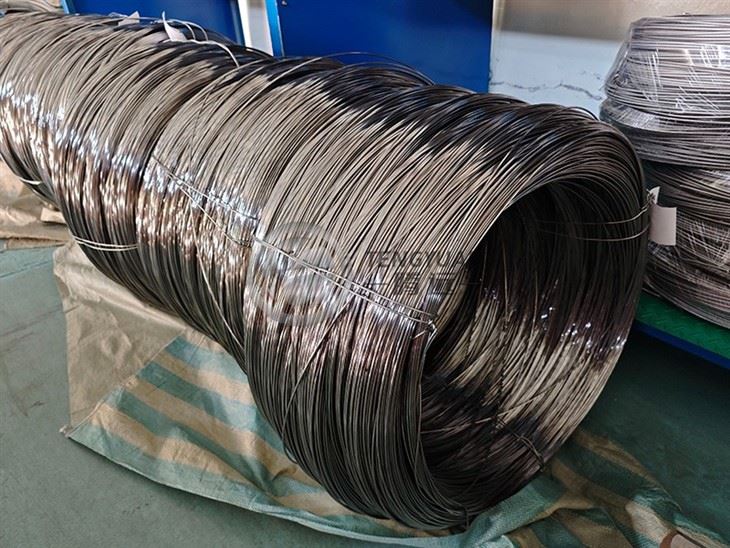
This relatively low thermal conductivity can be both an advantage and a disadvantage depending on the application. In applications where heat insulation is required, such as in some aerospace components where minimizing heat transfer can be critical for maintaining the integrity of sensitive equipment, the low thermal conductivity of GR1 Titanium Wire is beneficial. For example, in the construction of satellite components, the wire's ability to limit heat transfer helps protect delicate electronics from the extreme temperature variations in space.
On the other hand, in applications where efficient heat dissipation is necessary, such as in high - power electrical devices or some heat exchangers, the relatively low thermal conductivity of GR1 Titanium Wire may be a drawback. However, titanium's other excellent properties, such as its high strength - to - weight ratio, corrosion resistance, and biocompatibility, often make it a preferred choice despite its thermal conductivity limitations.
Factors Affecting the Thermal Conductivity of GR1 Titanium Wire
Several factors can influence the thermal conductivity of GR1 Titanium Wire.
Temperature
The thermal conductivity of GR1 Titanium Wire is temperature - dependent. As the temperature increases, the thermal conductivity of titanium generally increases. At higher temperatures, the lattice vibrations in the titanium crystal structure become more energetic, allowing for more efficient heat transfer through the material. However, this increase is not linear, and the relationship between temperature and thermal conductivity is complex and is often determined through experimental measurements.
Impurities and Alloying Elements
Even though GR1 Titanium Wire is considered industrial - pure titanium, it may still contain small amounts of impurities. These impurities can disrupt the regular crystal lattice structure of titanium, scattering the phonons (the carriers of heat in solids) and reducing the thermal conductivity. Additionally, if there are any unintentional alloying elements present, they can also have a significant impact on the thermal conductivity. For example, adding a small amount of a metal like iron to titanium can change its thermal conductivity characteristics.
Microstructure
The microstructure of GR1 Titanium Wire, which is affected by factors such as the manufacturing process and heat treatment, can also influence its thermal conductivity. A fine - grained microstructure may have a different thermal conductivity compared to a coarse - grained one. During the manufacturing process, processes like cold drawing and annealing can alter the grain size and orientation of the titanium, thereby affecting how heat is transferred through the wire.
Comparison with Other Titanium Grades
When comparing the thermal conductivity of GR1 Titanium Wire with other titanium grades, such as GR2 Titanium Wire and GR2 Titanium Welding Wire, there are some differences. GR2 Titanium is also an industrial - pure titanium grade but has slightly higher impurity levels compared to GR1. This difference in impurity content can lead to a slightly different thermal conductivity.
Typically, the thermal conductivity of GR2 Titanium is also in a similar range to that of GR1, but due to the presence of more impurities, it may have a slightly lower thermal conductivity under the same conditions. However, these differences are relatively small, and both grades are suitable for many of the same applications where their other properties, such as corrosion resistance and strength, are more important than the exact value of thermal conductivity.
Applications of GR1 Titanium Wire Based on Thermal Conductivity
The thermal conductivity of GR1 Titanium Wire plays a role in determining its suitability for various applications.
Aerospace Industry
As mentioned earlier, in the aerospace industry, the low thermal conductivity of GR1 Titanium Wire is advantageous in many applications. In aircraft engines, for example, the wire can be used in components where heat insulation is required to protect nearby structures from the high - temperature environment of the engine. It can also be used in the construction of aircraft frames and wings, where its combination of low thermal conductivity, high strength, and light weight makes it an ideal material.
Medical Industry
In the medical field, GR1 Titanium Wire's low thermal conductivity is beneficial. It is often used in medical implants such as orthopedic pins and dental implants. The low thermal conductivity helps to minimize the transfer of heat from the surrounding body tissues to the implant, reducing the risk of thermal damage to the tissues. Additionally, titanium's biocompatibility ensures that it is well - tolerated by the human body.
Chemical Processing Industry
In the chemical processing industry, GR1 Titanium Wire's corrosion resistance is well - known. Its low thermal conductivity can also be an advantage in some processes where temperature control is critical. For example, in the production of certain chemicals where maintaining a specific temperature range is necessary, the wire can be used in equipment where it helps to isolate different temperature zones within the process.
Conclusion
In conclusion, the thermal conductivity of GR1 Titanium Wire is an important property that affects its performance in a wide range of applications. With a thermal conductivity of approximately 16.3 W/(m·K) at room temperature, it has its unique advantages and limitations. Understanding the factors that affect its thermal conductivity, such as temperature, impurities, and microstructure, can help in optimizing its use in different industries.
If you are in need of high - quality GR1 Titanium Wire for your specific application, whether it's for aerospace, medical, or chemical processing, I invite you to contact us for further discussion. We have a team of experts who can provide you with detailed information and help you select the most suitable product for your needs.
References
- "Titanium: A Technical Guide", ASM International.
- Research papers on titanium thermal conductivity published in international materials science journals.
- Industry standards and specifications for titanium grades, such as ASTM standards.