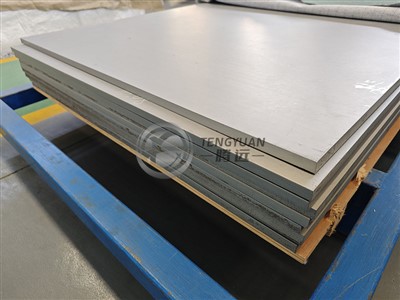
Hey there! As a supplier of GR1 Titanium Wire, I often get asked about its fracture toughness. So, I thought I'd take some time to break it down for you in this blog post.
First off, let's talk about what fracture toughness actually means. In simple terms, fracture toughness is a material's ability to resist the propagation of cracks. When a material is under stress, cracks can start to form. The fracture toughness of a material determines how well it can stop these cracks from growing and eventually causing the material to fail.
Now, let's get into the specifics of GR1 Titanium Wire. GR1 Titanium is an industrial pure titanium grade, which means it has a high level of purity and excellent corrosion resistance. This makes it a popular choice for a wide range of applications, including aerospace, marine, and chemical processing.

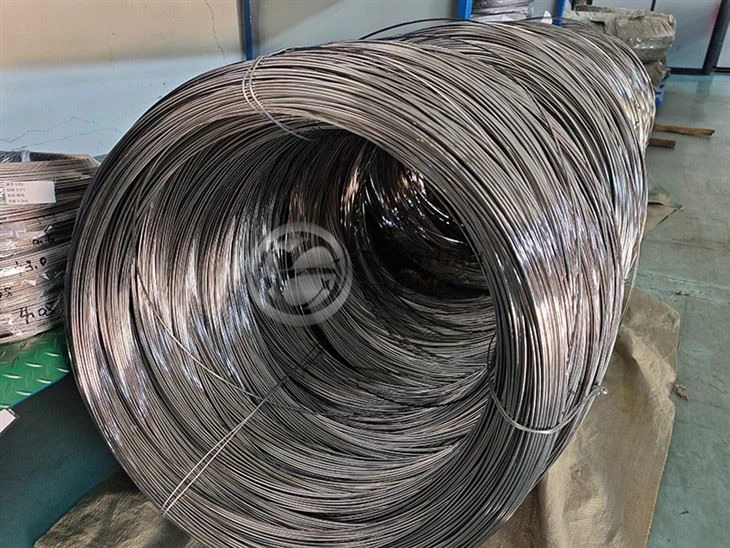
The fracture toughness of GR1 Titanium Wire is influenced by several factors, including its microstructure, chemical composition, and processing history. The microstructure of GR1 Titanium Wire consists of alpha-phase titanium, which is a hexagonal close-packed (HCP) crystal structure. This structure gives GR1 Titanium Wire its high strength and good ductility.
The chemical composition of GR1 Titanium Wire also plays a role in its fracture toughness. GR1 Titanium has a low carbon content, which helps to improve its corrosion resistance. It also contains small amounts of other elements, such as iron, oxygen, and nitrogen, which can affect its mechanical properties.
The processing history of GR1 Titanium Wire can also have a significant impact on its fracture toughness. For example, the wire may be cold-drawn or annealed to improve its strength and ductility. These processes can change the microstructure of the wire and affect its fracture toughness.
In general, GR1 Titanium Wire has a relatively high fracture toughness compared to other materials. This is due to its high strength, good ductility, and excellent corrosion resistance. However, the exact fracture toughness of GR1 Titanium Wire can vary depending on the specific application and the conditions under which it is used.
If you're considering using GR1 Titanium Wire in your application, it's important to understand its fracture toughness and how it will perform under the expected conditions. You may also want to consider other factors, such as the wire's strength, ductility, and corrosion resistance.
At our company, we offer a wide range of GR1 Titanium Wire products, including GR1 Titanium Wire. Our wires are made from high-quality materials and are carefully processed to ensure consistent quality and performance. We also offer custom solutions to meet your specific requirements.
In addition to GR1 Titanium Wire, we also offer GR2 Titanium Welding Wire and GR2 Titanium Wire. These products are similar to GR1 Titanium Wire but have different chemical compositions and mechanical properties.
If you're interested in learning more about our GR1 Titanium Wire products or have any questions about fracture toughness, please don't hesitate to contact us. We'd be happy to help you find the right solution for your application.
In conclusion, the fracture toughness of GR1 Titanium Wire is an important property that determines its ability to resist the propagation of cracks. GR1 Titanium Wire has a relatively high fracture toughness compared to other materials, which makes it a popular choice for a wide range of applications. If you're considering using GR1 Titanium Wire in your application, it's important to understand its fracture toughness and how it will perform under the expected conditions. At our company, we offer a wide range of GR1 Titanium Wire products and custom solutions to meet your specific requirements. So, if you're interested in learning more, please don't hesitate to contact us.
References:
- "Titanium and Titanium Alloys: Fundamentals and Applications" by Yuri Estrin, et al.
- "Metals Handbook: Properties and Selection: Nonferrous Alloys and Pure Metals" by ASM International.