What is the elongation of GR1 Titanium Plates?
As a supplier of GR1 Titanium Plates, I often encounter inquiries from customers regarding the elongation of these plates. Elongation is a crucial mechanical property that provides insights into the material's ductility and its ability to deform under tensile stress without fracturing. In this blog post, I'll delve into what elongation means in the context of GR1 Titanium Plates, its significance, and how it impacts various applications.
Understanding Elongation
Elongation is defined as the percentage increase in the length of a material when it is subjected to a tensile load until it reaches its breaking point. It is measured by comparing the original length of a test specimen to its length after fracture. For GR1 Titanium Plates, elongation is typically expressed as a percentage and is determined through a standardized tensile test, such as ASTM E8 or ISO 6892-1.
During a tensile test, a sample of the GR1 Titanium Plate is placed in a testing machine, and a gradually increasing load is applied until the specimen breaks. The elongation value is calculated using the following formula:
Elongation (%) = [(Final Length - Original Length) / Original Length] x 100
A higher elongation percentage indicates that the material can undergo more plastic deformation before failure, making it more ductile. Conversely, a lower elongation value suggests that the material is more brittle and prone to fracture under stress.
Elongation of GR1 Titanium Plates
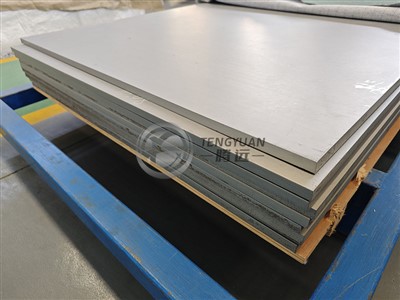
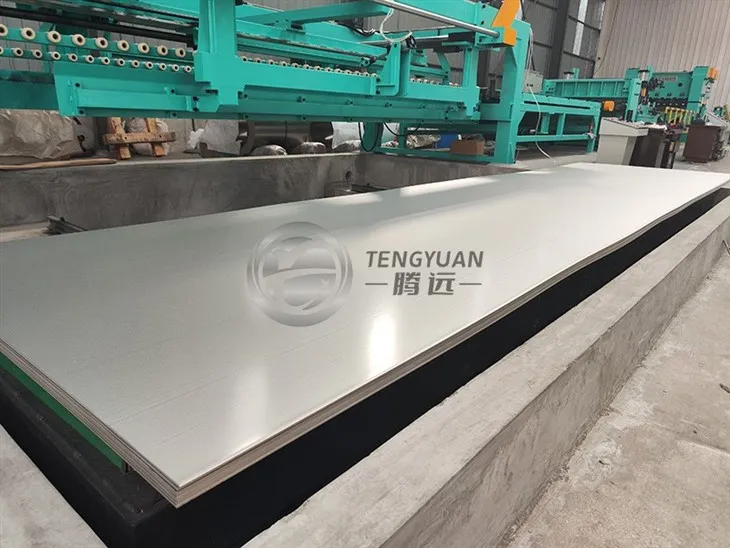
GR1 Titanium is an unalloyed titanium grade known for its excellent corrosion resistance, high strength-to-weight ratio, and good formability. The typical elongation of GR1 Titanium Plates ranges from 24% to 30%, depending on factors such as the plate's thickness, manufacturing process, and heat treatment.
The relatively high elongation of GR1 Titanium Plates makes them suitable for a wide range of applications where ductility is essential. For example, in the chemical industry, GR1 Titanium Plates are used in the construction of reactors, heat exchangers, and piping systems. The ability of these plates to deform without fracturing allows them to withstand the stresses associated with thermal expansion and contraction, as well as the pressure and corrosion from chemical substances.
In the aerospace industry, GR1 Titanium Plates are used in the fabrication of aircraft components, such as wing skins, fuselage panels, and engine parts. The high elongation of these plates enables them to be formed into complex shapes using processes like bending, stretching, and deep drawing, while maintaining their structural integrity.

Significance of Elongation in Applications
The elongation of GR1 Titanium Plates plays a vital role in determining their performance and suitability for specific applications. Here are some key aspects where elongation is of significant importance:
- Formability: High elongation values make GR1 Titanium Plates easier to form into various shapes, such as tubes, sheets, and profiles. This allows manufacturers to produce complex components with minimal cracking or tearing, reducing production costs and improving efficiency.
- Weldability: Elongation also affects the weldability of GR1 Titanium Plates. A material with good elongation can better accommodate the stresses generated during the welding process, reducing the risk of weld cracking and improving the overall quality of the weld joint.
- Structural Integrity: In structural applications, such as bridges, buildings, and offshore platforms, the elongation of GR1 Titanium Plates is crucial for ensuring the safety and reliability of the structure. A material with sufficient elongation can absorb energy and deform plastically under extreme loading conditions, such as earthquakes or high winds, without sudden failure.
- Corrosion Resistance: The ability of GR1 Titanium Plates to deform without fracturing also enhances their corrosion resistance. When a material is subjected to stress, it can develop cracks or defects that expose the underlying metal to corrosive environments. A high-elongation material is less likely to develop such cracks, reducing the risk of corrosion and extending the service life of the component.
Factors Affecting Elongation
Several factors can influence the elongation of GR1 Titanium Plates, including:
- Plate Thickness: Generally, thinner GR1 Titanium Plates tend to have higher elongation values compared to thicker plates. This is because thinner plates have a smaller cross-sectional area, which allows for more uniform deformation under stress.
- Manufacturing Process: The manufacturing process used to produce GR1 Titanium Plates can also affect their elongation. For example, plates produced by hot rolling typically have higher elongation values than those produced by cold rolling, as the hot rolling process helps to refine the grain structure of the material and improve its ductility.
- Heat Treatment: Heat treatment can significantly alter the mechanical properties of GR1 Titanium Plates, including their elongation. Annealing, for instance, is a common heat treatment process that involves heating the plates to a specific temperature and then slowly cooling them. This process helps to relieve internal stresses, refine the grain structure, and improve the elongation of the plates.
- Impurities and Alloying Elements: The presence of impurities and alloying elements in GR1 Titanium Plates can also affect their elongation. For example, the addition of small amounts of oxygen, nitrogen, or carbon can reduce the ductility of the material, while the addition of certain alloying elements, such as aluminum or vanadium, can improve its strength and elongation.
Related Products
If you're interested in other titanium plate products, we also offer GR2 Titanium Plates for Ships and GR2 Titanium Plates for Corrosion Resistant. These plates are designed to meet the specific requirements of different industries and applications, offering excellent corrosion resistance and mechanical properties.
For applications in the chemical industry, our GR1 Titanium Plates for Chemical Industry are an ideal choice. They are specifically engineered to withstand the harsh chemical environments and high temperatures commonly encountered in chemical processing plants.
Contact Us for Procurement
If you're in the market for high-quality GR1 Titanium Plates or have any questions about their elongation or other properties, we'd be more than happy to assist you. Our team of experts has extensive knowledge and experience in the titanium industry and can provide you with the guidance and support you need to make the right purchasing decision.
Whether you're a small-scale manufacturer or a large industrial corporation, we can offer competitive pricing, reliable delivery, and exceptional customer service. Contact us today to discuss your requirements and start a procurement negotiation.
References
- ASTM International. (2019). ASTM E8/E8M - 19a: Standard Test Methods for Tension Testing of Metallic Materials. West Conshohocken, PA: ASTM International.
- ISO. (2019). ISO 6892-1:2019: Metallic materials - Tensile testing - Part 1: Method of test at room temperature. Geneva, Switzerland: International Organization for Standardization.
- ASM International. (2000). Titanium and Titanium Alloys. Materials Park, OH: ASM International.