What is the ductility of GR1 Titanium Welding Wire?
As a supplier of GR1 Titanium Welding Wire, I've had numerous in - depth discussions with clients about the properties of this remarkable product. One of the most frequently asked questions revolves around its ductility. In this blog, I'll delve into what ductility means in the context of GR1 Titanium Welding Wire, its influencing factors, and its significance in various applications.
Understanding Ductility
Ductility is a crucial mechanical property that describes a material's ability to deform plastically under tensile stress without fracturing. In simpler terms, it is the measure of how much a material can be stretched or drawn into a wire or other shapes before it breaks. For GR1 Titanium Welding Wire, high ductility is highly desirable as it allows for easy forming and shaping during the welding process.
When a welding wire has good ductility, it can be bent, coiled, and fed through welding equipment smoothly. This is especially important in automated welding processes where continuous and consistent wire feeding is essential for high - quality welds. A lack of ductility can lead to wire breakage, inconsistent weld bead formation, and ultimately, poor - quality welds.
Ductility of GR1 Titanium Welding Wire
GR1 Titanium is an unalloyed titanium grade known for its excellent corrosion resistance, high strength - to - weight ratio, and, importantly, good ductility. The ductility of GR1 Titanium Welding Wire is typically characterized by its elongation at break. Elongation at break is the percentage increase in the length of the wire when it is pulled to the point of fracture.
On average, GR1 Titanium Welding Wire can have an elongation at break of around 24% - 30%. This level of ductility makes it suitable for a wide range of welding applications, from simple repair work to complex fabrication projects. The high ductility also allows the wire to accommodate some degree of stress and strain during the welding process without cracking.
Factors Influencing the Ductility of GR1 Titanium Welding Wire
- Chemical Composition: The purity of GR1 Titanium is a key factor in determining its ductility. GR1 Titanium is a low - interstitial grade, which means it has relatively low levels of impurities such as oxygen, nitrogen, and carbon. These impurities can act as hardening agents and reduce the ductility of the material. As a supplier, we ensure that our GR1 Titanium Welding Wire meets the strict chemical composition requirements for the grade to maintain its high ductility.
- Manufacturing Process: The way the wire is manufactured also affects its ductility. Processes such as hot rolling, cold drawing, and heat treatment can all influence the microstructure of the wire and, consequently, its ductility. For example, proper heat treatment can relieve internal stresses in the wire and improve its ductility. Our manufacturing process is carefully controlled to ensure that the wire has a uniform microstructure and optimal ductility.
- Temperature: Temperature can have a significant impact on the ductility of GR1 Titanium Welding Wire. At elevated temperatures, the ductility of titanium generally increases. During the welding process, the heat input can cause local temperature changes in the wire. If the heat input is too high or too low, it can affect the ductility of the wire in the weld zone. Welders need to carefully control the welding parameters to ensure that the wire maintains its ductility during the welding process.
Applications and the Importance of Ductility
- Aerospace Industry: In the aerospace industry, GR1 Titanium Welding Wire is used for welding components such as aircraft frames, engine parts, and fuel tanks. The high ductility of the wire is crucial in this application as it allows the welded joints to withstand the extreme stresses and vibrations experienced during flight. The ability of the wire to deform plastically without breaking helps to prevent crack propagation and ensures the structural integrity of the aircraft.
- Chemical Processing Industry: The chemical processing industry often uses GR1 Titanium Welding Wire for welding equipment that comes into contact with corrosive chemicals. The good ductility of the wire allows for the fabrication of complex - shaped vessels and pipes. These components may be subject to thermal expansion and contraction during operation, and the ductility of the wire helps the welds to accommodate these dimensional changes without failure.
- Medical Industry: In the medical field, GR1 Titanium Welding Wire is used for manufacturing surgical implants such as bone plates and screws. The high ductility of the wire is essential for ensuring that the implants can be shaped and formed to fit the patient's anatomy precisely. Additionally, the ductility helps the implants to withstand the mechanical stresses exerted on them in the human body.
Comparison with Other Titanium Welding Wires
When comparing GR1 Titanium Welding Wire with other grades, such as GR2 Titanium Welding Wire and GR2 Titanium Wire, there are some differences in ductility. GR2 Titanium is also an unalloyed grade but has slightly higher levels of interstitial elements compared to GR1. This results in GR2 Titanium Welding Wire having a slightly lower ductility than GR1. While GR2 may have an elongation at break of around 20% - 25%, GR1's higher ductility makes it more suitable for applications where greater formability is required.
Maintaining and Enhancing Ductility
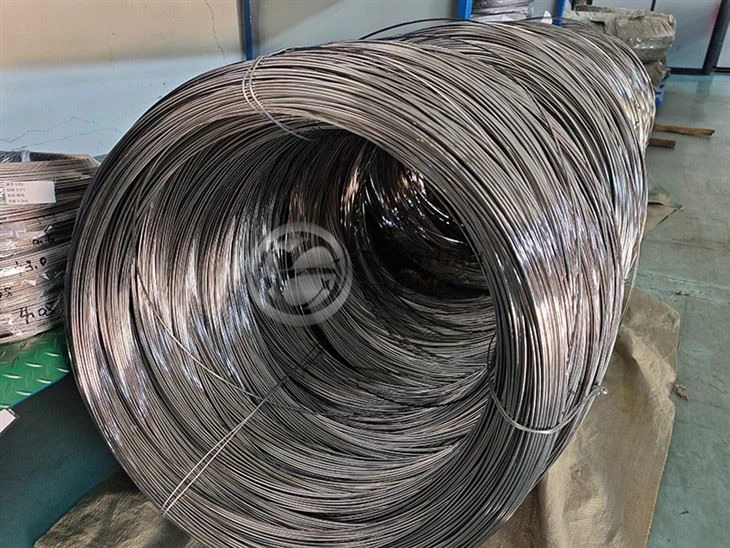
To maintain the ductility of GR1 Titanium Welding Wire, proper storage and handling are essential. The wire should be stored in a dry environment to prevent corrosion, which can reduce its ductility. Additionally, when using the wire, welders should follow the recommended welding procedures and parameters to avoid overheating or under - heating the wire.

In some cases, post - weld heat treatment can be used to enhance the ductility of the welded joints. This involves heating the welded area to a specific temperature and then cooling it slowly to relieve internal stresses and improve the microstructure of the weld.
Conclusion
The ductility of GR1 Titanium Welding Wire is a vital property that makes it a popular choice for a wide range of welding applications. Its ability to deform plastically without fracturing allows for high - quality welds in various industries, from aerospace to medical. As a supplier of GR1 Titanium Welding Wire, we are committed to providing high - quality wire with consistent ductility.
If you are in need of GR1 Titanium Welding Wire for your next project, I encourage you to reach out to us for more information. We can provide detailed technical specifications, samples, and guidance on the best way to use our wire for your specific application. Whether you are a small - scale repair shop or a large - scale manufacturing facility, we have the expertise and products to meet your welding needs.
References
- ASM Handbook, Volume 2: Properties and Selection: Nonferrous Alloys and Special - Purpose Materials
- Titanium: A Technical Guide, Second Edition by John C. Williams