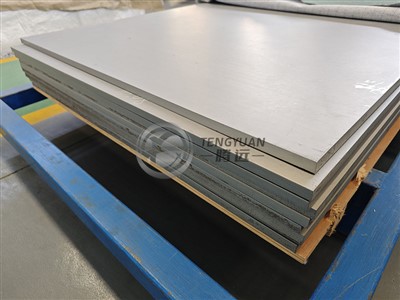
In the realm of advanced materials, GR2 titanium plates have emerged as a cornerstone in various industries, thanks to their remarkable properties. Among these properties, damping capacity stands out as a crucial characteristic that significantly influences the performance of GR2 titanium plates in different applications. As a reputable supplier of GR2 Titanium Plates, I am eager to delve into the concept of damping capacity, its importance, and how it relates to our high - quality GR2 titanium plates.

Understanding Damping Capacity
Damping capacity, in simple terms, is the ability of a material to dissipate mechanical energy when it is subjected to vibration or cyclic loading. When a structure vibrates, energy is stored in the form of elastic deformation. A material with high damping capacity can convert this stored elastic energy into other forms of energy, such as heat, and thereby reduce the amplitude of vibration.
The damping capacity of a material is typically measured by a parameter called the loss factor (η). The loss factor represents the ratio of the energy dissipated per cycle to the maximum elastic energy stored in the material during that cycle. A higher loss factor indicates a greater ability of the material to dampen vibrations.
Factors Affecting the Damping Capacity of GR2 Titanium Plates
The damping capacity of GR2 titanium plates is influenced by several factors, including their microstructure, impurity content, and temperature.
Microstructure plays a vital role in determining the damping capacity of GR2 titanium plates. The grain size, phase composition, and dislocation density within the material can all impact its ability to dissipate energy. For instance, a fine - grained microstructure generally provides more interfaces where energy can be dissipated, leading to a higher damping capacity. Additionally, the presence of different phases in the titanium matrix can affect the movement of dislocations, which in turn influences the damping behavior.
Impurity content is another significant factor. GR2 titanium is an industrial - pure titanium grade, but even small amounts of impurities can have an impact on its damping capacity. Elements such as oxygen, nitrogen, and carbon can form interstitial solid solutions in the titanium lattice, which can restrict the movement of dislocations and reduce the damping capacity. Therefore, careful control of the impurity content during the manufacturing process is essential to ensure optimal damping performance.
Temperature also has a profound effect on the damping capacity of GR2 titanium plates. As the temperature increases, the mobility of dislocations within the material generally increases. This can lead to changes in the damping behavior. At low temperatures, the damping capacity may be relatively low due to restricted dislocation movement. As the temperature rises, the damping capacity may increase up to a certain point, after which it may start to decrease again due to other factors such as thermal softening of the material.
Importance of Damping Capacity in Applications
The damping capacity of GR2 titanium plates is of great importance in a wide range of applications. In the aerospace industry, for example, vibration can cause fatigue failure of components, leading to catastrophic consequences. GR2 titanium plates with high damping capacity can help reduce vibrations in aircraft structures, such as wings and fuselages, thereby improving the overall safety and reliability of the aircraft.
In the automotive industry, damping capacity is crucial for reducing noise, vibration, and harshness (NVH) levels. GR2 titanium plates can be used in engine components, suspension systems, and exhaust systems to dampen vibrations and improve the driving experience. By reducing vibrations, the use of GR2 titanium plates can also extend the service life of automotive components.
In the chemical industry, GR2 titanium plates are widely used due to their excellent corrosion resistance. The damping capacity of these plates is also beneficial in this context. For example, in chemical processing equipment, vibrations caused by fluid flow or mechanical agitation can lead to wear and tear of the equipment. GR2 titanium plates with good damping capacity can help reduce these vibrations, thereby increasing the durability of the equipment. If you are interested in titanium plates for the chemical industry, you can check out our GR1 Titanium Plates for Chemical Industry.
Our GR2 Titanium Plates and Damping Capacity
As a supplier of GR2 Titanium Plates, we are committed to providing products with excellent damping capacity. Our manufacturing process is designed to optimize the microstructure of the GR2 titanium plates, ensuring a fine - grained structure that promotes energy dissipation. We also implement strict quality control measures to keep the impurity content within the optimal range, which helps maintain high damping performance.
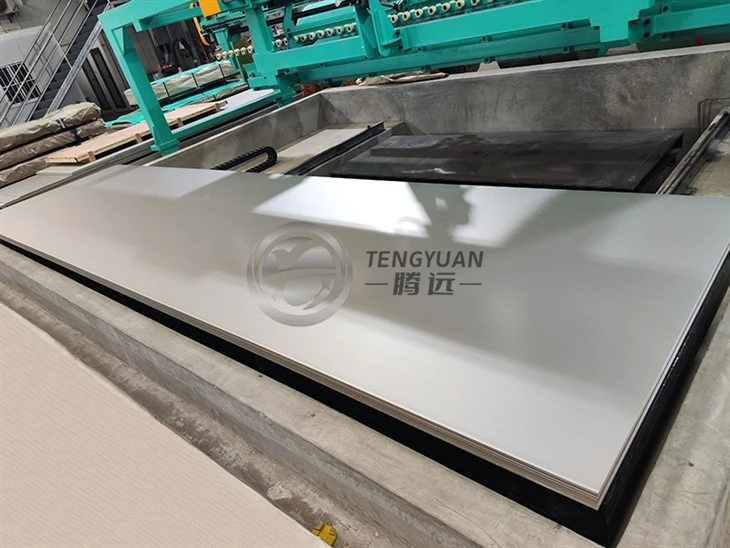
We offer a wide range of GR2 titanium plates with different thicknesses and dimensions to meet the diverse needs of our customers. Whether you need thin plates for precision applications or thick plates for heavy - duty structures, we have the right products for you. You can explore our GR2 Titanium Plates on our website to learn more about our product offerings.
In addition to GR2 titanium plates, we also supply GR1 Titanium Plates, which are another popular choice in various industries. GR1 titanium has similar properties to GR2 titanium but may have different applications depending on the specific requirements of the project.
Conclusion
The damping capacity of GR2 titanium plates is a critical property that has a significant impact on their performance in various applications. By understanding the factors that affect damping capacity and implementing strict quality control measures during the manufacturing process, we are able to provide high - quality GR2 titanium plates with excellent damping performance.
If you are in the market for GR2 titanium plates or have any questions about their damping capacity and other properties, we invite you to contact us for further discussion. Our team of experts is ready to assist you in finding the right solutions for your specific needs. Whether you are involved in aerospace, automotive, chemical, or other industries, our GR2 titanium plates can offer the performance and reliability you require.
References
- Boyer, R., Welsch, G., & Collings, E. W. (1994). Materials Properties Handbook: Titanium Alloys. ASM International.
- Frost, H. J., & Ashby, M. F. (1982). Deformation - Mechanism Maps: The Plasticity and Creep of Metals and Ceramics. Pergamon Press.
- Lütjering, G., & Williams, J. C. (2007). Titanium: A Technical Guide. ASM International.