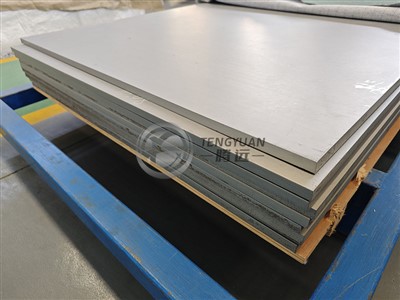
Ensuring the flatness of GR5 titanium plates during production is a critical aspect that directly impacts the quality and performance of the final product. As a leading supplier of GR5 Titanium Plates, we understand the significance of meeting strict flatness requirements. In this blog post, we will explore the key factors and strategies involved in maintaining the flatness of GR5 titanium plates throughout the production process.
Understanding GR5 Titanium Plates
GR5 titanium, also known as Ti-6Al-4V, is one of the most widely used titanium alloys due to its excellent combination of high strength, low density, and good corrosion resistance. These properties make GR5 titanium plates suitable for a variety of applications, including aerospace, automotive, medical, and marine industries. However, achieving and maintaining the desired flatness of GR5 titanium plates can be challenging due to the unique characteristics of the material and the complex production processes involved.
Factors Affecting the Flatness of GR5 Titanium Plates
Several factors can influence the flatness of GR5 titanium plates during production. Understanding these factors is essential for implementing effective control measures to ensure consistent flatness.
Material Properties
The inherent properties of GR5 titanium, such as its high strength and low thermal conductivity, can pose challenges to achieving flatness. During processing, the material may experience uneven deformation due to its high strength, leading to warping or bowing. Additionally, the low thermal conductivity can cause uneven temperature distribution during heat treatment, which can also affect the flatness of the plates.
Production Processes
The production processes used to manufacture GR5 titanium plates, including forging, rolling, heat treatment, and machining, can all have an impact on flatness. For example, improper forging or rolling operations can result in internal stresses within the material, which can cause distortion over time. Heat treatment processes, such as annealing or quenching, must be carefully controlled to prevent thermal stresses that can lead to warping. Machining operations, such as cutting or grinding, can also introduce stresses if not performed correctly.
Equipment and Tooling
The quality and condition of the equipment and tooling used in the production process are crucial for ensuring flatness. Outdated or poorly maintained equipment can result in inconsistent processing, leading to variations in flatness. Additionally, the design and precision of the tooling, such as dies and rolls, can affect the accuracy of the forming and shaping operations.
Environmental Conditions
Environmental conditions, such as temperature and humidity, can also influence the flatness of GR5 titanium plates. Fluctuations in temperature or humidity during production can cause the material to expand or contract, leading to dimensional changes and potential flatness issues.
Strategies for Ensuring the Flatness of GR5 Titanium Plates
To overcome the challenges and ensure the flatness of GR5 titanium plates during production, we employ a comprehensive approach that encompasses material selection, process control, and quality assurance.
Material Selection
We carefully select high-quality GR5 titanium raw materials from reliable suppliers. The raw materials are thoroughly inspected to ensure they meet the required chemical composition and mechanical properties. By starting with high-quality materials, we can minimize the potential for internal defects and inconsistencies that can affect flatness.
Process Control
We implement strict process control measures at every stage of the production process to ensure consistent flatness. This includes optimizing the forging and rolling parameters to minimize internal stresses, carefully controlling the heat treatment processes to prevent thermal distortion, and using advanced machining techniques to ensure precise dimensional accuracy.
Forging and Rolling
During forging and rolling operations, we use state-of-the-art equipment and advanced process control systems to ensure uniform deformation of the material. The forging and rolling parameters, such as temperature, pressure, and reduction ratio, are carefully monitored and adjusted to minimize internal stresses and ensure consistent flatness.
Heat Treatment
Heat treatment is a critical step in the production of GR5 titanium plates, as it can significantly affect the material's properties and flatness. We use advanced heat treatment furnaces with precise temperature control capabilities to ensure uniform heating and cooling of the plates. The heat treatment processes are carefully designed and optimized to minimize thermal stresses and prevent warping.


Machining
Machining operations are performed using high-precision equipment and cutting tools to ensure accurate dimensional control. We use advanced machining techniques, such as CNC machining, to minimize the introduction of stresses during the cutting and grinding processes. Additionally, we perform regular inspections and measurements during machining to ensure that the flatness requirements are met.
Quality Assurance
We have a rigorous quality assurance system in place to ensure that all GR5 titanium plates meet the required flatness specifications. This includes conducting regular inspections and measurements at various stages of the production process using advanced metrology equipment, such as laser scanners and coordinate measuring machines. Any plates that do not meet the flatness requirements are immediately identified and reworked or rejected to ensure that only high-quality products are delivered to our customers.
Advanced Technologies for Ensuring Flatness
In addition to traditional process control methods, we also leverage advanced technologies to further enhance the flatness of GR5 titanium plates.
Non-Destructive Testing
Non-destructive testing (NDT) techniques, such as ultrasonic testing and eddy current testing, are used to detect internal defects and inconsistencies in the material that could potentially affect flatness. By identifying these issues early in the production process, we can take corrective actions to prevent them from causing problems later on.
Finite Element Analysis
Finite element analysis (FEA) is a powerful tool that we use to simulate the production processes and predict the behavior of the material. By using FEA, we can optimize the process parameters and tooling design to minimize internal stresses and ensure consistent flatness.
Automated Inspection Systems
We have implemented automated inspection systems that use advanced sensors and imaging technology to quickly and accurately measure the flatness of the plates. These systems can detect even the slightest deviations from the required flatness specifications, allowing us to take immediate corrective actions.
Conclusion
Ensuring the flatness of GR5 titanium plates during production is a complex but essential task that requires a comprehensive approach. By understanding the factors that affect flatness, implementing effective process control measures, and leveraging advanced technologies, we can consistently produce high-quality GR5 titanium plates that meet the strictest flatness requirements.
As a trusted supplier of GR5 Titanium Plates, we are committed to providing our customers with the highest quality products and services. If you are in the market for GR5 titanium plates or GR12 Titanium Plates for your specific application, including GR12 Titanium Plates for Chemical Industry, we invite you to contact us to discuss your requirements. Our team of experts will work closely with you to understand your needs and provide you with the best solutions.
References
- ASM Handbook, Volume 2: Properties and Selection: Nonferrous Alloys and Special-Purpose Materials, ASM International.
- Titanium: A Technical Guide, Second Edition, by John C. Williams.
- Manufacturing Engineering and Technology, Fourth Edition, by Serope Kalpakjian and Steven R. Schmid.