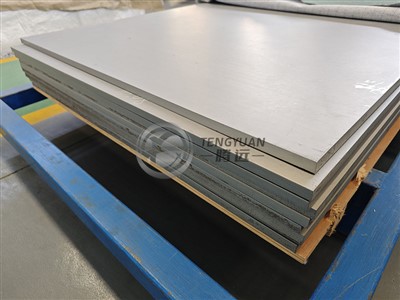
Hey there! As a supplier of GR5 Titanium Plates, I've been getting a lot of questions lately about how the joints in these plates can affect their overall performance. So, I thought I'd dive into this topic and share some insights with you all.


First off, let's talk a bit about GR5 Titanium Plates. These plates are super popular in a bunch of industries because of their amazing properties. They're strong, lightweight, and corrosion-resistant. That's why you'll find them in aerospace, medical, and even marine applications. You can check out more about GR5 Titanium Plates on our website.
Now, onto the joints. Joints are basically the connections between different pieces of the titanium plates. They play a crucial role in how well the plates perform as a whole. There are several types of joints that can be used with GR5 Titanium Plates, and each one has its own pros and cons.
One of the most common types of joints is the welded joint. Welding is a process where two pieces of metal are joined together by melting them at the joint. When it comes to GR5 Titanium Plates, welding can be a great option because it creates a strong and permanent bond. However, it's not without its challenges. Titanium is a reactive metal, which means it can easily react with oxygen, nitrogen, and hydrogen in the air when it's heated during the welding process. This can lead to the formation of brittle compounds, which can weaken the joint and reduce the overall performance of the plates.
To prevent these reactions, special welding techniques and shielding gases are used. For example, argon gas is often used to create a protective atmosphere around the weld area, preventing the titanium from reacting with the air. But even with these precautions, it's important to have skilled welders who know how to handle titanium properly. A poorly welded joint can lead to cracks, porosity, and other defects that can compromise the integrity of the plates.
Another type of joint is the bolted joint. This involves using bolts and nuts to hold two pieces of the plate together. Bolted joints are relatively easy to install and can be disassembled if needed, which makes them a popular choice in applications where maintenance or repair is required. However, they also have some limitations. The bolts themselves can add weight to the structure, which may be a concern in applications where weight is a critical factor, like aerospace. Additionally, the bolts need to be tightened to the correct torque to ensure a proper fit. If the bolts are not tightened enough, the joint may loosen over time, leading to vibrations and potential failure. On the other hand, if they're over-tightened, they can cause stress concentrations in the plate, which can also lead to cracking.
There's also the adhesive joint. Adhesive bonding involves using a special adhesive to join two pieces of the plate together. This method has some advantages, such as the ability to distribute stress evenly across the joint and the ability to bond dissimilar materials. Adhesive joints can also be more aesthetically pleasing because they don't require the use of visible bolts or welds. However, like welding, adhesive bonding also has its challenges. The strength of the adhesive joint depends on several factors, including the type of adhesive used, the surface preparation of the plates, and the curing conditions. If the adhesive is not applied correctly or if the plates are not properly prepared, the joint may not be strong enough, and it may fail under load.
So, how do these joints affect the overall performance of GR5 Titanium Plates? Well, the strength and integrity of the joint directly impact the strength and integrity of the entire structure. A weak joint can lead to premature failure of the plates, which can be dangerous and costly. For example, in an aerospace application, a failed joint in a GR5 Titanium Plate could lead to a catastrophic failure of the aircraft.
In addition to strength, the joints can also affect other performance characteristics of the plates, such as corrosion resistance. If the joint is not properly protected, it can be more susceptible to corrosion than the rest of the plate. This is especially true in environments where the plates are exposed to saltwater or other corrosive substances. For example, in a marine application, a poorly protected joint in a GR5 Titanium Plate could corrode over time, leading to a reduction in the plate's thickness and strength.
Another important aspect is the fatigue performance of the plates. Fatigue is the process by which a material fails under repeated loading. The joints in the GR5 Titanium Plates can be particularly vulnerable to fatigue because they often experience higher stress concentrations than the rest of the plate. A well-designed joint can help to reduce these stress concentrations and improve the fatigue life of the plates. For example, a smooth and rounded joint can distribute stress more evenly, reducing the likelihood of fatigue cracking.
When choosing a joint for GR5 Titanium Plates, it's important to consider the specific application and the requirements of the project. For example, in an application where high strength and a permanent bond are required, welding may be the best option. In an application where disassembly and maintenance are important, a bolted joint may be more suitable. And in an application where aesthetics and stress distribution are key, an adhesive joint may be the way to go.
We also offer GR12 Titanium Plates and GR12 Titanium Plates for Chemical Industry if you're interested in exploring other options. These plates have their own unique properties and applications, and the same principles of joint design and performance apply to them as well.
In conclusion, the joints in GR5 Titanium Plates play a vital role in determining their overall performance. Whether you choose a welded, bolted, or adhesive joint, it's important to understand the characteristics of each type of joint and how they can affect the strength, corrosion resistance, and fatigue life of the plates. By working with a knowledgeable supplier and using the right joint for your application, you can ensure that your GR5 Titanium Plates perform at their best.
If you're interested in purchasing GR5 Titanium Plates or have any questions about joint design and performance, feel free to reach out to us. We're here to help you find the best solution for your project.
References
- "Titanium: A Technical Guide" by J. R. Davis
- "Welding Metallurgy and Weldability of Titanium Alloys" by John C. Lippold and David J. Kotecki
- "Mechanical Design of Machine Elements and Machines: A Failure Prevention Perspective" by Jack A. Collins and George H. Busby