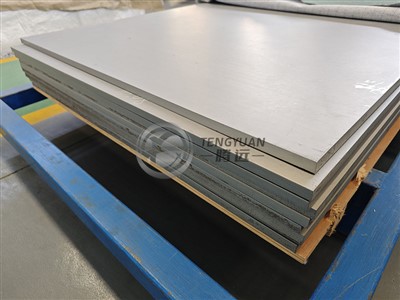
Hey there! As a supplier of GR12 Titanium Plates, I often get asked a bunch of questions about these plates, and one that pops up quite a bit is, "Can GR12 titanium plates be heat - treated?" Well, let's dig into this topic and find out.
First off, let's talk a bit about what GR12 titanium plates are. GR12 Titanium Plates are a type of titanium alloy plate. They're made up of a mix of titanium, molybdenum, and nickel, which gives them some pretty awesome properties. These plates are known for their good corrosion resistance, high strength - to - weight ratio, and excellent weldability. You can check out more about them on our website GR12 Titanium Plates. They're used in a wide range of industries, from aerospace to marine, and even in some chemical processing applications.
Now, onto the main question: can they be heat - treated? The short answer is yes, GR12 titanium plates can be heat - treated. Heat treatment is a process where you heat the metal to a specific temperature and then cool it at a controlled rate. This can change the microstructure of the metal, which in turn can affect its mechanical properties like strength, hardness, and ductility.
There are a few different types of heat treatments that can be applied to GR12 titanium plates. One common type is annealing. Annealing involves heating the plate to a relatively high temperature (usually around 700 - 800°C for GR12) and then slowly cooling it. This process helps to relieve internal stresses in the metal, making it more ductile and easier to work with. For example, if you're going to be machining the GR12 titanium plate later on, annealing can reduce the chances of cracking or warping during the machining process.
Another type of heat treatment is solution treating and aging. Solution treating is when you heat the plate to a high temperature (above the beta - transus temperature for GR12, which is around 910 - 950°C) and then rapidly cool it. This puts all the alloying elements into a solid solution. After that, you do the aging step, where you heat the plate to a lower temperature (around 500 - 600°C) for a certain period of time. This causes the alloying elements to precipitate out of the solid solution, forming small particles that strengthen the metal. This process can significantly increase the strength of the GR12 titanium plate, which is great for applications where high strength is required, like in aircraft components.
However, heat treating GR12 titanium plates isn't without its challenges. One of the main issues is the risk of oxidation. Titanium is very reactive with oxygen at high temperatures, so when you're heat - treating GR12 plates, you need to do it in a controlled environment, like a vacuum furnace or an inert gas atmosphere (usually argon). If oxidation occurs, it can form a brittle oxide layer on the surface of the plate, which can reduce its corrosion resistance and mechanical properties.
Also, the heat treatment process needs to be carefully controlled. If you heat the plate too much or cool it too quickly or slowly, you might not get the desired microstructure and mechanical properties. For example, if you cool the plate too rapidly during solution treating, you could end up with a very hard and brittle structure that's prone to cracking.
Let's compare GR12 titanium plates with another popular titanium alloy, GR5 Titanium Plates. GR5 Titanium Plates are also heat - treatable, but the heat treatment processes are a bit different. GR5 (Ti - 6Al - 4V) has a different alloy composition, and its heat treatment temperatures and times are adjusted accordingly. GR5 is known for its high strength and is often used in applications where weight savings are important, like in aircraft frames. In contrast, GR12 has better corrosion resistance, especially in environments with chloride ions, which makes it a great choice for marine applications.
In the marine industry, GR12 Titanium Plates for Ships are quite popular. The ability to heat - treat these plates is crucial in this industry. For example, in shipbuilding, the plates need to be strong enough to withstand the harsh marine environment, including the constant exposure to saltwater. Heat treatment can enhance the strength and corrosion resistance of the GR12 plates, making them more suitable for long - term use in ships.


When it comes to choosing the right heat treatment for your GR12 titanium plates, it really depends on your specific application. If you need a plate with high strength and hardness, solution treating and aging might be the way to go. But if you just need to relieve stresses and improve ductility, annealing could be sufficient. It's also important to work with a reputable heat - treating facility that has experience with titanium alloys. They'll have the equipment and expertise to ensure that the heat treatment is done correctly and that the desired properties are achieved.
As a supplier of GR12 Titanium Plates, I've seen firsthand how heat treatment can make a big difference in the performance of these plates. We work closely with our customers to understand their needs and can even recommend the best heat - treatment process for their specific applications. Whether you're in the aerospace industry looking for a high - strength component or in the marine industry needing corrosion - resistant plates, we can provide you with the right GR12 titanium plates and advice on heat treatment.
If you're interested in purchasing GR12 Titanium Plates or have any questions about heat treatment or other aspects of these plates, don't hesitate to reach out. We're here to help you find the best solution for your project. Whether you need a small quantity for a prototype or a large order for a full - scale production, we've got you covered.
In conclusion, GR12 titanium plates can definitely be heat - treated, and this process can offer a lot of benefits in terms of improving their mechanical properties. With the right heat treatment and proper handling, these plates can meet the demanding requirements of various industries. So, if you're in the market for GR12 Titanium Plates, consider the potential of heat treatment and how it can enhance the performance of your products.
References
- "Titanium: A Technical Guide" by John C. Williams
- Various industry standards and research papers on titanium alloy heat treatment.