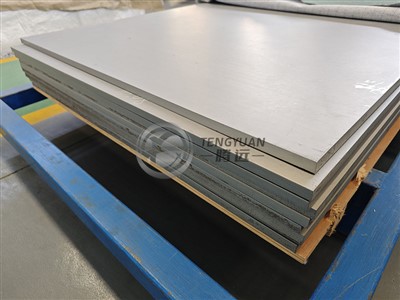
Hey there! As a supplier of GR12 Titanium Plates, I've gotten a ton of questions about the welding of these plates. So, I thought I'd sit down and write this blog to share some insights on whether there are any limitations in the welding of GR12 titanium plates.
First off, let's talk a bit about what GR12 Titanium Plates are. GR12 titanium is a titanium alloy that contains around 0.3% molybdenum and 0.8% nickel. This alloy offers a good combination of strength, ductility, and excellent corrosion resistance. It's widely used in various industries, such as chemical processing, marine, and aerospace. You can find more info about GR12 Titanium Plates on our website.
Now, onto the welding part. Welding GR12 titanium plates is possible, but it does come with some limitations and challenges. One of the major limitations is the high reactivity of titanium with oxygen, nitrogen, and hydrogen at elevated temperatures. When titanium is heated during the welding process, it can easily react with these elements in the air, forming brittle compounds on the weld surface. These compounds can significantly reduce the mechanical properties of the weld, such as its strength and ductility.
To overcome this issue, we need to use a shielding gas, usually argon, to protect the weld area from the surrounding air. The shielding gas creates a barrier between the hot titanium and the air, preventing the formation of these unwanted compounds. However, even with proper shielding, it's crucial to maintain a clean welding environment. Any contaminants, such as oil, grease, or dirt on the plate surface, can also cause problems during welding. They can react with the titanium and lead to porosity or cracking in the weld.
Another limitation is the heat-affected zone (HAZ). During welding, the area around the weld is heated to high temperatures, which can change the microstructure of the titanium. In GR12 titanium, the HAZ can become harder and more brittle compared to the base metal. This can affect the overall performance of the welded joint, especially in applications where ductility is important. To minimize the size and impact of the HAZ, we need to control the welding parameters carefully, such as the welding current, voltage, and travel speed.


The thickness of the GR12 titanium plates also plays a role in the welding process. Thicker plates require more heat input to achieve a proper weld, which can increase the risk of distortion and cracking. In addition, welding thick plates may require multiple passes, which can further complicate the process and increase the chances of defects. For very thick plates, preheating and post-weld heat treatment may be necessary to reduce the residual stresses and improve the mechanical properties of the weld.
The welding method used is also a factor. There are several welding methods available for titanium, such as gas tungsten arc welding (GTAW), gas metal arc welding (GMAW), and laser welding. Each method has its own advantages and limitations. For example, GTAW is a popular choice for welding GR12 titanium plates because it provides good control over the welding process and produces high-quality welds. However, it's a relatively slow process and may not be suitable for large-scale production. On the other hand, GMAW is faster but may require more skill to achieve good results, especially in terms of controlling the shielding gas and preventing spatter. Laser welding is a high-energy welding method that can produce very precise and high-quality welds, but it's also more expensive and requires specialized equipment.
In some cases, the joint design can also limit the welding of GR12 titanium plates. Certain joint designs, such as butt joints with large gaps or complex geometries, can be more difficult to weld compared to simple lap joints or fillet joints. The joint design needs to be carefully considered to ensure proper access for the welding torch and the shielding gas, as well as to minimize the risk of defects.
Despite these limitations, with proper techniques and precautions, we can achieve successful welds in GR12 titanium plates. It's important to follow the recommended welding procedures and use the right equipment and materials. For example, using high-quality shielding gas, clean welding electrodes, and proper welding parameters can make a big difference in the quality of the weld.
We also offer GR12 Titanium Plates for Corrosion Resistant applications. These plates are specifically designed to withstand harsh environments and are often used in chemical plants and marine structures. When welding these plates, the same limitations apply, but the need for a high-quality, corrosion-resistant weld is even more critical.
If you're in the market for GR12 Titanium Plates or have any questions about welding them, don't hesitate to reach out to us. We have a team of experts who can provide you with more detailed information and guidance. Whether you're a small business looking for a few plates or a large corporation in need of a bulk order, we can work with you to meet your requirements. And if you're also interested in GR5 Titanium Plates, we have those in stock too.
In conclusion, while there are limitations in the welding of GR12 titanium plates, these can be managed with the right approach. By understanding the challenges and taking appropriate measures, we can produce high-quality welded joints that meet the requirements of various applications. So, if you're considering using GR12 titanium plates in your project, don't let the welding limitations scare you off. We're here to help you every step of the way.
References
- ASM Handbook, Volume 6: Welding, Brazing, and Soldering
- Titanium: A Technical Guide, Second Edition by John C. Williams