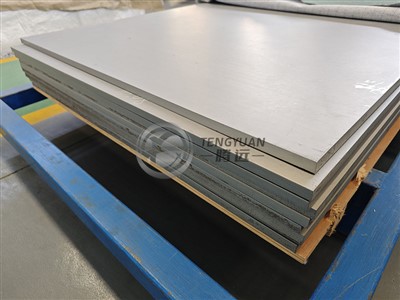
As a supplier of titanium alloy plates, I often encounter inquiries from customers about the thickness range of the titanium alloy plates available in the market. In this blog, I will share detailed information on this topic, drawing from my years of experience in the industry.
Titanium alloy plates are highly sought - after in various industries due to their excellent properties such as high strength - to - weight ratio, corrosion resistance, and good biocompatibility. The thickness range of these plates can vary significantly based on different manufacturing processes, application requirements, and industry standards.
Common Thickness Ranges
The thickness of titanium alloy plates in the market generally starts from as thin as 0.1mm. These ultra - thin titanium alloy plates are often used in applications where weight and space are critical factors, such as in the aerospace industry for components like aircraft skins and internal structural parts. For example, in the production of small unmanned aerial vehicles (UAVs), thin titanium alloy plates can reduce the overall weight of the aircraft while maintaining sufficient strength.
On the other end of the spectrum, the maximum thickness can reach up to 300mm or even more. Thick titanium alloy plates are commonly used in heavy - duty applications. In the shipbuilding industry, thick plates are used for the construction of ship hulls, especially for vessels operating in harsh marine environments. The high corrosion resistance of titanium alloy ensures the long - term durability of the ship. GR12 Titanium Plates for Ships are a prime example of such applications.
Thickness Ranges for Different Grades
Grade 1 and Grade 2 Titanium Alloys
These are the commercially pure titanium grades. They are known for their excellent formability and corrosion resistance. The thickness range for Grade 1 and Grade 2 titanium alloy plates typically spans from 0.5mm to 50mm. These plates are widely used in the chemical industry for manufacturing storage tanks, heat exchangers, and piping systems. For instance, GR12 Titanium Plates for Chemical Industry offer good resistance to a variety of chemical substances, making them suitable for these applications.
Grade 5 Titanium Alloy (Ti - 6Al - 4V)
Grade 5 is one of the most popular titanium alloys. It has high strength and is widely used in aerospace, medical, and automotive industries. The thickness of Grade 5 titanium alloy plates usually ranges from 1mm to 100mm. In the aerospace industry, it is used for making engine components, landing gear parts, and structural frames. In the medical field, it is used for manufacturing orthopedic implants due to its biocompatibility.
Grade 12 Titanium Alloy
Grade 12 titanium alloy combines good strength with excellent corrosion resistance. The thickness range for Grade 12 titanium alloy plates is quite broad, typically from 1mm to 200mm. It is used in a variety of applications, including those requiring corrosion - resistant components. GR12 Titanium Plates for Corrosion Resistant are commonly used in marine and chemical processing industries.
Factors Affecting Thickness Availability
Manufacturing Process
The manufacturing process has a significant impact on the available thickness of titanium alloy plates. For example, the rolling process is one of the most common methods for producing titanium alloy plates. In hot rolling, thicker plates can be produced more easily compared to cold rolling. Cold rolling is usually used for producing thinner plates with better surface finish and dimensional accuracy.
Market Demand
Market demand also plays a crucial role. If there is a high demand for a particular thickness range in a specific industry, manufacturers are more likely to produce plates within that range. For example, with the growth of the renewable energy industry, there has been an increased demand for thin titanium alloy plates for solar panel frames, leading to more production in the thinner thickness ranges.
Cost Considerations
Cost is another important factor. Producing extremely thin or thick plates can be more expensive due to the complexity of the manufacturing process and the higher material consumption. As a result, the availability of these extreme thicknesses may be limited in the market.
Selecting the Right Thickness
When selecting the appropriate thickness of titanium alloy plates, several factors need to be considered. First, the application requirements should be the top priority. For structural applications, the thickness should be sufficient to withstand the expected loads. In corrosion - resistant applications, the thickness may also be related to the expected service life and the severity of the corrosive environment.
Second, the mechanical properties of the titanium alloy should be taken into account. Thicker plates may have different mechanical properties compared to thinner ones, such as strength and ductility.
Finally, cost - effectiveness is also crucial. It is important to balance the performance requirements with the cost of the plates to ensure the best value for money.
Our Supply Capabilities
As a titanium alloy plate supplier, we are committed to providing a wide range of thickness options to meet the diverse needs of our customers. We have advanced manufacturing equipment and a professional technical team that can produce titanium alloy plates with thicknesses ranging from 0.5mm to 200mm. Whether you need thin plates for aerospace applications or thick plates for heavy - duty construction, we can offer high - quality products.
We understand that each customer's requirements are unique. That's why we also offer customized services. If you have specific thickness requirements that are not commonly available in the market, our team can work with you to develop a solution that meets your needs.


Contact Us for Procurement
If you are interested in purchasing titanium alloy plates or have any questions about the thickness range or other aspects of our products, please feel free to contact us. We are here to provide you with detailed information and professional advice. Our team is dedicated to helping you find the most suitable titanium alloy plates for your applications.
References
- Titanium: A Technical Guide, ASM International
- Titanium Alloys for Aerospace Applications, Elsevier
- Handbook of Titanium Science and Technology, Springer