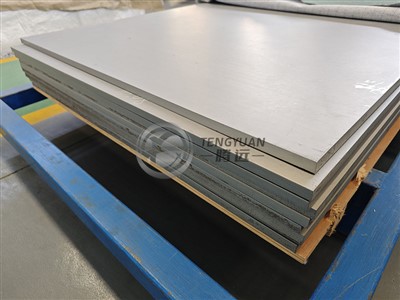
As a supplier of GR12 Titanium Plates, I often encounter inquiries about the technical aspects of these plates, one of the most common being the notch sensitivity. In this blog post, I will delve into what notch sensitivity means in the context of GR12 titanium plates, its influencing factors, and its practical implications in various applications.
Understanding Notch Sensitivity
Notch sensitivity refers to the degree to which the presence of a notch or a stress - concentration factor affects the mechanical properties of a material, particularly its fatigue strength and fracture toughness. When a material has high notch sensitivity, a small notch or crack can significantly reduce its ability to withstand cyclic loading or sudden impact. In the case of GR12 titanium plates, notch sensitivity is a crucial property as these plates are often used in applications where they may be subjected to stress concentrations due to design features, manufacturing processes, or in - service damage.
GR12 titanium is a duplex titanium alloy composed of approximately 0.3% Mo and 0.8% Ni, along with small amounts of other elements. This alloy offers a good combination of strength, corrosion resistance, and weldability, making it suitable for a wide range of applications, including the chemical industry, marine environments, and aerospace components. However, like all materials, GR12 titanium plates can be affected by notch sensitivity.
Factors Affecting Notch Sensitivity of GR12 Titanium Plates
Microstructure
The microstructure of GR12 titanium plates plays a vital role in determining their notch sensitivity. A fine - grained microstructure generally leads to lower notch sensitivity compared to a coarse - grained one. This is because fine grains can better distribute stress around a notch, reducing the stress concentration at the tip of the notch. Heat treatment processes such as annealing can be used to control the grain size and improve the overall mechanical properties of the plates, including their notch sensitivity.
Chemical Composition
The chemical composition of GR12 titanium also influences its notch sensitivity. The presence of alloying elements such as molybdenum and nickel helps to enhance the strength and corrosion resistance of the alloy. However, improper ratios or impurities in the chemical composition can increase notch sensitivity. For example, excessive amounts of certain elements may lead to the formation of brittle phases, which can exacerbate stress concentrations at notches and reduce the fatigue life of the plates.
Manufacturing Processes
The manufacturing processes used to produce GR12 titanium plates can also have a significant impact on their notch sensitivity. Processes such as rolling, forging, and machining can introduce residual stresses and surface irregularities, which can act as stress - concentration points. For instance, rough machining surfaces with high surface roughness can increase the notch sensitivity of the plates. Therefore, proper manufacturing techniques, including careful control of process parameters and post - processing treatments, are essential to minimize notch sensitivity.


Measuring Notch Sensitivity of GR12 Titanium Plates
There are several methods for measuring the notch sensitivity of GR12 titanium plates. One common approach is the notch - fatigue test, where specimens with notches of different geometries are subjected to cyclic loading until failure. The ratio of the fatigue strength of the notched specimen to that of the un - notched specimen is then calculated as the notch - sensitivity factor. Another method is the fracture - toughness test, which measures the ability of the material to resist crack propagation. High fracture toughness generally indicates lower notch sensitivity.
Practical Implications in Applications
Chemical Industry
In the chemical industry, GR12 titanium plates are widely used due to their excellent corrosion resistance. However, the presence of notches can compromise the integrity of the plates, especially in environments with aggressive chemicals. For example, in a chemical reactor, a small notch in a GR12 titanium plate can lead to stress - corrosion cracking, which can ultimately result in the failure of the reactor. Therefore, understanding and controlling the notch sensitivity of GR12 titanium plates is crucial for ensuring the long - term reliability of chemical - processing equipment. You can find more information about GR12 Titanium Plates for Chemical Industry.
Marine Applications
In marine environments, GR12 titanium plates are used in various components such as ship hulls, offshore platforms, and desalination plants. These plates are exposed to harsh conditions, including saltwater corrosion and cyclic loading from waves and tides. Notch sensitivity can significantly affect the fatigue life of these components, as notches can accelerate the initiation and propagation of cracks. By carefully considering the notch sensitivity of GR12 titanium plates during the design and manufacturing process, the risk of premature failure can be reduced.
Aerospace Components
In the aerospace industry, where weight and performance are critical, GR12 titanium plates are used in applications such as aircraft frames and engine components. The notch sensitivity of these plates can have a major impact on the safety and reliability of the aircraft. A high - notch - sensitivity material may require more conservative design approaches, such as larger safety factors, to ensure that the components can withstand the expected loads without failure.
Controlling Notch Sensitivity
To control the notch sensitivity of GR12 titanium plates, several strategies can be employed. As mentioned earlier, proper heat treatment can be used to optimize the microstructure and reduce notch sensitivity. Additionally, surface finishing techniques such as polishing can be applied to reduce surface roughness and minimize stress concentrations. During the design process, avoiding sharp corners and notches in the component geometry can also help to reduce the impact of notch sensitivity.
Conclusion
Notch sensitivity is an important property of GR12 titanium plates that can significantly affect their performance in various applications. By understanding the factors that influence notch sensitivity, measuring it accurately, and implementing appropriate control strategies, we can ensure that these plates meet the high - quality standards required in industries such as the chemical, marine, and aerospace sectors.
As a supplier of GR12 Titanium Plates, we are committed to providing high - quality products with controlled notch sensitivity. Our GR12 titanium plates offer excellent corrosion resistance, as described in our GR12 Titanium Plates for Corrosion Resistant product page. If you are interested in purchasing GR12 titanium plates for your specific application, we invite you to contact us for further discussion and to start the procurement process. We can provide detailed technical information and support to help you make the best choice for your project.
References
- ASM Handbook Volume 2: Properties and Selection: Nonferrous Alloys and Special - Purpose Materials.
- Titanium: A Technical Guide, Second Edition by David Eylon.
- Research papers on the mechanical properties of GR12 titanium alloy published in leading materials science journals.