

Hey there! As a supplier of GR2 Titanium Wire, I often get asked about the maximum temperature this amazing material can withstand. So, let's dive right into it and explore the ins and outs of GR2 Titanium Wire's heat resistance.
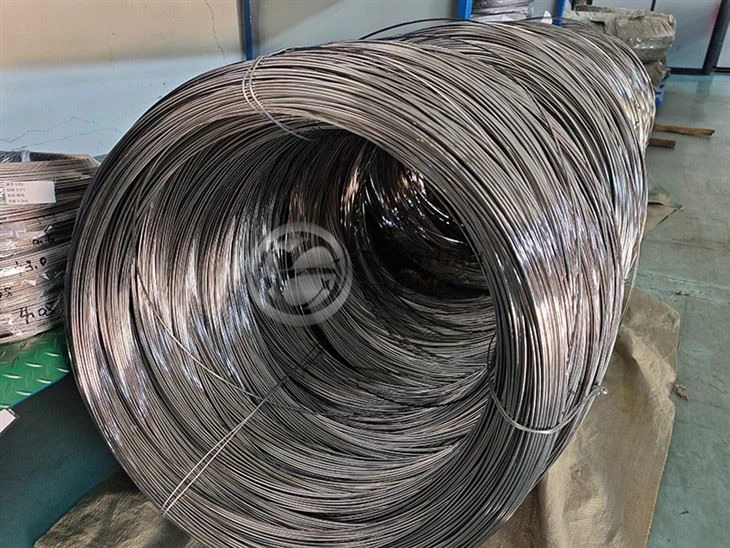
First off, let's quickly introduce what GR2 Titanium Wire is. It's a type of industrial pure titanium wire. Compared to GR1 Titanium Wire, GR2 has a slightly higher level of impurities, which gives it some unique properties. GR2 Titanium Wire is known for its excellent corrosion resistance, good formability, and relatively high strength - to - weight ratio. It's used in a wide range of industries, from aerospace to chemical processing, and even in some medical applications.
Now, back to the main question: what's the maximum temperature that GR2 Titanium Wire can handle? Well, the answer isn't as straightforward as you might think. GR2 Titanium Wire can generally withstand temperatures up to around 300 - 350°C (572 - 662°F) for long - term use. At these temperatures, it retains its mechanical properties quite well. The corrosion resistance remains high, and it doesn't experience significant deformation or loss of strength.
But if you push the temperature higher, things start to get a bit dicey. As the temperature approaches 400°C (752°F), the oxidation rate of GR2 Titanium Wire increases. Oxidation is a chemical reaction where the titanium reacts with oxygen in the air to form titanium dioxide. This oxide layer can protect the underlying metal to some extent, but if the temperature is too high or the exposure time is too long, the oxide layer can become thick and start to flake off. This can lead to a loss of material and a decrease in the wire's mechanical properties.
At temperatures above 500°C (932°F), the situation gets even more critical. The mechanical properties of GR2 Titanium Wire start to degrade rapidly. The strength and ductility of the wire decrease, making it more brittle and prone to cracking. In extreme cases, at very high temperatures (say, above 600°C or 1112°F), the wire can even start to melt.
It's important to note that these temperature limits also depend on other factors. For example, the presence of certain chemicals or gases in the environment can affect the wire's performance at high temperatures. If there are halogens (like chlorine or fluorine) present, they can react with the titanium at relatively low temperatures and accelerate the corrosion process.
Another factor is the duration of exposure. A short - term exposure to a high temperature might not cause as much damage as a long - term exposure. For instance, if the GR2 Titanium Wire is briefly exposed to a temperature of 450°C (842°F) during a manufacturing process, it might still be able to recover and maintain its properties. But if it's kept at that temperature for hours or days, the damage will be much more severe.
Now, let's talk about some of the applications where the temperature resistance of GR2 Titanium Wire matters. In the aerospace industry, GR2 Titanium Wire is used in various components, such as aircraft engines and airframe structures. These components can be exposed to high temperatures during flight, especially in areas close to the engine. The ability of the wire to withstand these temperatures is crucial for the safety and performance of the aircraft.
In the chemical processing industry, GR2 Titanium Wire is used in equipment like heat exchangers and reactors. These vessels often operate at high temperatures and are in contact with corrosive chemicals. The wire's ability to resist both high temperatures and corrosion makes it an ideal choice for these applications.
If you're in the market for GR2 Titanium Wire, you might also be interested in GR1 Titanium Welding Wire. GR1 Titanium Welding Wire has similar properties to GR2 but is often used for welding applications. It has a slightly lower impurity level, which can result in better weldability.
As a supplier, I understand that choosing the right material for your application is crucial. That's why I'm always here to help you make an informed decision. Whether you need to know more about the temperature limits of GR2 Titanium Wire or have questions about other properties, feel free to reach out.
If you're considering using GR2 Titanium Wire in your project, I encourage you to get in touch with me. We can discuss your specific requirements, such as the temperature range, the environment, and the mechanical properties you need. I can provide you with samples so you can test the wire in your own conditions. And of course, we can talk about pricing and delivery options.
So, if you're interested in purchasing GR2 Titanium Wire or have any questions about it, don't hesitate to contact me. Let's work together to find the best solution for your needs.
References:

- "Titanium: A Technical Guide" by John C. Williams
- Various industry reports on the properties of titanium alloys.


