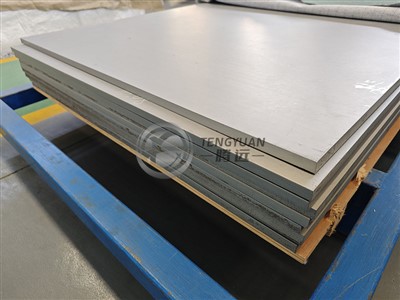
When it comes to high - performance materials in various industrial applications, titanium alloy rods stand out as a top choice. As a reliable titanium alloy rod supplier, I often get asked a wide range of questions about these remarkable products, and one of the most common inquiries is: "What is the boiling point of titanium alloy rod?" In this blog, I'll dive deep into this topic, exploring the factors that influence the boiling point of titanium alloy rods and their significance in different industries.


Understanding Titanium Alloys
Titanium alloys are mixtures of titanium with other chemical elements, which are designed to enhance specific properties such as strength, corrosion resistance, and heat resistance. These alloys are created by adding elements like aluminum, vanadium, molybdenum, and zirconium to pure titanium. The resulting alloys offer a unique combination of characteristics that make them suitable for a variety of demanding applications, from aerospace and automotive industries to medical and chemical sectors.
The Boiling Point of Titanium Alloy Rods
The boiling point of a titanium alloy rod is not a fixed value and can vary depending on several factors, primarily the composition of the alloy. Pure titanium has a boiling point of approximately 3287°C (5949°F). However, when titanium is alloyed with other elements, the boiling point can change due to the different physical and chemical properties of the added elements.
For example, in GR12 Titanium Rods for Chemical Industry, which are often used in chemical processing plants, the alloy contains elements like molybdenum and nickel in addition to titanium. These elements can affect the overall thermal properties of the rod, potentially altering its boiling point. Similarly, GR12 Titanium Rods for Corrosion Resistant are engineered to have excellent corrosion resistance, and the alloying elements used to achieve this can have an impact on the boiling point as well.
GR5 Titanium Rods are one of the most widely used titanium alloys, known for their high strength and good formability. This alloy contains aluminum and vanadium. The presence of these elements modifies the crystal structure of the titanium, which in turn affects its boiling point. Although the change in boiling point may not be extremely significant in most cases, it is an important factor to consider in applications where high - temperature performance is crucial.
Factors Affecting the Boiling Point of Titanium Alloy Rods
- Alloy Composition: As mentioned earlier, the elements added to titanium have different boiling points themselves. When they form a solid - solution alloy with titanium, they can either raise or lower the overall boiling point of the alloy. For example, elements with high boiling points like tungsten or molybdenum can increase the boiling point of the alloy, while elements with lower boiling points may have a slightly opposite effect.
- Impurities: Even small amounts of impurities in the titanium alloy rod can influence its boiling point. Impurities can disrupt the lattice structure of the alloy, affecting the energy required for the phase transition from liquid to vapor. Controlling the purity of the raw materials during the manufacturing process is thus crucial for achieving consistent boiling point properties.
- Crystal Structure: The crystal structure of the titanium alloy can also play a role. Different alloying elements can cause the titanium to form different crystal structures, such as alpha, beta, or alpha - beta. These structures have different atomic arrangements and bonding energies, which can impact the boiling point.
Significance of the Boiling Point in Industrial Applications
- Aerospace Industry: In aerospace applications, titanium alloy rods are used in engine components and structural parts. Understanding the boiling point is essential as these components are often exposed to extremely high temperatures during flight. Ensuring that the alloy can withstand these temperatures without reaching its boiling point is crucial for the safety and performance of the aircraft.
- Chemical Industry: Chemical processing plants use titanium alloy rods for various equipment, such as reactors and pipelines. These rod need to resist corrosion and high - temperature chemical reactions. Knowing the boiling point helps in selecting the appropriate alloy for the specific chemical processes and operating conditions.
- Medical Industry: Titanium alloy rods are used in medical implants, such as orthopedic implants. Although the operating temperatures in the human body are relatively low, during the manufacturing and sterilization processes, the rods may be exposed to high temperatures. The boiling point provides an indication of the upper - limit temperature that the alloy can tolerate without significant degradation.
Conclusion
In conclusion, the boiling point of a titanium alloy rod is a complex property that depends on multiple factors, including alloy composition, impurities, and crystal structure. As a titanium alloy rod supplier, I understand the importance of providing accurate information about these properties to our customers. Whether you are looking for GR12 Titanium Rods for Chemical Industry, GR12 Titanium Rods for Corrosion Resistant, or GR5 Titanium Rods, we have the expertise to assist you in choosing the right product for your specific application.
If you are interested in purchasing high - quality titanium alloy rods or have any questions about their properties and applications, please feel free to contact us for a detailed discussion. We look forward to working with you and helping you find the ideal solution for your needs.
References
- "Titanium and Titanium Alloys: Fundamentals and Applications" by Yuri Estrin.
- "Materials Science and Engineering: An Introduction" by William D. Callister, Jr. and David G. Rethwisch.