As a supplier of U-shaped titanium profiles, I've been deeply involved in understanding the various properties of these remarkable products. One aspect that often comes up in discussions with clients is the acoustic performance of U-shaped titanium profiles. In this blog, I'll delve into what the acoustic performance of U-shaped titanium profiles entails, how it is measured, and its practical applications.
Understanding Acoustic Performance
Acoustic performance refers to how a material behaves in relation to sound. It encompasses several key factors, including sound absorption, sound transmission loss, and sound reflection. When it comes to U-shaped titanium profiles, these factors play a crucial role in determining their suitability for different applications.

Sound Absorption
Sound absorption is the ability of a material to absorb sound energy rather than reflecting it. In the case of U-shaped titanium profiles, their sound absorption capabilities are influenced by their structure and surface characteristics. Titanium itself is a relatively dense material, which means it has some inherent ability to dampen sound waves. However, the U-shaped design can further enhance this property.
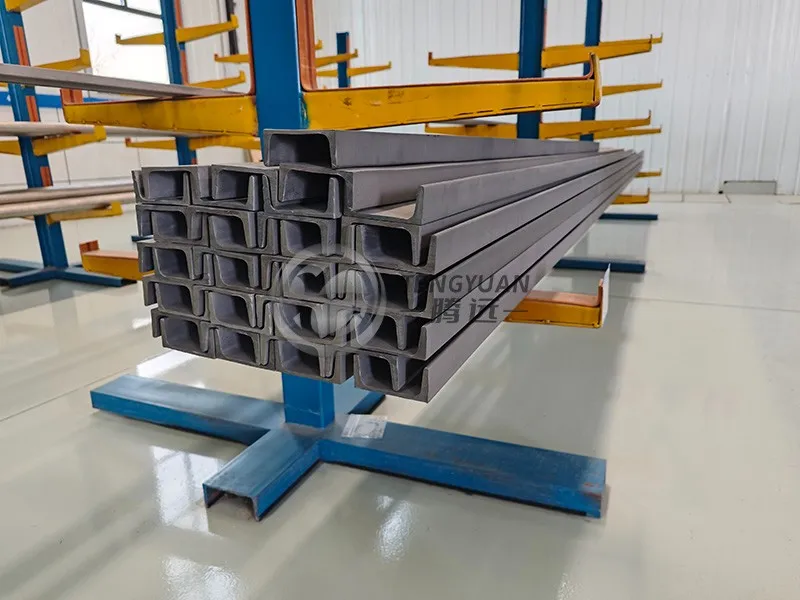
The U-shaped cross - section creates cavities and channels within the profile. These cavities can trap sound waves, causing them to bounce around and lose energy through friction and viscous effects. As a result, the sound is absorbed to a certain extent. The degree of sound absorption can be improved by adding sound - absorbing materials to the interior of the U - shaped profile. For example, porous materials like fiberglass or foam can be inserted, which significantly increase the overall sound absorption coefficient.
Sound Transmission Loss
Sound transmission loss measures the ability of a material to prevent sound from passing through it. U - shaped titanium profiles have good sound transmission loss characteristics due to the density of titanium. The high density of titanium acts as a barrier to sound waves, making it more difficult for sound to penetrate.
The thickness of the titanium also plays a role in sound transmission loss. Thicker U - shaped titanium profiles generally offer better sound insulation than thinner ones. Additionally, the way the profiles are installed can affect sound transmission. Proper sealing and installation techniques can minimize gaps and joints, further improving the sound transmission loss performance.
Sound Reflection
Sound reflection occurs when sound waves hit a surface and bounce back. Titanium has a relatively smooth surface, which can cause some sound reflection. However, the U - shaped design can disrupt the direct reflection of sound waves. Instead of reflecting sound in a single direction, the U - shape can scatter the sound waves, reducing the intensity of the reflected sound in any one area.
Measuring Acoustic Performance
To accurately assess the acoustic performance of U - shaped titanium profiles, several standardized testing methods are used.
Sound Absorption Coefficient Testing
The sound absorption coefficient is typically measured using the reverberation room method or the impedance tube method. In the reverberation room method, the U - shaped titanium profile sample is placed in a reverberation room, and the decay of sound in the room is measured with and without the sample. The difference in the decay rate is used to calculate the sound absorption coefficient.
The impedance tube method, on the other hand, is more suitable for small samples. A sound wave is sent through an impedance tube containing the sample, and the reflected and transmitted sound waves are measured. From these measurements, the sound absorption coefficient can be determined.
Sound Transmission Loss Testing
Sound transmission loss is measured using a sound transmission suite. The U - shaped titanium profile is installed between two rooms, and a sound source is placed in one room. The sound level is measured in both the source room and the receiving room. The difference in sound levels between the two rooms is the sound transmission loss.
Practical Applications
The acoustic performance of U - shaped titanium profiles makes them suitable for a variety of applications.
Industrial Applications
In industrial settings, noise reduction is often a critical requirement. U - shaped titanium profiles can be used in machinery enclosures to reduce the noise generated by equipment. Their corrosion - resistant properties, combined with good acoustic performance, make them ideal for use in harsh industrial environments. For example, in chemical plants, where there may be exposure to corrosive substances, U - shaped Titanium Profile for Chemical Industry can be used to create noise - reducing enclosures around pumps and compressors.
Architectural Applications
In architecture, U - shaped titanium profiles can be used in building facades and interior partitions. They can help to reduce the transmission of external noise into buildings, creating a more comfortable indoor environment. For example, in urban areas with high traffic noise, using U - shaped titanium profiles in the construction of building facades can significantly improve the acoustic comfort of the interior spaces. Additionally, in large public buildings such as concert halls and theaters, U - shaped titanium profiles can be used in combination with other sound - absorbing materials to achieve precise acoustic control.
Marine Applications
In the marine industry, noise reduction is important for the comfort of passengers and crew. U - shaped titanium profiles can be used in the construction of ship cabins and engine rooms. Their corrosion resistance makes them suitable for the harsh marine environment, while their acoustic performance helps to reduce the noise from engines and other equipment. U - shaped Titanium Profile for Corrosion Resistant is particularly well - suited for these applications.
Product Variations and Their Acoustic Performance
We offer different types of U - shaped titanium profiles, each with its own unique acoustic performance characteristics.
GR2 U - shaped Titanium Profile
Our GR2 U - shaped Titanium Profile is a popular choice. GR2 titanium is a commercially pure titanium with good corrosion resistance and mechanical properties. In terms of acoustic performance, the density of GR2 titanium provides a certain level of sound insulation. The U - shaped design of the GR2 profile further enhances its acoustic properties, making it suitable for a wide range of applications where both corrosion resistance and noise reduction are required.
Conclusion
The acoustic performance of U - shaped titanium profiles is a complex but important aspect of their functionality. Their ability to absorb, transmit, and reflect sound makes them suitable for various applications in industrial, architectural, and marine settings. As a supplier of U - shaped titanium profiles, we are committed to providing high - quality products with excellent acoustic performance.
If you are interested in learning more about our U - shaped titanium profiles or have specific acoustic requirements for your project, we encourage you to contact us for a detailed discussion. Our team of experts can help you select the most suitable profiles and provide guidance on installation and optimization for the best acoustic results.
References
- Harris, C. M. (2007). Handbook of Acoustical Engineering. McGraw - Hill.
- Beranek, L. L. (1986). Acoustics. American Institute of Physics.
- Craik, R. J. M. (2009). The Acoustics of Buildings. Spon Press.