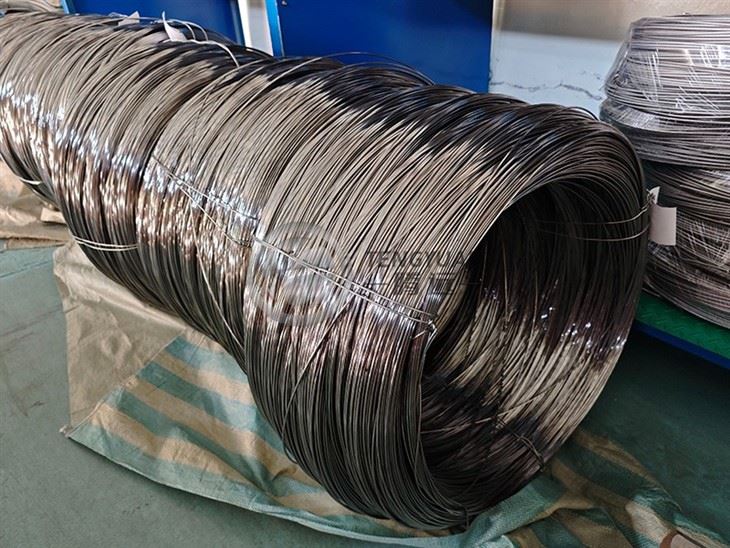
Hey there! As a supplier of GR2 Titanium Wire, I've had my fair share of chats with folks who are curious about the differences between GR2 Titanium Wire and other grades of titanium wire. So, I thought I'd put together this blog to break it all down for you.
First off, let's talk a bit about what titanium wire is in general. Titanium is an amazing metal. It's super strong, lightweight, and has excellent corrosion resistance. That's why it's used in a ton of different industries, from aerospace to medical, and even in jewelry.
Now, onto the star of the show - GR2 Titanium Wire. GR2 titanium is what we call an industrial pure titanium. It's got a high level of purity, with about 99% titanium. This purity gives it some really cool properties.
One of the big differences between GR2 Titanium Wire and other grades is its strength. GR2 is considered to have a medium strength among titanium grades. It's not as strong as some of the higher - grade titanium alloys, but it's still plenty strong for a lot of applications. For example, in the chemical processing industry, GR2 Titanium Wire can be used in equipment that needs to withstand corrosive chemicals. Its medium strength is enough to hold up the structure of the equipment, while its corrosion resistance keeps it from getting eaten away by the chemicals.

Let's compare it to GR1 Titanium Wire. GR1 is also an industrial pure titanium, but it's even more pure than GR2, with over 99.5% titanium. This extra purity makes GR1 a bit more ductile than GR2. Ductility means it can be stretched and bent more easily without breaking. So, if you're looking for a titanium wire that you can form into complex shapes, GR1 might be a better choice. But on the flip side, because it's so ductile, it's not as strong as GR2. So, if you need a wire that can handle a bit more stress, GR2 is the way to go.
Another grade that's often compared to GR2 is GR5 titanium. GR5 is a titanium alloy, which means it's made up of titanium and other elements, usually aluminum and vanadium. This alloying gives GR5 a much higher strength than GR2. In fact, GR5 is one of the most commonly used titanium alloys because of its high strength - to - weight ratio. It's often used in aerospace applications, like in the frames of airplanes. But with that high strength comes a higher cost. GR5 is more expensive to produce than GR2, so if cost is a big factor in your project, GR2 might be a more budget - friendly option.
When it comes to corrosion resistance, GR2 Titanium Wire is pretty top - notch. It can resist corrosion in a wide range of environments, including seawater, which is why it's used in marine applications. However, some of the higher - grade titanium alloys, like GR7, which has a small amount of palladium added to it, have even better corrosion resistance in certain environments. But again, the addition of palladium makes GR7 more expensive than GR2.
In terms of weldability, GR2 Titanium Wire is great. It can be easily welded using common welding methods, like TIG (Tungsten Inert Gas) welding. This is important because in many applications, you might need to join pieces of titanium wire together. GR1 also has good weldability, but some of the higher - grade alloys can be a bit trickier to weld. The added elements in the alloys can change the way the metal behaves during the welding process, so you might need more specialized welding techniques and equipment.
Now, let's talk about applications. As I mentioned earlier, GR2 Titanium Wire is used in a variety of industries. In the medical field, it can be used in dental implants. Its biocompatibility, which means it's not rejected by the human body, along with its medium strength and corrosion resistance, make it a great choice for this application. In the automotive industry, GR2 can be used in exhaust systems. The high temperatures and corrosive gases in the exhaust can be tough on materials, but GR2 can handle it.
On the other hand, GR1 Titanium Wire, because of its high ductility, is often used in jewelry making. Jewelers can easily shape it into rings, necklaces, and other pieces. And GR5, with its high strength, is used in high - performance applications like in the aerospace and military industries.
So, how do you choose between GR2 Titanium Wire and other grades? Well, it really depends on your specific needs. If you need a wire that's strong, corrosion - resistant, and easy to weld, and cost is a concern, GR2 is a great option. If you need a wire that can be easily formed into complex shapes, GR1 might be better. And if you need a wire with extremely high strength for a high - performance application, you might want to go with GR5.
If you're interested in learning more about GR2 Titanium Wire or are thinking about placing an order, I'd love to have a chat with you. Just reach out, and we can discuss your project in detail and figure out if GR2 is the right fit for you.
References:
- "Titanium: A Technical Guide" by John C. Williams
- Various industry reports on titanium materials and their applications.