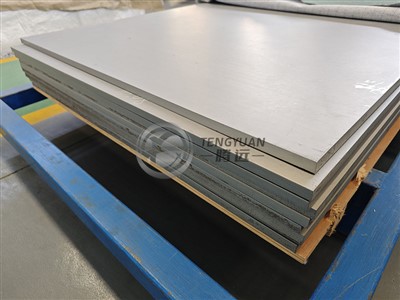
Hey there! I'm a supplier of GR5 Titanium Wire, and today I want to dive into the corrosion mechanisms of this amazing material in different environments. GR5 Titanium Wire, also known as Ti-6Al-4V, is a widely used titanium alloy due to its excellent strength-to-weight ratio, high corrosion resistance, and good weldability. But like any material, it's not immune to corrosion, and understanding how it behaves in various settings is crucial for making the most of its properties.
First off, let's talk about what corrosion is. In simple terms, corrosion is the deterioration of a material due to chemical reactions with its environment. For metals like GR5 Titanium Wire, this usually involves the oxidation of the metal surface, which can lead to a loss of material, a decrease in mechanical properties, and ultimately, failure of the component.
Corrosion in Aqueous Environments
One of the most common environments where GR5 Titanium Wire might be used is in contact with water. In pure water, titanium forms a passive oxide layer on its surface, which acts as a protective barrier against further corrosion. This oxide layer is incredibly thin, just a few nanometers thick, but it's very stable and adherent, making it highly resistant to most forms of corrosion.
However, things get a bit more complicated when the water contains other substances. For example, in the presence of chloride ions, such as in seawater, the passive oxide layer can be disrupted. Chloride ions can penetrate the oxide layer and react with the underlying titanium metal, leading to localized corrosion. This type of corrosion is known as pitting corrosion, where small holes or pits form on the surface of the wire. Pitting corrosion can be particularly problematic because it can cause rapid failure of the material, even in areas where the overall corrosion rate is low.
Another factor that can affect the corrosion of GR5 Titanium Wire in aqueous environments is the pH of the water. In acidic solutions, the passive oxide layer can dissolve, exposing the underlying metal to further corrosion. On the other hand, in alkaline solutions, the oxide layer can become more stable, providing better protection against corrosion.
Corrosion in High-Temperature Environments
GR5 Titanium Wire is also often used in high-temperature applications, such as in aerospace and automotive engines. At high temperatures, the corrosion mechanisms change significantly. One of the main issues in high-temperature environments is oxidation. As the temperature increases, the rate of oxidation of the titanium metal also increases, leading to the formation of a thicker oxide layer.
Initially, this thicker oxide layer can provide some protection against further oxidation. However, at very high temperatures, the oxide layer can become less adherent and start to spall off, exposing the underlying metal to further oxidation. This can lead to a rapid increase in the corrosion rate and a significant loss of material.
Another factor that can affect the corrosion of GR5 Titanium Wire in high-temperature environments is the presence of other gases. For example, in the presence of oxygen and nitrogen, titanium can form titanium nitride and titanium oxide compounds, which can have different properties than the pure titanium metal. These compounds can either enhance or degrade the corrosion resistance of the wire, depending on the specific conditions.
Corrosion in Chemical Environments
GR5 Titanium Wire is often used in chemical processing industries, where it may be exposed to a wide range of chemicals. The corrosion behavior of the wire in these environments depends on the specific chemical species present.
In general, GR5 Titanium Wire is highly resistant to many acids and alkalis. However, there are some chemicals that can cause significant corrosion. For example, hydrofluoric acid is extremely corrosive to titanium, as it can dissolve the passive oxide layer and react directly with the underlying metal. Other chemicals, such as concentrated sulfuric acid and hydrochloric acid, can also cause corrosion, especially at high temperatures and concentrations.
On the other hand, GR5 Titanium Wire is very resistant to many organic chemicals, such as alcohols, ketones, and esters. This makes it a popular choice for applications in the pharmaceutical and food processing industries.
How to Mitigate Corrosion
So, what can we do to mitigate the corrosion of GR5 Titanium Wire in different environments? One of the most effective ways is to choose the right alloy composition. For example, adding small amounts of other elements, such as palladium or ruthenium, can improve the corrosion resistance of the wire in certain environments.
Another approach is to use coatings or surface treatments. For example, applying a protective coating, such as a ceramic or polymer coating, can provide an additional barrier against corrosion. Surface treatments, such as passivation or anodizing, can also improve the corrosion resistance of the wire by enhancing the stability of the passive oxide layer.
Finally, proper design and maintenance are also crucial for preventing corrosion. For example, avoiding crevices and stagnant areas in the design of the component can reduce the risk of localized corrosion. Regular inspection and maintenance can also help to detect and address any corrosion issues before they become serious.


Conclusion
In conclusion, the corrosion mechanisms of GR5 Titanium Wire in different environments are complex and depend on a variety of factors, including the composition of the environment, the temperature, and the presence of other substances. Understanding these mechanisms is essential for selecting the right material and taking appropriate measures to prevent corrosion.
As a supplier of GR5 Titanium Wire, I'm always happy to help my customers choose the right product for their specific applications. If you're interested in learning more about GR5 Titanium Wire or have any questions about its corrosion resistance, please don't hesitate to contact me for a purchase negotiation. We also offer other high-quality titanium products, such as GR12 Titanium Welding Wire and GR12 Titanium Wire. You can find more information about our GR5 Titanium Wire on our website.
References
- Jones, D. A. (1996). Principles and Prevention of Corrosion. Prentice Hall.
- Uhlig, H. H., & Revie, R. W. (1985). Corrosion and Corrosion Control: An Introduction to Corrosion Science and Engineering. Wiley.
-ASM Handbook, Volume 13A: Corrosion: Fundamentals, Testing, and Protection. ASM International.