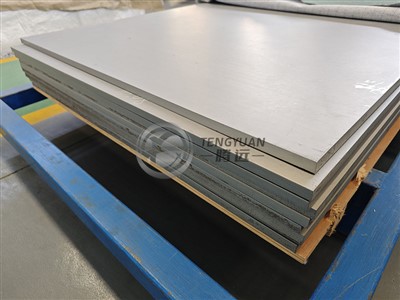
Titanium alloy plates are widely recognized for their excellent strength-to-weight ratio, high melting point, and good corrosion resistance. However, in harsh environments such as those with high humidity, strong acids, or alkalis, the corrosion resistance of titanium alloy plates may face challenges. As a trusted titanium alloy plates supplier, I'd like to share some effective strategies to enhance the corrosion resistance of titanium alloy plates in these tough conditions.
Understanding the Corrosion Mechanisms of Titanium Alloy Plates
Before delving into the improvement methods, it's crucial to understand how titanium alloy plates corrode in harsh environments. Titanium forms a passive oxide layer on its surface under normal conditions, which provides a certain degree of protection against corrosion. But in some aggressive environments, this passive layer can be damaged.
For instance, in acidic solutions containing chloride ions, the chloride ions can penetrate the passive layer and react with the titanium substrate, leading to pitting corrosion. In alkaline environments, the hydroxide ions can also react with the titanium, causing general corrosion. High temperatures and high humidity can accelerate these corrosion processes by increasing the activity of the corrosive agents and promoting the diffusion of ions through the passive layer.
Surface Treatment Methods
Anodizing
Anodizing is a popular surface treatment method that can significantly improve the corrosion resistance of titanium alloy plates. During anodizing, the titanium alloy plate is made the anode in an electrolytic cell. By applying an electric current, a thicker and more stable oxide layer is formed on the surface of the plate.
The anodized oxide layer has a dense structure that acts as a better barrier against corrosive agents compared to the natural passive layer. The thickness and properties of the anodized layer can be controlled by adjusting the anodizing parameters such as the electrolyte composition, current density, and anodizing time. For example, anodizing in a sulfuric acid electrolyte can produce a relatively thick and porous oxide layer, which can be further sealed to enhance its corrosion resistance.


Chemical Conversion Coating
Chemical conversion coating involves treating the titanium alloy plate with a chemical solution to form a protective coating on its surface. One common type of chemical conversion coating for titanium is the chromate conversion coating. Chromate coatings can provide good corrosion protection by forming a thin layer of chromium compounds on the surface of the plate.
However, due to the environmental concerns associated with hexavalent chromium, alternative conversion coatings such as phosphate - based or rare - earth - based conversion coatings are being developed. These alternative coatings can also offer effective corrosion protection and are more environmentally friendly.
Alloying Elements
Adding specific alloying elements to titanium can enhance its corrosion resistance. For example, molybdenum (Mo) and nickel (Ni) are often added to titanium alloys. Molybdenum can improve the stability of the passive layer in acidic environments, especially in solutions containing chloride ions. It helps to prevent pitting corrosion by inhibiting the penetration of chloride ions through the passive layer.
Nickel can enhance the overall corrosion resistance of titanium alloys by improving their resistance to oxidation and reducing the tendency for crevice corrosion. GR12 Titanium Plates, which contain small amounts of molybdenum and nickel, are known for their good corrosion resistance in various environments. You can learn more about them here: GR12 Titanium Plates for Corrosion Resistant.
Design and Installation Considerations
Avoiding Crevice Corrosion
Crevice corrosion can occur when there are narrow gaps or crevices in the titanium alloy plate installation. To prevent this, proper design and installation techniques should be used. For example, when joining titanium alloy plates, ensure that the joints are properly sealed to prevent the accumulation of corrosive agents in the crevices.
Using gaskets made of compatible materials can also help to prevent crevice corrosion. Additionally, avoid using materials that can cause galvanic corrosion when in contact with titanium alloy plates. For example, if titanium alloy plates are in contact with a more active metal, a galvanic cell can be formed, which can accelerate the corrosion of the titanium alloy.
Proper Ventilation and Drainage
In high - humidity environments, proper ventilation and drainage are essential to reduce the moisture content on the surface of the titanium alloy plates. Good ventilation can help to remove the humid air and prevent the formation of a water film on the plate surface. Drainage systems should be designed to quickly remove any accumulated water to avoid long - term contact between the plate and water, which can promote corrosion.
Selection of the Right Titanium Alloy Grade
Different titanium alloy grades have different corrosion resistance properties. For harsh environments, it's important to select the appropriate grade of titanium alloy plate. GR5 Titanium Plates, also known as Ti - 6Al - 4V, are widely used in aerospace and marine applications due to their high strength and good corrosion resistance. They can withstand a wide range of corrosive environments, including seawater.
GR12 Titanium Plates, as mentioned earlier, are also a good choice for corrosion - resistant applications. They have better corrosion resistance in some acidic and reducing environments compared to pure titanium. You can find more information about GR12 Titanium Plates here: GR12 Titanium Plates and GR5 Titanium Plates.
Maintenance and Monitoring
Regular Inspection
Regular inspection of the titanium alloy plates is crucial to detect any signs of corrosion at an early stage. Visual inspection can be used to check for surface discoloration, pitting, or cracking. Non - destructive testing methods such as ultrasonic testing and eddy current testing can be used to detect internal defects and corrosion that may not be visible to the naked eye.
Cleaning and Maintenance
Cleaning the titanium alloy plates regularly can help to remove any dirt, debris, or corrosive substances that may have accumulated on the surface. Use mild cleaning agents and soft brushes to avoid scratching the surface of the plate. If any signs of corrosion are detected, appropriate measures such as surface repair or re - treatment should be taken immediately to prevent further corrosion.
Conclusion
Improving the corrosion resistance of titanium alloy plates in harsh environments requires a comprehensive approach that includes surface treatment, proper design and installation, selection of the right alloy grade, and regular maintenance. By following these strategies, the service life of titanium alloy plates can be significantly extended, and their performance in harsh environments can be ensured.
If you are in need of high - quality titanium alloy plates with excellent corrosion resistance, we are here to help. Our company offers a wide range of titanium alloy plates, including GR5 and GR12 Titanium Plates, which are suitable for various harsh environments. Contact us for more information and to discuss your specific requirements for procurement.
References
- Fontana, M. G., & Greene, N. D. (1967). Corrosion Engineering. McGraw - Hill.
- Schütze, M., & Völkl, A. (2003). Titanium and Titanium Alloys: Fundamentals and Applications. Wiley - VCH.
- ASM Handbook Committee. (2000). ASM Handbook Volume 13A: Corrosion: Fundamentals, Testing, and Protection. ASM International.