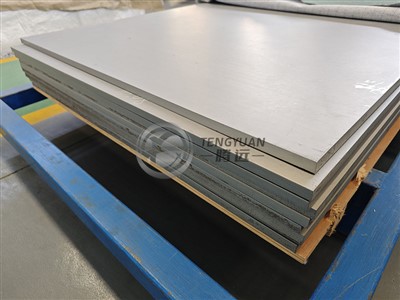
As a supplier of titanium alloy plates, I've witnessed firsthand the importance of coating adhesion on these high - performance materials. Titanium alloy plates, such as GR12 Titanium Plates, are widely used in various industries due to their excellent strength - to - weight ratio, corrosion resistance, and biocompatibility. However, achieving strong adhesion of coatings on titanium alloy plates can be a challenging task. In this blog, I'll share some effective strategies to improve the adhesion of coatings on titanium alloy plates.
Surface Preparation
The first and most crucial step in enhancing coating adhesion is proper surface preparation. Titanium alloy surfaces often have a thin oxide layer, which can affect the bonding between the coating and the substrate. Here are several common surface preparation methods:
Mechanical Cleaning
Mechanical cleaning methods, such as sandblasting or grinding, can remove contaminants, oxides, and surface irregularities from the titanium alloy plates. Sandblasting uses abrasive particles to roughen the surface, increasing the surface area available for coating adhesion. The choice of abrasive material, particle size, and blasting pressure should be carefully considered to avoid damaging the substrate. For example, using a fine - grained abrasive like aluminum oxide can create a uniform surface roughness without causing excessive pitting.
Chemical Cleaning
Chemical cleaning is used to remove organic contaminants, oils, and loose oxides from the surface. Solvents such as acetone or isopropyl alcohol can be used to degrease the surface. After degreasing, pickling solutions can be employed to remove the oxide layer. A common pickling solution for titanium alloys is a mixture of hydrofluoric acid and nitric acid. However, this process must be carefully controlled to prevent over - etching, which can weaken the substrate.
Anodizing
Anodizing is an electrochemical process that forms a controlled oxide layer on the titanium alloy surface. This oxide layer can improve the adhesion of subsequent coatings by providing a more chemically reactive and porous surface. The anodizing process involves immersing the titanium alloy plate in an electrolyte solution and applying an electric current. The composition of the electrolyte, current density, and anodizing time can be adjusted to control the thickness and properties of the oxide layer.
Coating Selection
Choosing the right coating material is essential for achieving good adhesion on titanium alloy plates. Different coatings have different chemical and physical properties, which can affect their compatibility with the titanium alloy substrate.
Epoxy Coatings
Epoxy coatings are widely used for their excellent adhesion, chemical resistance, and mechanical properties. They can form strong bonds with the titanium alloy surface through chemical reactions between the epoxy resin and the surface oxides. Epoxy coatings can be formulated with different curing agents and additives to optimize their performance for specific applications. For example, GR12 Titanium Plates for Chemical Industry often require coatings with high chemical resistance, and epoxy coatings can be tailored to meet these requirements.
Polyurethane Coatings
Polyurethane coatings offer good flexibility, abrasion resistance, and weatherability. They can be applied to titanium alloy plates to provide protection against environmental factors such as UV radiation, moisture, and mechanical wear. Polyurethane coatings can be either solvent - based or water - based, and the choice depends on the specific application and environmental regulations.
Ceramic Coatings
Ceramic coatings provide excellent high - temperature resistance, corrosion resistance, and hardness. They can be applied to titanium alloy plates using techniques such as thermal spraying or chemical vapor deposition. Ceramic coatings form a strong mechanical bond with the substrate through interlocking and diffusion processes. For GR12 Titanium Plates for Corrosion Resistant, ceramic coatings can offer enhanced protection in harsh corrosive environments.
Coating Application
The coating application process also plays a significant role in determining the adhesion of the coating on titanium alloy plates.
Spray Coating
Spray coating is a common method for applying coatings to titanium alloy plates. It allows for uniform distribution of the coating material over a large surface area. The spray parameters, such as spray distance, spray angle, and spray pressure, should be carefully controlled to ensure proper atomization and deposition of the coating. In addition, the environmental conditions during spray coating, such as temperature and humidity, can affect the coating quality and adhesion.
Dip Coating
Dip coating involves immersing the titanium alloy plate in a coating bath. This method is suitable for coating complex - shaped parts and can provide a uniform coating thickness. However, the viscosity of the coating material and the dipping speed need to be optimized to avoid issues such as dripping and uneven coating thickness.
Electrostatic Coating
Electrostatic coating uses an electrostatic charge to attract the coating particles to the titanium alloy surface. This method can improve the coating transfer efficiency and adhesion. The electrostatic charge can be applied to either the coating particles or the substrate, depending on the coating material and application requirements.
Post - Treatment
After the coating is applied, post - treatment processes can be used to further improve the adhesion and performance of the coating.


Curing
Curing is a process of hardening the coating by applying heat or radiation. For thermosetting coatings such as epoxy and polyurethane, proper curing is essential for achieving the desired mechanical properties and adhesion. The curing temperature and time should be carefully controlled according to the coating manufacturer's recommendations.
Aging
Aging the coated titanium alloy plates in a controlled environment can allow the coating to fully develop its properties and improve its adhesion over time. This process can involve exposing the coated plates to elevated temperatures, humidity, or specific chemical environments.
Quality Control
Quality control is an important aspect of ensuring good coating adhesion on titanium alloy plates. Non - destructive testing methods, such as pull - off adhesion testing, can be used to measure the adhesion strength of the coating. This test involves attaching a dollop to the coating surface and applying a tensile force until the coating detaches from the substrate. Other testing methods, such as visual inspection, cross - cut testing, and salt spray testing, can also be used to evaluate the coating quality and adhesion.
In conclusion, improving the adhesion of coatings on titanium alloy plates requires a comprehensive approach that includes proper surface preparation, appropriate coating selection, correct coating application, and effective post - treatment. By following these strategies, we can ensure that the coatings on our titanium alloy plates, such as GR12 Titanium Plates, provide long - lasting protection and performance.
If you are interested in our titanium alloy plates and would like to discuss coating solutions for your specific application, please feel free to contact us for further information and procurement negotiations.
References
- "Surface Engineering for Corrosion and Wear Resistance" by M. P. Brady and B. D. Craig.
- "Coatings Technology Handbook" edited by P. K. T. Oldring.
- "Titanium: A Technical Guide" by J. R. Davis.