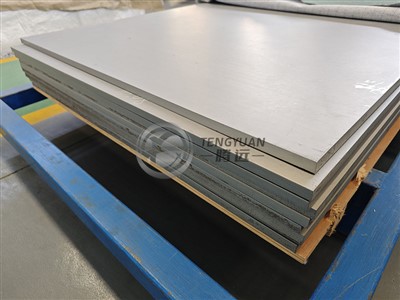
As a supplier of GR5 titanium rods, I know how crucial it is to ensure top - notch quality control during production. GR5 titanium rods, also known as Ti - 6Al - 4V, are widely used in various industries like aerospace, medical, and automotive due to their high strength, low density, and excellent corrosion resistance. If you're curious about "GR5 Titanium Rods", you can check this out GR5 Titanium Rods.
Raw Material Inspection
The quality control process starts right at the source - the raw materials. We always work with reliable suppliers who can provide high - grade titanium sponge and alloying elements. Before accepting any batch of raw materials, we conduct a series of strict inspections.
Firstly, we analyze the chemical composition of the materials. We use advanced X - ray fluorescence (XRF) spectrometers to quickly and accurately determine the content of various elements such as aluminum (Al), vanadium (V), iron (Fe), carbon (C), and nitrogen (N). For GR5 titanium rods, the aluminum content should be around 5.5% - 6.75%, and the vanadium content should be 3.5% - 4.5%. Any deviation from these specifications can greatly affect the performance of the final product.
We also check the physical properties of the raw materials. The density, particle size, and purity of the titanium sponge can all influence the quality of the rods. For example, if the particle size is too large, it may lead to inhomogeneous melting during the smelting process.
Melting and Casting
Once the raw materials pass the inspection, we move on to the melting and casting stage. The melting process is carried out in a vacuum arc remelting (VAR) furnace. This method helps to remove impurities and ensure a uniform chemical composition throughout the ingot.
During the VAR process, we closely monitor several key parameters. The vacuum level in the furnace is extremely important. A high - quality vacuum can prevent oxidation and the formation of unwanted compounds. We aim to maintain a vacuum level of at least 10⁻³ Pa.
The current and voltage applied during melting also need to be carefully controlled. Too high a current can cause over - heating and evaporation of some elements, while too low a current may result in incomplete melting. We use automated control systems to adjust these parameters in real - time based on the feedback from sensors.
After melting, the molten titanium is cast into ingots. The casting speed and temperature are critical factors. A proper casting speed ensures that the ingot has a fine - grained structure, which is beneficial for the mechanical properties of the subsequent rods. The temperature should be high enough to keep the titanium in a molten state but not too high to cause excessive shrinkage or cracking during solidification.
Forging and Rolling
The next step is forging and rolling the ingots into rods. Forging is a process that uses compressive forces to shape the metal and improve its mechanical properties. We start with a high - temperature forging process, usually at around 900 - 1000°C. This helps to break down the large grains in the ingot and refine the microstructure.
During forging, we pay close attention to the forging ratio, which is the ratio of the initial cross - sectional area to the final cross - sectional area. A proper forging ratio can enhance the strength and toughness of the rod. After forging, the rods are then rolled to achieve the desired diameter and surface finish.
Rolling is a continuous process that further refines the grain structure and improves the dimensional accuracy of the rods. We control the rolling speed, feed rate, and roll gap carefully to ensure consistent quality. Any errors in these parameters can lead to variations in diameter, surface roughness, or internal stress in the rods.
Heat Treatment
Heat treatment is a crucial step to optimize the mechanical properties of GR5 titanium rods. There are several heat treatment processes, including annealing, solution treatment, and aging.
Annealing is mainly used to relieve internal stresses and improve the ductility of the rods. We heat the rods to a specific temperature, usually around 700 - 800°C, and hold them at that temperature for a certain period of time, followed by slow cooling. This process helps to reduce the hardness and make the rods easier to machine.
Solution treatment involves heating the rods to a higher temperature, typically around 950 - 980°C, and then quenching them rapidly. This process dissolves the alloying elements in the titanium matrix and forms a supersaturated solid solution.
Subsequent aging treatment is carried out at a lower temperature, around 500 - 600°C, to precipitate fine particles of the alloying elements. These precipitates strengthen the alloy and improve its strength and hardness.
During the heat treatment process, we use temperature - controlled furnaces and precise time - control systems. We also monitor the atmosphere inside the furnaces to prevent oxidation. For example, we may use an inert gas such as argon to create a protective environment.
Quality Testing
After all the production steps, we conduct a comprehensive set of quality tests on the finished GR5 titanium rods.
One of the most important tests is the mechanical property test. We use a universal testing machine to measure the tensile strength, yield strength, and elongation of the rods. The tensile strength of GR5 titanium rods should typically be above 900 MPa, and the elongation should be around 10% - 15%. These values ensure that the rods can withstand the stresses and strains in their intended applications.
We also perform hardness testing using a hardness tester. Hardness is an important indicator of the material's wear resistance and machinability. By measuring the hardness at different locations on the rod, we can ensure the uniformity of the material.
Non - destructive testing (NDT) methods are also employed to detect any internal defects in the rods. Ultrasonic testing (UT) is commonly used to detect cracks, porosity, and other discontinuities inside the rod. Eddy - current testing (ET) is another method that can detect surface and near - surface defects.
In addition to these tests, we also check the surface quality of the rods. Any scratches, pits, or surface roughness that exceeds the specified limits can have a negative impact on the performance of the rods. We use optical inspection systems and surface profilometers to ensure the surface quality meets the requirements.


Documentation and Traceability
Throughout the production process, we maintain detailed documentation. Every batch of raw materials, production parameters during each stage, and test results are recorded. This documentation not only helps us to ensure the quality control of the current production but also provides traceability in case of any quality issues in the future.
If a customer reports a quality problem, we can quickly refer to the documentation to identify the source of the problem, whether it's from the raw materials, a specific production step, or a testing error. This traceability is very important for building trust with our customers.
Other Titanium Products We Offer
If you're also interested in other types of titanium rods, we also supply GR12 Titanium Rods for Corrosion Resistant and GR12 Titanium Rods for Chemical Industry. These GR12 titanium rods have their own unique properties and are suitable for different applications, especially in environments where corrosion resistance is crucial.
Finally, Let's Talk Business!
Ensuring the quality control of GR5 titanium rods is a complex and continuous process that requires strict management at every stage. Whether you're in the aerospace, medical, or automotive industry, if you're looking for high - quality GR5 titanium rods, we're here to help. We're more than happy to discuss your specific requirements and provide you with the best solutions. Just reach out to us for a procurement discussion, and let's work together to make your projects a success!
References
- "Titanium: A Technical Guide" by David Eylon
- "Materials Science and Engineering: An Introduction" by William D. Callister Jr. and David G. Rethwisch