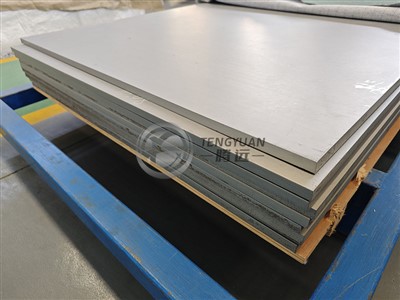
As a supplier of GR5 titanium plates, I've witnessed firsthand the remarkable properties and widespread applications of this material. GR5 titanium, also known as Ti-6Al-4V, is a versatile and high-performance titanium alloy renowned for its excellent strength-to-weight ratio, corrosion resistance, and biocompatibility. These attributes make it a popular choice in various industries, including aerospace, medical, automotive, and marine.
However, one critical factor that can significantly influence the performance and integrity of GR5 titanium plates is impact. In this blog post, I'll delve into how impact affects the integrity of GR5 titanium plates, exploring the mechanisms involved, the potential consequences, and the measures we can take to mitigate these effects.
Understanding the Impact Resistance of GR5 Titanium Plates
Before we discuss how impact affects the integrity of GR5 titanium plates, it's essential to understand their inherent impact resistance. GR5 titanium is known for its good toughness, which is the ability of a material to absorb energy and deform plastically before fracturing. This toughness is due to its unique microstructure, which consists of a combination of alpha and beta phases. The alpha phase provides strength and hardness, while the beta phase enhances ductility and toughness.
The impact resistance of GR5 titanium plates is typically evaluated using the Charpy V-notch test, which measures the energy absorbed by a notched specimen when struck by a pendulum. The higher the energy absorbed, the greater the impact resistance of the material. GR5 titanium plates generally exhibit good impact resistance at room temperature, but their performance can be affected by several factors, including temperature, strain rate, and the presence of defects.
Mechanisms of Impact Damage in GR5 Titanium Plates
When a GR5 titanium plate is subjected to an impact, several mechanisms can occur, leading to damage and a reduction in its integrity. These mechanisms include:
Plastic Deformation
The initial response of a GR5 titanium plate to an impact is plastic deformation, which is the permanent change in shape of the material without fracturing. Plastic deformation occurs when the applied stress exceeds the yield strength of the material. During plastic deformation, the dislocations in the material's crystal structure move and interact, causing the material to deform. The amount of plastic deformation depends on the magnitude of the impact energy and the mechanical properties of the material.
Crack Initiation and Propagation
If the impact energy is high enough, cracks can initiate and propagate in the GR5 titanium plate. Crack initiation typically occurs at stress concentrations, such as notches, holes, or defects in the material. Once a crack is initiated, it can propagate through the material under the influence of the applied stress. The propagation of cracks can be either stable or unstable, depending on the material's fracture toughness and the applied stress.
Fracture
If the crack propagation becomes unstable, the GR5 titanium plate can fracture. Fracture can occur in two main modes: ductile fracture and brittle fracture. Ductile fracture is characterized by significant plastic deformation before fracture, while brittle fracture occurs with little or no plastic deformation. The mode of fracture depends on several factors, including the material's microstructure, temperature, and strain rate.
Consequences of Impact Damage in GR5 Titanium Plates
The impact damage in GR5 titanium plates can have several consequences, including:
Reduced Mechanical Properties
Impact damage can reduce the mechanical properties of GR5 titanium plates, such as strength, ductility, and toughness. This reduction in mechanical properties can compromise the performance and reliability of the plates in service. For example, a plate with reduced strength may not be able to withstand the design loads, leading to structural failure.


Leakage and Corrosion
If the impact damage results in cracks or holes in the GR5 titanium plate, it can lead to leakage of fluids or gases. This leakage can cause corrosion of the plate and other components in the system, further reducing their integrity and performance. Corrosion can also weaken the plate over time, increasing the risk of failure.
Safety Risks
In some applications, such as aerospace and medical, the failure of a GR5 titanium plate due to impact damage can pose significant safety risks. For example, in an aircraft, a damaged plate could lead to structural failure, resulting in a catastrophic accident. In a medical implant, a damaged plate could cause pain, infection, or other complications for the patient.
Factors Affecting the Impact Resistance of GR5 Titanium Plates
Several factors can affect the impact resistance of GR5 titanium plates, including:
Temperature
The impact resistance of GR5 titanium plates decreases with decreasing temperature. At low temperatures, the material becomes more brittle, and the risk of brittle fracture increases. This is because the mobility of dislocations in the material's crystal structure decreases at low temperatures, making it more difficult for the material to deform plastically.
Strain Rate
The strain rate, which is the rate at which the material is deformed, can also affect its impact resistance. At high strain rates, such as those encountered during impact loading, the material's strength and hardness increase, but its ductility and toughness decrease. This is because the dislocations in the material's crystal structure do not have enough time to move and interact, leading to a more brittle behavior.
Defects
The presence of defects, such as cracks, pores, or inclusions, can significantly reduce the impact resistance of GR5 titanium plates. Defects act as stress concentrations, where the applied stress is amplified, increasing the risk of crack initiation and propagation. Even small defects can have a significant impact on the material's performance, especially under high-stress conditions.
Mitigating the Effects of Impact on GR5 Titanium Plates
To mitigate the effects of impact on the integrity of GR5 titanium plates, several measures can be taken, including:
Material Selection
Choosing the right grade and quality of GR5 titanium plates is crucial for ensuring their impact resistance. High-quality plates with a uniform microstructure and low defect density are more likely to have good impact resistance. Additionally, the plate's thickness and surface finish can also affect its performance. Thicker plates generally have better impact resistance than thinner plates, and a smooth surface finish can reduce the risk of stress concentrations.
Design Optimization
Proper design can also help to mitigate the effects of impact on GR5 titanium plates. For example, avoiding sharp corners and edges in the design can reduce the risk of stress concentrations. Additionally, using appropriate support structures and reinforcement can help to distribute the impact load more evenly, reducing the stress on the plate.
Surface Treatment
Surface treatment can improve the impact resistance of GR5 titanium plates by increasing their hardness and wear resistance. For example, shot peening can introduce compressive stresses on the surface of the plate, which can help to prevent crack initiation and propagation. Additionally, coating the plate with a hard and wear-resistant material, such as titanium nitride, can also improve its performance.
Inspection and Maintenance
Regular inspection and maintenance of GR5 titanium plates are essential for detecting and preventing impact damage. Non-destructive testing methods, such as ultrasonic testing, X-ray testing, and magnetic particle testing, can be used to detect defects and cracks in the plates. Additionally, visual inspection can be used to identify signs of damage, such as dents, scratches, or deformation. If damage is detected, appropriate repairs or replacements should be made to ensure the continued integrity of the plates.
Conclusion
In conclusion, impact can have a significant effect on the integrity of GR5 titanium plates. Understanding the mechanisms of impact damage and the factors that affect the impact resistance of these plates is crucial for ensuring their performance and reliability in service. By selecting the right material, optimizing the design, applying appropriate surface treatments, and conducting regular inspection and maintenance, we can mitigate the effects of impact and extend the lifespan of GR5 titanium plates.
As a supplier of GR5 titanium plates, we are committed to providing our customers with high-quality products that meet their specific requirements. We offer a wide range of GR5 titanium plates in various sizes, thicknesses, and grades, and we can also provide customized solutions to meet your unique needs. If you are interested in purchasing GR5 titanium plates or have any questions about their performance and application, please feel free to contact us for more information. We look forward to working with you to find the best solution for your project.
In addition to GR5 titanium plates, we also supply GR12 Titanium Plates for Chemical Industry, GR12 Titanium Plates for Ships, and GR12 Titanium Plates for Corrosion Resistant. These plates are also known for their excellent corrosion resistance and mechanical properties, making them suitable for a variety of applications.
References
- ASM Handbook, Volume 2: Properties and Selection: Nonferrous Alloys and Special-Purpose Materials, ASM International, 2001.
- Titanium: A Technical Guide, Second Edition, John R. Davis, ASM International, 1999.
- Metals Handbook, Volume 8: Mechanical Testing and Evaluation, ASM International, 2000.