

As a supplier of GR1 Titanium Wire, one of the most frequently asked questions I encounter is whether GR1 Titanium Wire can be welded. In this blog post, I'll delve into the details of welding GR1 Titanium Wire, exploring the possibilities, challenges, and best practices.
Understanding GR1 Titanium Wire
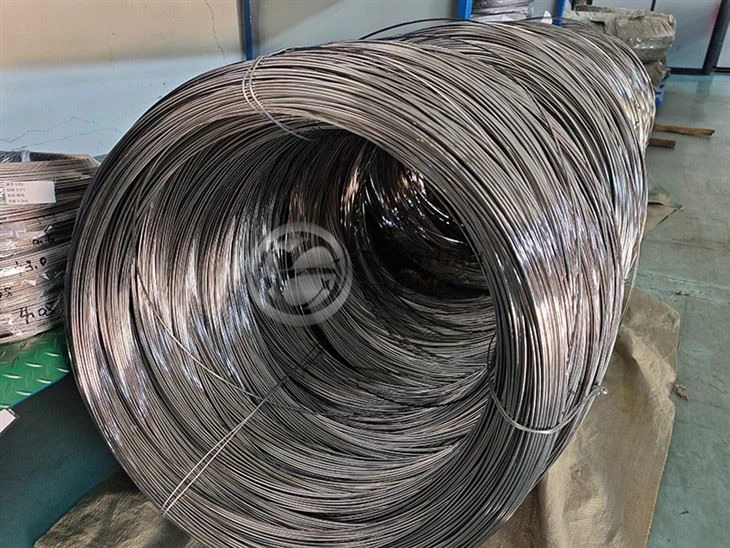
GR1 Titanium Wire is a type of commercially pure titanium wire. It is known for its excellent corrosion resistance, high strength - to - weight ratio, and good formability. These properties make it widely used in various industries such as aerospace, chemical processing, and medical applications.
The purity of GR1 titanium is relatively high, with a minimum titanium content of about 99.5%. The low levels of impurities give it good ductility and toughness, which are important factors when considering welding.
Can GR1 Titanium Wire be Welded?
The short answer is yes, GR1 Titanium Wire can be welded. However, welding titanium, including GR1 titanium wire, comes with its own set of challenges compared to welding more common metals like steel or aluminum.
One of the main challenges is titanium's high reactivity with oxygen, nitrogen, and hydrogen at elevated temperatures. When titanium is heated during the welding process, it can easily react with these elements in the air, forming brittle compounds on the weld surface. These compounds can significantly reduce the mechanical properties of the weld, such as its strength and ductility.
Another challenge is the need for proper shielding during welding. To prevent the reaction with atmospheric gases, the weld area must be protected by an inert gas, typically argon. This requires specialized welding equipment and techniques to ensure that the shielding gas effectively covers the weld pool and the surrounding area.
Welding Methods for GR1 Titanium Wire
There are several welding methods that can be used for GR1 Titanium Wire:
Tungsten Inert Gas (TIG) Welding
TIG welding is one of the most commonly used methods for welding titanium. In TIG welding, a non - consumable tungsten electrode is used to create an arc between the electrode and the workpiece. An inert gas (usually argon) is used to shield the weld area from the atmosphere.
The advantage of TIG welding for GR1 Titanium Wire is that it provides precise control over the heat input and the weld pool. This allows for high - quality welds with good penetration and minimal distortion. However, TIG welding is a relatively slow process and requires a high level of skill from the welder.
Metal Inert Gas (MIG) Welding
MIG welding uses a consumable wire electrode that is fed continuously into the weld pool. Similar to TIG welding, an inert gas is used to shield the weld area. MIG welding is generally faster than TIG welding, which can be an advantage for large - scale production.
However, MIG welding of GR1 Titanium Wire can be more challenging because it is more difficult to control the heat input and the weld pool compared to TIG welding. There is also a higher risk of porosity in the weld if the shielding gas is not properly applied.
Laser Welding
Laser welding is a high - energy density welding method that uses a laser beam to melt and join the titanium wire. Laser welding offers several advantages, such as a small heat - affected zone, high welding speed, and the ability to weld in hard - to - reach areas.
For GR1 Titanium Wire, laser welding can produce high - quality welds with excellent mechanical properties. However, laser welding equipment is expensive, and the process requires precise control of the laser parameters, such as power, pulse duration, and spot size.
Best Practices for Welding GR1 Titanium Wire
To ensure successful welding of GR1 Titanium Wire, the following best practices should be followed:
Surface Preparation
Before welding, the surface of the GR1 Titanium Wire must be thoroughly cleaned to remove any contaminants such as oil, grease, dirt, or oxides. This can be done using a suitable solvent or a mechanical cleaning method such as wire brushing.

Shielding Gas
As mentioned earlier, proper shielding with an inert gas is crucial. The shielding gas should have a high purity level (usually at least 99.99% argon). The gas flow rate should be carefully adjusted to ensure complete coverage of the weld area.
Welding Parameters
The welding parameters, such as current, voltage, and travel speed, should be carefully selected based on the thickness of the GR1 Titanium Wire and the welding method used. These parameters should be optimized to achieve a good balance between weld quality and productivity.
Post - Weld Treatment
After welding, the welded joint may need to undergo post - weld treatment to improve its mechanical properties. This can include stress relieving heat treatment or surface finishing to remove any residual oxides or contaminants.
Applications of Welded GR1 Titanium Wire
Welded GR1 Titanium Wire has a wide range of applications. In the aerospace industry, it can be used to fabricate structural components, such as frames and brackets, where high strength and corrosion resistance are required.
In the chemical processing industry, welded GR1 Titanium Wire can be used in the construction of pipes, valves, and heat exchangers. Its excellent corrosion resistance makes it suitable for handling corrosive chemicals.
In the medical field, welded GR1 Titanium Wire can be used in the production of surgical implants, such as bone plates and screws. Titanium's biocompatibility and good mechanical properties make it an ideal material for medical applications.
Comparison with Other Titanium Wires
When compared to GR2 Titanium Wire, GR1 Titanium Wire has lower strength but higher ductility. In terms of welding, both GR1 and GR2 titanium wires face similar challenges related to reactivity with atmospheric gases. However, the slightly different chemical compositions may require some adjustments in the welding parameters.
GR1 Titanium Welding Wire and GR2 Titanium Welding Wire are specifically designed for welding applications. They are manufactured to meet strict quality standards to ensure high - quality welds.
Conclusion
In conclusion, GR1 Titanium Wire can be welded, but it requires careful consideration of the challenges and the use of appropriate welding methods and best practices. With the right equipment, skills, and techniques, high - quality welds can be achieved, allowing GR1 Titanium Wire to be used in a wide range of applications.
If you are interested in purchasing GR1 Titanium Wire or have any questions about its welding process, please feel free to contact us. We are a professional supplier of GR1 Titanium Wire and can provide you with high - quality products and technical support.
References
-ASM Handbook, Volume 6: Welding, Brazing, and Soldering.
-Titanium: A Technical Guide, Second Edition by J. R. Davis.
-Welding Metallurgy of Titanium Alloys by R. S. Mishra and M. W. Mahoney.


