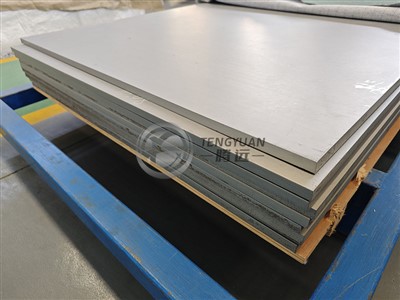
Hey there! As a supplier of GR1 Titanium Welding Wire, I often get asked if this wire can be used for welding titanium to other metals. It's a super interesting question, and in this blog, I'm gonna break it down for you.
First off, let's talk a bit about GR1 Titanium Welding Wire. GR1 Titanium Wire is known for its high purity and excellent corrosion - resistance. It's made from industrial pure titanium, which means it has relatively few alloying elements. This makes it great for applications where you need a material that can withstand harsh environments without corroding easily. You can learn more about it GR1 Titanium Wire.
Now, when it comes to welding titanium to other metals, things get a bit tricky. Titanium has some unique properties that set it apart from other metals. For starters, it has a very high melting point. That means when you're trying to weld it to another metal, you need to make sure that the welding process can handle that high temperature.
One of the main challenges of welding titanium to other metals is the formation of intermetallic compounds. When titanium comes into contact with other metals at high temperatures during the welding process, these intermetallic compounds can form. These compounds are often brittle and can weaken the weld joint. This is a major concern because a weak weld joint can lead to failures in the finished product.
Let's take a look at some common metals that people might want to weld to titanium.
Welding Titanium to Steel
Steel is a widely used metal, and there are times when you might want to weld titanium to it. However, steel and titanium have very different thermal expansion coefficients. This means that as the weld cools down, the two metals will shrink at different rates. This differential shrinkage can cause stress in the weld joint, which can lead to cracking.
Also, when steel and titanium are welded together, iron - titanium intermetallic compounds can form. These compounds are extremely hard and brittle, and they can significantly reduce the ductility and toughness of the weld. So, using GR1 Titanium Welding Wire to weld titanium to steel is generally not recommended. If you really need to weld these two metals, special techniques and filler materials might be required.
Welding Titanium to Aluminum
Aluminum is another metal that is often considered for welding with titanium. Similar to the situation with steel, aluminum and titanium have different melting points and thermal expansion characteristics. When welding these two metals, aluminum - titanium intermetallic compounds can form. These compounds are also brittle and can cause problems in the weld joint.
However, in some cases, it might be possible to use GR1 Titanium Welding Wire for a titanium - aluminum weld if the right welding parameters are used. For example, a very precise control of the heat input is required to minimize the formation of intermetallic compounds. But this is a very challenging process and requires a high level of skill and experience.
When GR1 Titanium Welding Wire Can Be Useful
There are some situations where GR1 Titanium Welding Wire can be used effectively for welding titanium to other metals. For instance, when welding titanium to other grades of titanium, like GR2 Titanium Wire. Since both GR1 and GR2 are industrial pure titanium grades, they have similar properties. This means that the formation of intermetallic compounds is not a major concern.
In this case, GR1 Titanium Welding Wire can provide a strong and reliable weld joint. The similar melting points and thermal expansion coefficients of these two grades make the welding process more straightforward.
The Role of Welding Process
The choice of welding process also plays a crucial role when trying to weld titanium to other metals. Some common welding processes for titanium include Tungsten Inert Gas (TIG) welding and Plasma Arc Welding (PAW).
TIG welding is a popular choice because it allows for precise control of the heat input. This is important when welding titanium, as too much heat can cause oxidation and other issues. With TIG welding, you can also use a shielding gas, such as argon, to protect the weld area from oxygen and nitrogen in the air. Oxidation can lead to the formation of titanium oxides, which can weaken the weld.
Plasma Arc Welding is another option. It can provide a higher welding speed and deeper penetration compared to TIG welding. However, it also requires more specialized equipment and a higher level of operator skill.
Surface Preparation
Before you start welding titanium to other metals, proper surface preparation is essential. Titanium has a thin oxide layer on its surface. This oxide layer needs to be removed before welding because it can prevent good fusion between the two metals. You can use mechanical methods, such as grinding or sanding, to remove the oxide layer. Chemical cleaning can also be used in some cases.
For the other metal that you're welding to titanium, it also needs to be clean and free of any contaminants. Grease, oil, and rust can all affect the quality of the weld.
Using GR1 Titanium Welding Wire
If you've determined that it's appropriate to use GR1 Titanium Welding Wire for your welding project, here are some tips.
First, make sure that the wire is clean. Any dirt or contaminants on the wire can cause problems during the welding process. You can clean the wire using a solvent or a wire brush.
When setting up the welding equipment, adjust the parameters according to the thickness of the metals being welded and the type of welding process you're using. For example, if you're using TIG welding, you need to set the correct amperage, voltage, and gas flow rate.

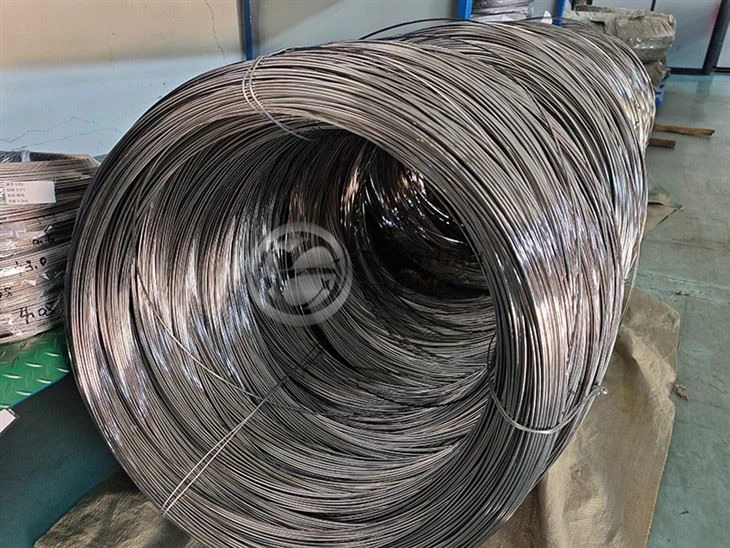
During the welding process, maintain a stable arc and a consistent travel speed. This will help ensure a uniform weld bead and good fusion between the two metals.
Conclusion
So, can GR1 Titanium Welding Wire be used for welding titanium to other metals? The answer is: it depends. In some cases, such as welding titanium to other grades of titanium, it can be a great choice. But when it comes to welding titanium to metals like steel or aluminum, there are many challenges that need to be overcome.
If you're considering a project that involves welding titanium to other metals, it's important to do your research and consult with experts. As a supplier of GR1 Titanium Welding Wire, I'm here to help you make the right decisions. If you have any questions or if you're interested in purchasing our GR1 Titanium Welding Wire, feel free to reach out. We can discuss your specific needs and provide you with the best solutions for your welding projects.
References
- "Titanium: A Technical Guide" by ASM International
- "Welding Metallurgy" by John C. Lippold and David L. Kotecki