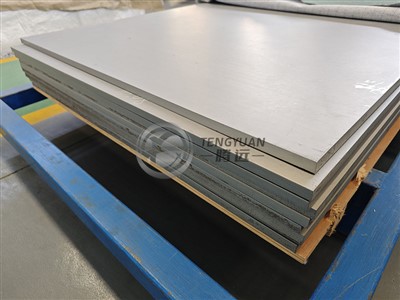
As a supplier of GR2 Titanium Plates, I often encounter inquiries from clients about various properties of these plates, one of the most frequently asked being the thermal expansion coefficient. Understanding the thermal expansion coefficient of GR2 titanium plates is crucial for many applications, as it directly impacts the performance and durability of the material under different temperature conditions.
What is the Thermal Expansion Coefficient?
Before delving into the specific thermal expansion coefficient of GR2 titanium plates, let's first understand what the thermal expansion coefficient is. The thermal expansion coefficient is a measure of how much a material expands or contracts when its temperature changes. It is typically expressed as the fractional change in length or volume per unit change in temperature. There are two main types of thermal expansion coefficients: the linear thermal expansion coefficient (CTE), which measures the change in length, and the volumetric thermal expansion coefficient, which measures the change in volume.
The formula for the linear thermal expansion coefficient (α) is given by:
[ \alpha = \frac{\Delta L}{L_0 \Delta T} ]
where (\Delta L) is the change in length, (L_0) is the original length, and (\Delta T) is the change in temperature.
Thermal Expansion Coefficient of GR2 Titanium Plates
GR2 titanium is a commercially pure titanium grade known for its excellent corrosion resistance, good formability, and moderate strength. The thermal expansion coefficient of GR2 titanium plates is relatively low compared to many other metals, which is one of the reasons why it is favored in applications where dimensional stability is critical.
The linear thermal expansion coefficient of GR2 titanium plates typically ranges from approximately (8.6 \times 10^{-6}) to (9.0 \times 10^{-6}) per °C in the temperature range of 20 - 100 °C. This low value indicates that GR2 titanium plates expand and contract very little with changes in temperature, making them suitable for applications in environments with significant temperature variations.
For example, in aerospace applications, where components are exposed to extreme temperature changes during flight, the low thermal expansion coefficient of GR2 titanium plates helps to maintain the structural integrity and dimensional accuracy of the parts. Similarly, in chemical processing plants, where equipment may be subjected to high temperatures and corrosive chemicals, the low thermal expansion of GR2 titanium plates ensures that the equipment remains stable and leak-free.


Factors Affecting the Thermal Expansion Coefficient of GR2 Titanium Plates
While the thermal expansion coefficient of GR2 titanium plates is relatively stable, it can be affected by several factors, including:
- Temperature Range: The thermal expansion coefficient of GR2 titanium plates may vary slightly with temperature. At higher temperatures, the coefficient generally increases, although the change is relatively small.
- Alloying Elements: Although GR2 is a commercially pure titanium grade, trace amounts of alloying elements can have a minor impact on the thermal expansion coefficient. For example, the presence of oxygen and iron can slightly increase the coefficient.
- Microstructure: The microstructure of GR2 titanium plates, which can be influenced by factors such as processing and heat treatment, can also affect the thermal expansion coefficient. A fine-grained microstructure may result in a slightly different coefficient compared to a coarse-grained microstructure.
Applications of GR2 Titanium Plates Based on Thermal Expansion Properties
The low thermal expansion coefficient of GR2 titanium plates makes them suitable for a wide range of applications, including:
- Aerospace: In the aerospace industry, GR2 titanium plates are used in the manufacture of aircraft components such as engine parts, structural frames, and heat shields. The low thermal expansion helps to prevent dimensional changes and stress cracking under extreme temperature conditions.
- Chemical Processing: GR2 titanium plates are widely used in chemical processing plants for equipment such as reactors, heat exchangers, and piping systems. The low thermal expansion and excellent corrosion resistance make them ideal for handling corrosive chemicals at high temperatures.
- Marine Engineering: In marine applications, GR2 titanium plates are used for shipbuilding, offshore platforms, and desalination plants. The low thermal expansion and resistance to seawater corrosion ensure the long-term durability of the structures. You can find more information about GR1 Titanium Plates for Ships.
- Medical Devices: GR2 titanium plates are also used in the medical field for the manufacture of implants and surgical instruments. The low thermal expansion and biocompatibility of the material make it suitable for use in the human body.
Advantages of Using GR2 Titanium Plates in High-Temperature Applications
In addition to their low thermal expansion coefficient, GR2 titanium plates offer several other advantages in high-temperature applications:
- Corrosion Resistance: GR2 titanium plates have excellent corrosion resistance, even in harsh environments such as seawater, acids, and alkalis. This makes them suitable for use in chemical processing plants, marine applications, and other industries where corrosion is a major concern. You can explore more about GR2 Titanium Plates for Corrosion Resistant.
- High Strength-to-Weight Ratio: GR2 titanium plates have a high strength-to-weight ratio, which means they can provide the required strength while being relatively lightweight. This is particularly important in aerospace and automotive applications, where weight reduction is crucial for improving fuel efficiency.
- Good Weldability: GR2 titanium plates can be easily welded using various welding methods, such as TIG (Tungsten Inert Gas) welding and MIG (Metal Inert Gas) welding. This allows for the fabrication of complex structures and components.
Contact Us for GR2 Titanium Plates
If you are in need of high-quality GR2 titanium plates for your specific application, we are here to help. As a leading supplier of GR2 Titanium Plates, we offer a wide range of sizes, thicknesses, and specifications to meet your requirements. Our plates are manufactured using the latest technology and quality control measures to ensure the highest level of performance and reliability.
Whether you are in the aerospace, chemical processing, marine, or medical industry, our team of experts can provide you with the technical support and guidance you need to select the right GR2 titanium plates for your project. Contact us today to discuss your needs and get a quote.
References
- ASM Handbook, Volume 2: Properties and Selection: Nonferrous Alloys and Special-Purpose Materials. ASM International.
- Titanium: A Technical Guide. Second Edition. J.R. Davis (Ed.). ASM International.