What is the thermal conductivity of titanium seamless pipes?
As a supplier of titanium seamless pipes, I often encounter inquiries about the thermal conductivity of these pipes. Understanding the thermal conductivity of titanium seamless pipes is crucial for various applications, from chemical processing to shipbuilding. In this blog post, I will delve into the concept of thermal conductivity, explore the factors affecting the thermal conductivity of titanium seamless pipes, and discuss its implications in different industries.
Understanding Thermal Conductivity
Thermal conductivity is a fundamental property of materials that measures their ability to conduct heat. It is defined as the amount of heat that can be transferred through a unit area of a material in a unit time, with a unit temperature gradient. In simpler terms, it indicates how easily heat can flow through a material. Materials with high thermal conductivity transfer heat quickly, while those with low thermal conductivity are better insulators.

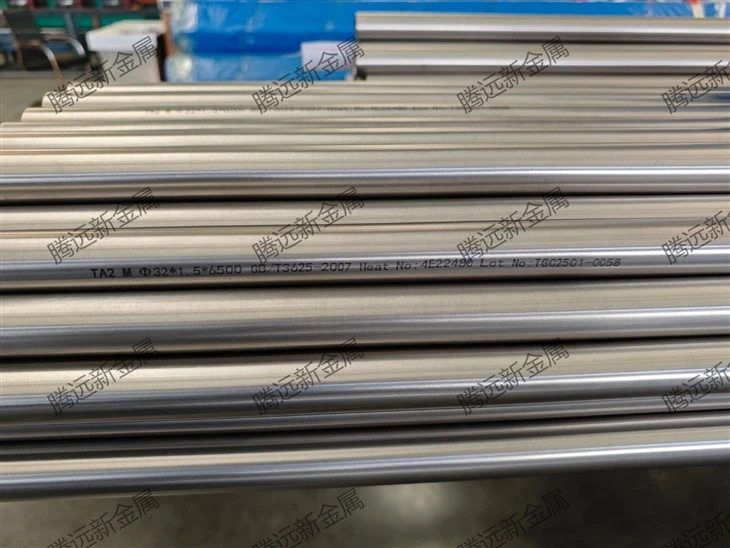
The thermal conductivity of a material is influenced by several factors, including its atomic structure, density, and temperature. Metals generally have high thermal conductivity due to the presence of free electrons that can carry heat energy. Titanium, a transition metal, also exhibits relatively high thermal conductivity compared to many non - metallic materials.
Thermal Conductivity of Titanium
Titanium has a thermal conductivity that varies depending on its purity and alloy composition. Pure titanium (Grade 1) has a thermal conductivity of approximately 17 W/(m·K) at room temperature. As the alloying elements are added, the thermal conductivity can change. For example, some titanium alloys may have slightly lower thermal conductivity due to the presence of alloying elements that disrupt the flow of heat - carrying electrons.
The thermal conductivity of titanium also changes with temperature. Generally, as the temperature increases, the thermal conductivity of titanium decreases. This is because at higher temperatures, the lattice vibrations in the titanium structure become more intense, which scatters the free electrons and reduces their ability to conduct heat.
Factors Affecting the Thermal Conductivity of Titanium Seamless Pipes
- Alloy Composition: As mentioned earlier, the addition of alloying elements such as aluminum, vanadium, and molybdenum can affect the thermal conductivity of titanium seamless pipes. These elements can form different phases and microstructures within the titanium matrix, which can either enhance or impede the flow of heat. For example, titanium - 6aluminum - 4vanadium (Ti - 6Al - 4V), one of the most commonly used titanium alloys, has a thermal conductivity of around 7 - 8 W/(m·K), which is lower than that of pure titanium.
- Pipe Wall Thickness: The wall thickness of the titanium seamless pipe can also influence its thermal conductivity. A thicker wall will generally have a lower effective thermal conductivity because heat has to travel through a greater distance. In applications where rapid heat transfer is required, thinner - walled pipes may be preferred.
- Surface Finish: The surface finish of the titanium seamless pipe can affect the heat transfer coefficient at the pipe - fluid interface. A smooth surface can promote better heat transfer compared to a rough surface, as it reduces the resistance to heat flow. Additionally, surface treatments such as coatings can also impact the thermal conductivity of the pipe.
Applications of Titanium Seamless Pipes Based on Thermal Conductivity
- Chemical Industry: In the chemical industry, titanium seamless pipes are widely used due to their excellent corrosion resistance and moderate thermal conductivity. The ability to transfer heat efficiently is essential in processes such as heat exchangers, where heat needs to be transferred between different chemical fluids. Titanium Seamless Pipe for Chemical Industry can withstand the harsh chemical environments while effectively transferring heat, making them a popular choice for chemical processing plants.
- Shipbuilding: Titanium seamless pipes are also used in shipbuilding, particularly in areas where heat transfer and corrosion resistance are required. For example, in the ship's cooling systems, these pipes can transfer heat from the engine coolant to the seawater. The moderate thermal conductivity of titanium ensures that heat is transferred at an appropriate rate, while its corrosion resistance protects the pipes from the corrosive effects of seawater. Titanium Seamless Pipe for Ships are lightweight, which is an added advantage in shipbuilding as it helps to reduce the overall weight of the ship.
- Corrosion - Resistant Applications: In applications where corrosion is a major concern, such as in the oil and gas industry or in coastal infrastructure, titanium seamless pipes are used. Their corrosion resistance combined with their thermal conductivity properties make them suitable for heat - related applications in these environments. Titanium Seamless Pipe for Corrosion Resistant can be used in heat exchangers, condensers, and other equipment where heat transfer and long - term durability are required.
Implications of Thermal Conductivity in Design and Application
When designing systems that use titanium seamless pipes, the thermal conductivity of the pipes must be taken into account. In heat exchanger design, for example, the thermal conductivity of the titanium pipe material will determine the heat transfer rate and the size of the heat exchanger required. A higher thermal conductivity will allow for a more compact heat exchanger design, as less surface area is needed to achieve the same heat transfer rate.
In applications where temperature control is critical, such as in chemical reactors, the thermal conductivity of the titanium seamless pipes can affect the heating and cooling rates of the reactants. Engineers need to carefully select the appropriate titanium alloy and pipe dimensions to ensure that the desired temperature profiles are maintained.
Contact for Procurement
If you are in need of titanium seamless pipes for your specific application, whether it is for chemical processing, shipbuilding, or corrosion - resistant projects, I encourage you to reach out for a detailed discussion. Our team of experts can help you select the right titanium alloy and pipe specifications based on your thermal conductivity requirements and other performance criteria. We are committed to providing high - quality titanium seamless pipes that meet your exact needs.
References
- "Titanium: A Technical Guide" by John R. Davis
- "Materials Science and Engineering: An Introduction" by William D. Callister, Jr. and David G. Rethwisch