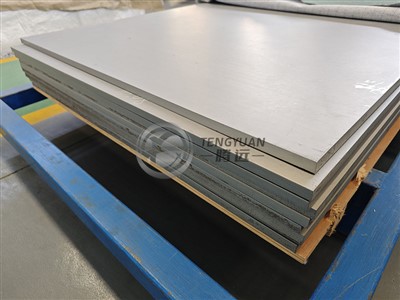
Hey there! I'm a supplier of GR1 Titanium Plates, and today I wanna chat about the flatness requirement for these plates.
First off, let's understand what GR1 Titanium Plates are. GR1 Titanium Plates are made from Grade 1 titanium, which is an industrial pure titanium. It's known for its excellent corrosion resistance, high strength-to-weight ratio, and good formability. These plates are widely used in various industries such as aerospace, chemical processing, marine, and medical. You can find more details about GR1 Titanium Plates on our website GR1 Titanium Plates.
Now, let's dive into the flatness requirement. Flatness is a crucial characteristic of titanium plates, as it directly affects their performance and usability in different applications. In simple terms, flatness refers to how straight and even the surface of the plate is. A plate with good flatness will lie flat without any significant bends, waves, or warps.
The flatness requirement for GR1 Titanium Plates can vary depending on several factors, including the application, the manufacturing process, and the customer's specifications. In general, the flatter the plate, the better its quality and performance.
For aerospace applications, where precision and reliability are of utmost importance, the flatness requirement is usually very strict. The plates need to meet specific tolerances to ensure proper fit and function in aircraft components. Even a slight deviation from the required flatness can lead to issues such as improper assembly, reduced structural integrity, and increased wear and tear.
In the chemical processing industry, GR1 Titanium Plates are often used in equipment such as heat exchangers, reactors, and storage tanks. These applications require plates with good flatness to ensure proper sealing and prevent leakage. A plate with poor flatness may not fit properly in the equipment, leading to gaps and potential leaks, which can be hazardous and costly.
When it comes to manufacturing, the flatness of GR1 Titanium Plates is influenced by several factors. The rolling process, for example, plays a significant role in determining the final flatness of the plate. During rolling, the plate is passed through a series of rollers to reduce its thickness and improve its flatness. The quality of the rollers, the rolling speed, and the amount of pressure applied can all affect the flatness of the plate.
Another factor that can affect flatness is the heat treatment process. Heat treatment is often used to improve the mechanical properties of the titanium plate, but it can also cause some distortion. If the heat treatment is not carried out properly, the plate may warp or bend, resulting in poor flatness.


To ensure that our GR1 Titanium Plates meet the required flatness standards, we use advanced manufacturing techniques and quality control measures. Our state-of-the-art rolling mills are equipped with precision rollers and advanced control systems to ensure consistent and accurate rolling. We also perform regular inspections and tests to check the flatness of the plates at various stages of the manufacturing process.
In addition to the standard flatness requirements, we also offer custom flatness options to meet the specific needs of our customers. If you have unique requirements for your application, we can work with you to develop a solution that meets your exact specifications.
It's also worth mentioning that there are other grades of titanium plates available, such as GR2 Titanium Plates. GR2 Titanium Plates are similar to GR1 but have slightly higher strength and hardness. They are also commonly used in various industries, including the chemical industry. GR2 Titanium Plates for Chemical Industry are specifically designed to meet the unique requirements of chemical processing applications.
So, how do we measure the flatness of GR1 Titanium Plates? There are several methods available, including visual inspection, straightedge testing, and laser scanning. Visual inspection is the simplest and most basic method, where an inspector visually examines the plate for any obvious bends, waves, or warps. However, this method is subjective and may not be accurate enough for high-precision applications.
Straightedge testing involves placing a straightedge on the surface of the plate and measuring the gap between the straightedge and the plate at various points. This method provides a more quantitative measure of flatness but may not be suitable for measuring small deviations.
Laser scanning is a more advanced and accurate method for measuring flatness. It uses a laser beam to scan the surface of the plate and create a detailed 3D image. The data from the laser scan can then be analyzed to determine the flatness of the plate with high precision.
In conclusion, the flatness requirement for GR1 Titanium Plates is an important factor that can significantly affect their performance and usability in various applications. Whether you're in the aerospace, chemical processing, or any other industry, it's crucial to choose plates with the right flatness to ensure the success of your project.
As a supplier of GR1 Titanium Plates, we are committed to providing our customers with high-quality plates that meet the strictest flatness standards. We have the expertise, experience, and state-of-the-art facilities to manufacture and supply plates that meet your specific requirements.
If you're interested in purchasing GR1 Titanium Plates or have any questions about the flatness requirement, please don't hesitate to contact us. We'd be happy to discuss your needs and provide you with a customized solution. Let's work together to find the perfect GR1 Titanium Plates for your application.
References:
- ASME Boiler and Pressure Vessel Code
- ASTM International Standards for Titanium and Titanium Alloys
- Aerospace Industry Standards for Titanium Components