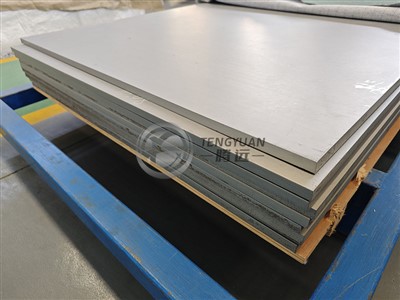
Hey there! As a supplier of GR2 Titanium Plates, I often get asked about the brittleness transition temperature of these plates. So, I thought I'd write this blog to break it down for you in plain English.
First off, let's understand what GR2 titanium plates are. GR2 titanium is a type of commercially pure titanium. It's widely used in various industries, especially in the chemical industry because of its excellent corrosion resistance. You can check out more about GR2 Titanium Plates for Chemical Industry on our website. And if you're interested in other options, we also have GR1 Titanium Plates for Chemical Industry.
Now, let's talk about the brittleness transition temperature. The brittleness transition temperature, often abbreviated as BTT, is a critical temperature point for materials like GR2 titanium plates. At temperatures above the BTT, the material behaves in a ductile manner. That means it can deform under stress without breaking easily. It can stretch, bend, and absorb energy without shattering.
But when the temperature drops below the BTT, things change. The material becomes brittle. Instead of deforming, it's more likely to crack or break suddenly when subjected to stress. This is a big deal in applications where the titanium plates might be exposed to low temperatures.
For GR2 titanium plates, the brittleness transition temperature is relatively low. In fact, it's well below normal operating temperatures in most industrial environments. This is one of the reasons why GR2 titanium is so popular. It can maintain its ductility and toughness even in cold conditions.
However, it's important to note that the exact BTT can vary depending on a few factors. One of the main factors is the purity of the titanium. Our GR2 Titanium Plates are made with high - quality materials, and we ensure a consistent level of purity to keep the BTT as low as possible.
Another factor is the manufacturing process. The way the plates are rolled, heat - treated, and finished can all have an impact on the BTT. At our company, we use advanced manufacturing techniques to optimize the properties of our GR2 titanium plates. This helps us to control the BTT and ensure that our products perform well in different conditions.
Let's take a look at some real - world applications. In the chemical industry, GR2 titanium plates are used in equipment like heat exchangers, reactors, and storage tanks. These pieces of equipment might be exposed to a wide range of temperatures, including cold temperatures during some processes. Thanks to the low BTT of GR2 titanium, the plates can withstand these conditions without becoming brittle and failing.
In the aerospace industry, GR2 titanium is also used in various components. Aircraft can experience extremely low temperatures at high altitudes. The low BTT of GR2 titanium ensures that the components made from these plates remain reliable and safe.
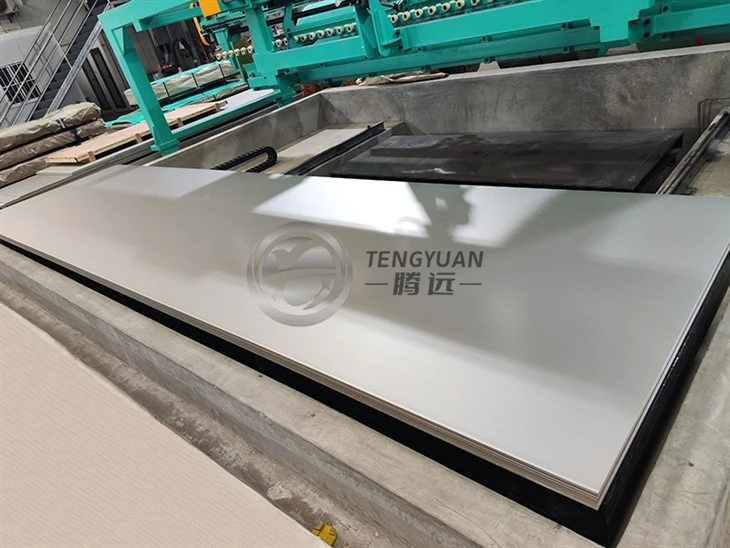

So, how do we measure the brittleness transition temperature? There are a few methods. One common method is the Charpy impact test. In this test, a notched sample of the GR2 titanium plate is struck with a pendulum. The energy absorbed by the sample during the impact is measured. By conducting this test at different temperatures, we can determine the temperature at which the energy absorption drops significantly. This is the approximate BTT.
Another method is the drop - weight test. A heavy weight is dropped onto a sample of the plate at different temperatures. The temperature at which the sample starts to show brittle fracture is noted as the BTT.
As a supplier, we conduct these tests regularly to ensure the quality of our GR2 titanium plates. We want to make sure that our customers get products that meet their requirements and perform well in their applications.
If you're in the market for GR2 titanium plates, you need to consider the brittleness transition temperature. It's an important property that can affect the performance and safety of your equipment. Whether you're in the chemical industry, aerospace, or any other field that uses titanium plates, our GR2 titanium plates are a great choice.
We're always here to answer your questions and help you find the right products for your needs. If you're interested in purchasing GR2 titanium plates, feel free to reach out to us. We can provide you with more detailed information, specifications, and pricing. Let's start a conversation and see how we can work together to meet your requirements.
In conclusion, the brittleness transition temperature of GR2 titanium plates is a crucial property that makes these plates suitable for a wide range of applications. With our high - quality products and advanced manufacturing techniques, we ensure that our GR2 titanium plates have a low BTT and excellent performance. So, don't hesitate to contact us if you're looking for reliable GR2 titanium plates.
References:
- ASM Handbook Volume 1: Properties and Selection: Irons, Steels, and High - Performance Alloys
- Titanium: A Technical Guide by J. R. Davis