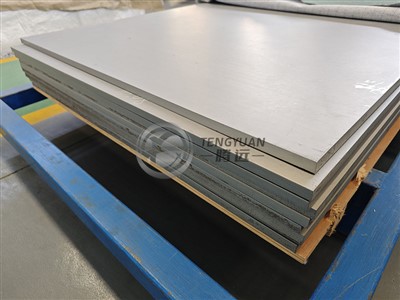
Hey there! As a supplier of titanium alloy plates, I'm super stoked to share with you the ins and outs of the rolling processes for manufacturing these awesome plates. Titanium alloy plates are used in a wide range of industries, from aerospace to medical, thanks to their high strength, low density, and excellent corrosion resistance. So, let's dive right in and explore how these plates are made.
Initial Preparation
Before we even start the rolling process, there's a whole bunch of prep work to do. First off, we need to get the right titanium alloy. There are different grades of titanium alloys, each with its own unique properties and applications. For example, GR5 Titanium Plates are widely used in aerospace due to their high strength and good weldability, while GR12 Titanium Plates for Chemical Industry are great for chemical processing because of their corrosion resistance.
Once we've selected the appropriate alloy, the next step is to create the initial ingot. This is done by melting the titanium alloy in a furnace at extremely high temperatures. During this melting process, we have to be really careful to control the composition and purity of the alloy. Any impurities can affect the quality of the final product. After the alloy is melted, it's poured into a mold to form an ingot. This ingot is then cooled slowly to ensure a uniform structure.


Hot Rolling
Hot rolling is usually the first major step in the plate manufacturing process. We heat the ingot to a really high temperature, typically above 800°C. This makes the titanium alloy more malleable and easier to work with. The heated ingot is then passed through a series of rolling mills. These mills have large rolls that apply pressure to the ingot, gradually reducing its thickness and increasing its length.
The hot rolling process is divided into several passes. In each pass, the thickness of the plate is reduced by a certain amount. We have to carefully control the reduction ratio in each pass to ensure that the plate has a uniform thickness and good mechanical properties. As the plate passes through the rolling mills, it also undergoes some changes in its microstructure. The grains in the titanium alloy are deformed and elongated, which can improve the strength and toughness of the plate.
One of the key things we have to watch out for during hot rolling is the temperature. If the temperature drops too much, the titanium alloy can become too hard and difficult to roll. On the other hand, if the temperature is too high, the alloy can oxidize, which can affect its surface quality. So, we use special heating systems to maintain the temperature of the plate during the rolling process.
Cold Rolling
After hot rolling, the plate usually goes through a cold rolling process. Cold rolling is done at room temperature or slightly above. The main purpose of cold rolling is to further reduce the thickness of the plate and improve its surface finish. The plate is passed through a set of smaller, more precise rolling mills. These mills can apply higher pressures than the hot rolling mills, allowing us to achieve thinner and more accurate plate thicknesses.
During cold rolling, the plate also undergoes some work hardening. This means that the strength and hardness of the plate increase as it is deformed. However, this also makes the plate more brittle. To counteract this, we often perform an annealing process after cold rolling. Annealing involves heating the plate to a specific temperature for a certain period of time and then cooling it slowly. This helps to relieve the internal stresses in the plate and restore its ductility.
Finishing Processes
Once the rolling processes are complete, the titanium alloy plate still needs some finishing touches. First, we perform a surface treatment to remove any oxides or impurities that may have formed during the rolling processes. This can involve processes like pickling, which uses chemicals to dissolve the surface oxides, or grinding, which uses abrasive wheels to smooth the surface of the plate.
Next, we cut the plate to the desired size and shape. This can be done using a variety of cutting methods, such as sawing, shearing, or laser cutting. The choice of cutting method depends on the thickness of the plate and the required precision.
Finally, we perform a quality inspection on the plate. We check the thickness, flatness, surface finish, and mechanical properties of the plate to make sure it meets the customer's requirements. This involves using a range of testing equipment, such as calipers, micrometers, and tensile testing machines.
Why Choose Our Titanium Alloy Plates
At our company, we've got years of experience in manufacturing titanium alloy plates. We use the latest technology and equipment to ensure that our plates are of the highest quality. Our team of experts is always on hand to provide technical support and advice to our customers. Whether you need GR5 Titanium Plates for aerospace applications or GR12 Titanium Plates for Corrosion Resistant for marine environments, we've got you covered.
If you're in the market for high-quality titanium alloy plates, don't hesitate to get in touch with us. We can provide you with detailed product information and competitive quotes. We're always looking to build long-term relationships with our customers, so whether you're a small business or a large corporation, we'd love to work with you.
Conclusion
So, there you have it – a rundown of the rolling processes for manufacturing titanium alloy plates. From the initial preparation to the finishing touches, each step in the process is crucial for ensuring the quality and performance of the final product. Whether it's hot rolling to shape the plate or cold rolling to improve its surface finish, we take every measure to make sure our titanium alloy plates meet the highest standards.
If you're interested in purchasing titanium alloy plates or have any questions about our products, feel free to reach out. We're here to help you find the perfect solution for your needs.
References
- "Titanium: A Technical Guide" by John C. Williams
- "Metal Forming: Processes and Applications" by George E. Dieter
- Various industry research papers on titanium alloy manufacturing processes.