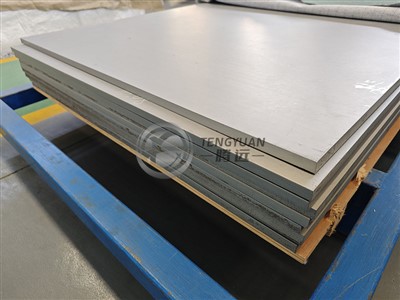
Hey there! I'm a supplier of GR1 Titanium Plates, and today I wanna chat about how to test the mechanical properties of these awesome plates. GR1 Titanium Plates are super popular in various industries, like the chemical industry, thanks to their great corrosion resistance and other cool features. You can check out more about GR1 Titanium Plates for Chemical Industry on our website.
First off, let's understand why testing the mechanical properties of GR1 Titanium Plates is so important. When you're using these plates in different applications, you need to make sure they can handle the stress and strain they'll be exposed to. Whether it's in a chemical plant or some other industrial setting, the mechanical properties determine how well the plates will perform over time.
One of the most common tests we do is the tensile test. This test helps us figure out the strength and ductility of the GR1 Titanium Plates. To do a tensile test, we take a sample of the plate and put it in a machine that pulls it apart at a constant speed. As the machine pulls, it measures the force applied and how much the sample stretches.

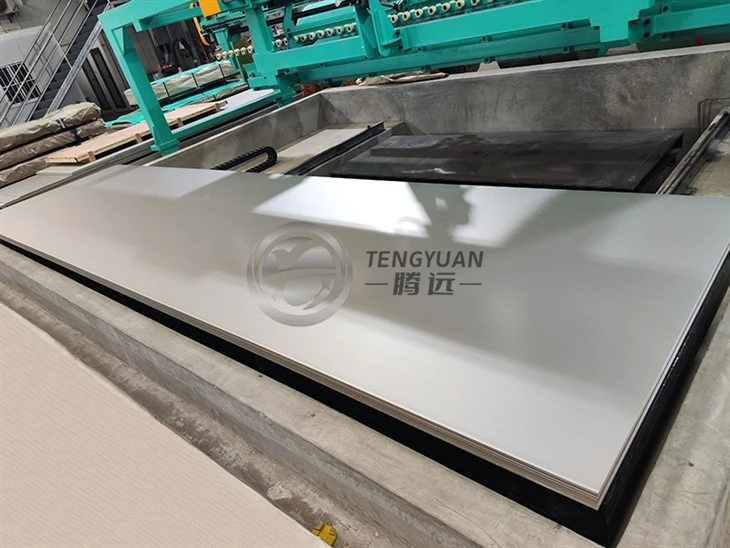
The key things we look for in a tensile test are the yield strength, ultimate tensile strength, and elongation. The yield strength is the point at which the material starts to deform permanently. It's like the "breaking point" where the plate won't go back to its original shape after the force is removed. The ultimate tensile strength is the maximum stress the plate can handle before it breaks. And elongation tells us how much the plate can stretch before it fails.
For GR1 Titanium Plates, we usually expect a certain range of values for these properties. If the yield strength is too low, it means the plate might not be strong enough to withstand the forces it'll face in real - world applications. On the other hand, if the elongation is too low, the plate could be brittle and prone to cracking.
Another important test is the hardness test. Hardness is a measure of how resistant the material is to indentation or scratching. There are different methods for hardness testing, but the most common ones for GR1 Titanium Plates are the Rockwell and Brinell tests.
In the Rockwell test, a small indenter is pressed into the surface of the plate with a specific force. The depth of the indentation is then measured, and this measurement is used to determine the hardness. The Brinell test is similar, but it uses a larger indenter and a different scale.
Hardness is crucial because it gives us an idea of how wear - resistant the plate is. In applications where the plate might come into contact with other hard materials or be subject to abrasion, a higher hardness can mean a longer lifespan for the plate. You can also find more about corrosion - resistant options like GR1 Titanium Plates for Corrosion Resistant on our site.
We also do impact testing. This test measures how well the plate can absorb energy when it's hit suddenly. We use a machine that swings a pendulum and hits a notched sample of the plate. The energy absorbed by the sample during the impact is measured, and this gives us an idea of the plate's toughness.
In some industries, like those where the plates might be exposed to sudden shocks or vibrations, impact resistance is really important. A plate with good impact resistance is less likely to crack or break when it's hit unexpectedly.
Now, let's talk about how we ensure the accuracy of these tests. First of all, we make sure our testing equipment is calibrated regularly. This means checking and adjusting the machines so that they give accurate measurements. We also follow strict testing standards and procedures. There are international standards, like ASTM (American Society for Testing and Materials), that we adhere to.
When we take samples for testing, we make sure they're representative of the whole batch of GR1 Titanium Plates. We take samples from different parts of the plates to account for any variations in the manufacturing process.
After we've done all the tests, we analyze the results. If the results meet our quality standards, we can be confident that the plates are suitable for their intended applications. But if the results are outside the expected range, we need to figure out what went wrong. It could be a problem with the raw materials, the manufacturing process, or something else.
Sometimes, we might need to adjust the manufacturing process to improve the mechanical properties of the plates. For example, if the hardness is too low, we might change the heat - treatment process to increase it.
It's also worth mentioning that we offer different grades of titanium plates, like GR2 Titanium Plates for Chemical Industry. Each grade has its own unique set of mechanical properties, so it's important to choose the right grade for your specific application.
If you're in the market for GR1 Titanium Plates, it's crucial to work with a supplier who knows how to test the mechanical properties properly. You want to make sure you're getting high - quality plates that will perform well in your application.
We're always here to help you understand the testing process and choose the right plates for your needs. Whether you're a small business or a large industrial company, we can provide you with the information and support you need.
If you're interested in purchasing GR1 Titanium Plates, feel free to reach out to us for more details and to start a procurement discussion. We're happy to answer any questions you might have and work with you to find the best solution for your project.
References
- ASTM International standards for titanium plate testing
- Industry research on the mechanical properties of titanium alloys