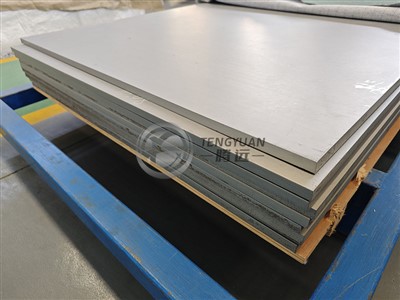
Titanium is a remarkable metal known for its exceptional properties, such as high strength-to-weight ratio, excellent corrosion resistance, and biocompatibility. Among the various grades of titanium, GR2 titanium plates are widely used in numerous industries due to their versatility and cost-effectiveness. As a leading supplier of GR2 Titanium Plates, I am often asked about their performance in alkaline environments. In this blog post, I will delve into the behavior of GR2 titanium plates in alkaline solutions, exploring their corrosion resistance, mechanical properties, and potential applications.
Understanding GR2 Titanium Plates
GR2 titanium, also known as commercially pure titanium grade 2, is one of the most commonly used titanium grades. It is composed of at least 99% titanium, with small amounts of iron, oxygen, carbon, nitrogen, and hydrogen. This composition gives GR2 titanium its unique combination of properties, making it suitable for a wide range of applications, including chemical processing, marine engineering, and medical devices.
One of the key advantages of GR2 titanium is its excellent corrosion resistance. Titanium forms a thin, protective oxide layer on its surface when exposed to oxygen, which acts as a barrier against further corrosion. This oxide layer is self-healing, meaning that if it is damaged, it will quickly reform in the presence of oxygen. As a result, GR2 titanium plates can withstand harsh environments, including acidic, neutral, and alkaline solutions.
Performance of GR2 Titanium Plates in Alkaline Environments
The performance of GR2 titanium plates in alkaline environments depends on several factors, including the concentration and temperature of the alkaline solution, the presence of other chemicals, and the duration of exposure. In general, GR2 titanium exhibits good corrosion resistance in mild to moderately alkaline solutions.
Corrosion Resistance
In alkaline solutions with a pH between 7 and 12, GR2 titanium forms a stable oxide layer that provides excellent protection against corrosion. The oxide layer is composed mainly of titanium dioxide (TiO₂), which is highly resistant to chemical attack. As a result, GR2 titanium plates can be used in applications where they are exposed to alkaline solutions, such as in the chemical processing industry for the production of sodium hydroxide (NaOH) and potassium hydroxide (KOH).
However, in highly alkaline solutions with a pH greater than 12, the corrosion resistance of GR2 titanium may be compromised. At high pH values, the protective oxide layer can dissolve, exposing the underlying titanium metal to corrosion. The rate of corrosion increases with increasing pH and temperature. Therefore, it is important to carefully consider the operating conditions when using GR2 titanium plates in highly alkaline environments.
Mechanical Properties
In addition to its corrosion resistance, the mechanical properties of GR2 titanium plates can also be affected by exposure to alkaline environments. In general, the strength and ductility of GR2 titanium remain relatively stable in mild to moderately alkaline solutions. However, in highly alkaline solutions, the mechanical properties may degrade over time due to corrosion.
The corrosion process can cause pitting, crevice corrosion, and stress corrosion cracking, which can reduce the strength and integrity of the titanium plates. Pitting corrosion occurs when small holes or pits form on the surface of the titanium, while crevice corrosion occurs in narrow gaps or crevices where the protective oxide layer is disrupted. Stress corrosion cracking is a more severe form of corrosion that can occur when the titanium is subjected to both stress and a corrosive environment.
Potential Applications
Despite the potential challenges in highly alkaline environments, GR2 titanium plates have many applications in industries where they are exposed to alkaline solutions. Some of the common applications include:
- Chemical Processing: GR2 titanium plates are used in the construction of chemical reactors, storage tanks, and piping systems for the production of alkaline chemicals, such as sodium hydroxide and potassium hydroxide.
- Marine Engineering: In the marine industry, GR2 titanium plates are used in seawater desalination plants, offshore oil and gas platforms, and shipbuilding. Seawater is slightly alkaline, and GR2 titanium's corrosion resistance makes it an ideal material for these applications.
- Medical Devices: GR2 titanium is biocompatible, making it suitable for use in medical devices, such as orthopedic implants and dental fixtures. In the human body, which has a slightly alkaline pH, GR2 titanium can provide long-term corrosion resistance and stability.
Comparison with Other Titanium Grades
When considering the use of titanium plates in alkaline environments, it is also important to compare GR2 titanium with other titanium grades, such as GR1 titanium. GR1 Titanium Plates are another commercially pure titanium grade that is similar to GR2 but has lower oxygen and iron content. As a result, GR1 titanium is more ductile and has slightly better corrosion resistance in some environments.
However, the difference in corrosion resistance between GR1 and GR2 titanium in alkaline environments is generally not significant. Both grades can provide good corrosion resistance in mild to moderately alkaline solutions. GR1 Titanium Plates for Corrosion Resistant and GR2 Titanium Plates for Corrosion Resistant are often selected based on other factors, such as cost, mechanical properties, and availability.
Conclusion
In conclusion, GR2 titanium plates offer excellent corrosion resistance in mild to moderately alkaline environments, making them suitable for a wide range of applications in industries such as chemical processing, marine engineering, and medical devices. However, in highly alkaline solutions, the corrosion resistance of GR2 titanium may be compromised, and careful consideration should be given to the operating conditions.


As a supplier of GR2 Titanium Plates, I am committed to providing high-quality products and technical support to our customers. If you are considering using GR2 titanium plates in an alkaline environment, I encourage you to contact me to discuss your specific requirements and to learn more about our products. We can work together to ensure that you select the right material for your application and that it performs optimally in your operating conditions.
References
- ASM Handbook, Volume 2: Properties and Selection: Nonferrous Alloys and Special-Purpose Materials, ASM International.
- Titanium: A Technical Guide, Second Edition, by John C. Williams, ASM International.
- Corrosion Resistance of Titanium and Titanium Alloys, by George L. Donegan, NACE International.