

In the realm of industrial materials, GR1 titanium wire stands out as a remarkable product, known for its unique properties and wide - ranging applications. As a supplier of GR1 titanium wire, I am often asked whether our product meets international standards. In this blog, I will delve into this question, exploring the characteristics of GR1 titanium wire, international standards, and how our product aligns with them.
Understanding GR1 Titanium Wire
GR1 titanium wire is a type of industrial pure titanium wire. It is primarily composed of titanium, with a small amount of impurities. This type of wire is highly valued for its excellent corrosion resistance, low density, and good formability. These properties make it suitable for a variety of industries, including aerospace, marine, chemical processing, and medical.
In the aerospace industry, GR1 titanium wire is used in the manufacturing of components such as fasteners and brackets. Its high strength - to - weight ratio helps reduce the overall weight of the aircraft, improving fuel efficiency. In the marine environment, its corrosion resistance makes it ideal for applications such as shipbuilding and offshore platforms. In the chemical processing industry, it can withstand harsh chemicals, ensuring the safety and longevity of equipment. And in the medical field, GR1 titanium wire is used in surgical implants due to its biocompatibility.
International Standards for Titanium Wire
There are several international standards that govern the production and quality of titanium wire. One of the most well - known standards is the ASTM (American Society for Testing and Materials) standard. ASTM has a series of specifications for titanium and titanium alloy products, including titanium wire. For example, ASTM B348 covers the requirements for wrought titanium and titanium alloy bars and billets, which also have implications for titanium wire production.
Another important set of standards is the ISO (International Organization for Standardization) standards. ISO standards are recognized globally and provide a framework for ensuring the quality, safety, and efficiency of products. ISO 5832 - 2 specifically addresses the requirements for titanium and titanium alloy materials used in surgical implants, which is relevant for the medical applications of GR1 titanium wire.
These standards define various aspects of titanium wire, such as chemical composition, mechanical properties, and surface quality. For chemical composition, they specify the allowable ranges of different elements in the titanium wire. Mechanical properties include tensile strength, yield strength, and elongation, which are crucial for determining the performance of the wire in different applications. Surface quality standards ensure that the wire is free from defects such as cracks, pits, and scratches.
How Our GR1 Titanium Wire Meets International Standards
As a supplier, we are committed to producing GR1 titanium wire that meets or exceeds international standards.
Chemical Composition
We carefully control the chemical composition of our GR1 titanium wire. Our production process uses high - purity titanium raw materials, and we conduct rigorous chemical analysis at every stage of production. We ensure that the content of titanium is within the specified range, and the levels of impurities such as iron, carbon, nitrogen, and oxygen are strictly controlled. This not only meets the requirements of ASTM and ISO standards but also ensures the high - quality performance of our wire in various applications.
Mechanical Properties
Our GR1 titanium wire is tested for mechanical properties using state - of - the - art testing equipment. We conduct tensile tests to measure the tensile strength and yield strength of the wire, and elongation tests to evaluate its ductility. Our production process is optimized to achieve the desired mechanical properties. For example, we use appropriate heat treatment methods to improve the strength and toughness of the wire. The results of our mechanical tests consistently meet or exceed the requirements of international standards, ensuring that our wire can perform well under different stress conditions.
Surface Quality
We pay great attention to the surface quality of our GR1 titanium wire. Our manufacturing process includes multiple steps of surface treatment to ensure a smooth and defect - free surface. We use advanced inspection techniques, such as visual inspection and non - destructive testing, to detect any surface defects. By meeting the surface quality standards, our wire is more suitable for applications where a high - quality surface finish is required, such as in the aerospace and medical industries.
Comparison with Other Grades of Titanium Wire
It is also worth comparing GR1 titanium wire with other grades, such as GR2 Titanium Wire. While both GR1 and GR2 are industrial pure titanium wires, there are some differences between them.
GR2 titanium wire has a slightly higher strength compared to GR1 due to a slightly higher content of impurities. This makes GR2 more suitable for applications where higher strength is required. However, GR1 has better formability and corrosion resistance in some environments. For example, in highly corrosive chemical environments, GR1 may be a better choice.
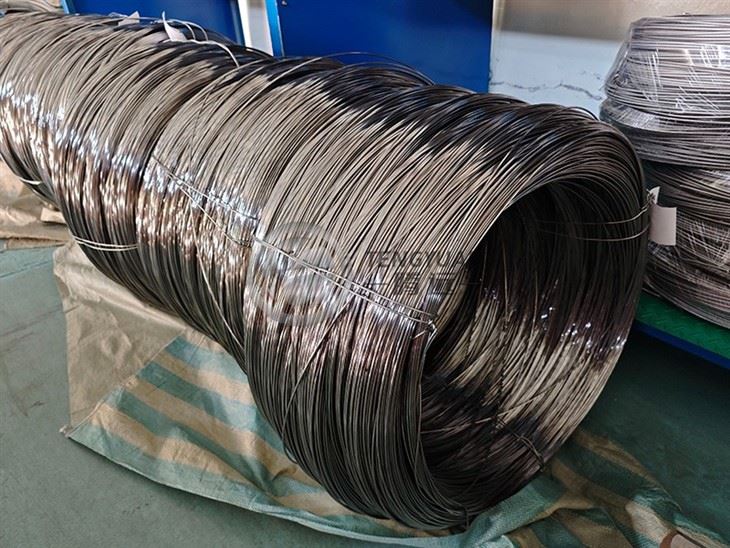

Similarly, when it comes to welding wire, GR1 Titanium Welding Wire and GR2 Titanium Welding Wire have different characteristics. GR1 welding wire is often used for welding applications where a more ductile weld is required, while GR2 welding wire can provide a stronger weld joint.
Ensuring Compliance and Quality Assurance
To ensure that our GR1 titanium wire consistently meets international standards, we have established a comprehensive quality assurance system. Our production facilities are equipped with advanced manufacturing and testing equipment, and our production processes are strictly controlled. We have a team of experienced quality control personnel who conduct inspections at every stage of production, from raw material inspection to finished product testing.
We also participate in regular audits and certifications. We are certified to relevant ISO standards, which is a testament to our commitment to quality and compliance. In addition, we work closely with independent testing laboratories to conduct third - party testing of our products, further validating their quality and compliance with international standards.
Conclusion
In conclusion, our GR1 titanium wire meets international standards in terms of chemical composition, mechanical properties, and surface quality. We understand the importance of these standards in ensuring the performance and safety of our products in various industries. Whether it is for aerospace, marine, chemical processing, or medical applications, our wire can provide reliable performance.
If you are in the market for high - quality GR1 titanium wire that meets international standards, we invite you to contact us for procurement and further discussions. We are ready to provide you with detailed product information and customized solutions to meet your specific needs.
References
- ASTM International. ASTM B348 - Standard Specification for Wrought Titanium and Titanium Alloy Bars and Billets.
- International Organization for Standardization. ISO 5832 - 2 - Implants for surgery - Metallic materials - Part 2: Unalloyed titanium.


