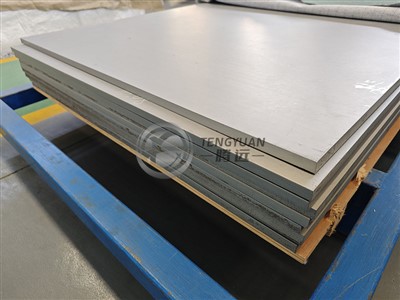
Forging is a crucial manufacturing process in the production of titanium alloy rods, which are widely used in various industries due to their excellent properties such as high strength - to - weight ratio, corrosion resistance, and good biocompatibility. As a trusted titanium alloy rod supplier, I am delighted to share with you the detailed forging process of titanium alloy rods.
Pre - forging Preparation
Before the forging process begins, several important preparatory steps are necessary. First, the selection of high - quality titanium alloy raw materials is of utmost importance. Different grades of titanium alloys are available, each with unique chemical compositions and properties. For instance, GR12 Titanium Rods and GR5 Titanium Rods are two popular choices. GR5 titanium alloy, also known as Ti - 6Al - 4V, is one of the most widely used titanium alloys, offering a good combination of strength, ductility, and corrosion resistance. GR12 titanium alloy contains elements such as titanium, molybdenum, and nickel, which gives it excellent corrosion resistance, especially in environments containing reducing acids. You can learn more about GR12 Titanium Rods for Corrosion Resistant.
Once the appropriate titanium alloy is selected, the raw material is inspected to ensure it meets the required quality standards. This includes checking for any surface defects, internal cracks, or inhomogeneities in the chemical composition. After inspection, the raw material is cut into appropriate sizes according to the specifications of the final titanium alloy rod. The cutting process can be carried out using methods such as sawing, shearing, or abrasive cutting.
Heating the Titanium Alloy
Titanium alloy has a relatively high melting point and a narrow forging temperature range. Therefore, precise heating is essential during the forging process. The titanium alloy billets are heated in a furnace to the appropriate forging temperature. For most titanium alloys, the forging temperature usually ranges from 800°C to 1100°C. Heating the titanium alloy to this temperature range reduces its yield strength and increases its ductility, making it easier to deform during forging.
It is important to control the heating rate carefully to avoid thermal stress and cracking in the billets. The heating process is often carried out in a controlled atmosphere furnace to prevent oxidation and contamination of the titanium alloy. Oxidation can lead to the formation of a hard and brittle oxide layer on the surface of the titanium alloy, which can affect the quality of the final product. In addition, the furnace atmosphere is usually controlled to minimize the absorption of interstitial elements such as oxygen, nitrogen, and hydrogen, which can also degrade the mechanical properties of the titanium alloy.
Forging Operations
There are several forging methods that can be used to produce titanium alloy rods, including open - die forging, closed - die forging, and ring rolling.
Open - Die Forging
Open - die forging is a common method for producing titanium alloy rods. In open - die forging, the titanium alloy billet is placed between two flat or shaped dies, and a series of compressive forces are applied to the billet to deform it into the desired shape. This process can be carried out using a hydraulic press or a forging hammer.
During open - die forging, the billet is repeatedly deformed and rotated to ensure uniform deformation throughout the cross - section of the rod. The forging ratio, which is the ratio of the initial cross - sectional area of the billet to the final cross - sectional area of the rod, is an important parameter in open - die forging. A higher forging ratio generally results in better mechanical properties of the titanium alloy rod, as it promotes grain refinement and improves the alignment of the grain structure.
Closed - Die Forging
Closed - die forging, also known as impression - die forging, is used when more complex shapes and higher dimensional accuracy are required. In closed - die forging, the titanium alloy billet is placed in a die cavity that has the shape of the final product. The die is then closed, and a high - pressure force is applied to the billet to fill the die cavity completely.
Closed - die forging can produce titanium alloy rods with precise dimensions and complex geometries. However, it requires more expensive dies and higher forging forces compared to open - die forging. In addition, the design and manufacturing of the dies need to be carefully optimized to ensure the proper flow of the titanium alloy during forging and to avoid defects such as flash, under - filling, or cracking.
Ring Rolling
Ring rolling is a specialized forging process used to produce seamless rings and tubular products, which can also be used to make titanium alloy rods with a circular cross - section. In ring rolling, a pre - formed ring - shaped billet is placed between a driven roll and an idler roll. As the driven roll rotates, it applies a radial force to the ring, causing it to expand in diameter and reduce in thickness.
Ring rolling can produce titanium alloy rods with a uniform grain structure and excellent mechanical properties. It is a highly efficient process for producing large - diameter titanium alloy rods with a high degree of circularity and wall thickness uniformity.
Intermediate Annealing
After each forging operation, intermediate annealing is often carried out to relieve the internal stresses generated during forging and to restore the ductility of the titanium alloy. Annealing involves heating the forged titanium alloy to a specific temperature and holding it for a certain period of time, followed by slow cooling.
The annealing temperature and time depend on the type of titanium alloy and the forging process used. For example, for Ti - 6Al - 4V alloy, the annealing temperature is usually around 700°C - 800°C, and the holding time can range from 1 to 4 hours. Intermediate annealing not only helps to improve the mechanical properties of the titanium alloy rod but also makes it easier to perform subsequent forging operations if multiple forging steps are required.
Finishing Operations
After the main forging operations are completed, several finishing operations are carried out to obtain the final titanium alloy rod. These operations include machining, heat treatment, and surface treatment.


Machining
Machining is used to achieve the final dimensions and surface finish of the titanium alloy rod. Common machining operations include turning, milling, drilling, and grinding. Machining titanium alloy can be challenging due to its high strength, low thermal conductivity, and tendency to work - harden. Therefore, special cutting tools and machining parameters need to be used to ensure efficient and high - quality machining.
Heat Treatment
Heat treatment is an important step to optimize the mechanical properties of the titanium alloy rod. There are different types of heat treatment processes for titanium alloys, such as solution treatment, aging treatment, and stress - relief annealing. Solution treatment involves heating the titanium alloy to a high temperature to dissolve the alloying elements in the matrix, followed by rapid quenching to form a supersaturated solid solution. Aging treatment is then carried out at a lower temperature to precipitate fine - scale particles, which can significantly increase the strength of the titanium alloy.
Surface Treatment
Surface treatment is used to improve the corrosion resistance, wear resistance, and aesthetic appearance of the titanium alloy rod. Common surface treatment methods include passivation, anodizing, and coating. Passivation is a chemical process that forms a thin, protective oxide layer on the surface of the titanium alloy, which can enhance its corrosion resistance. Anodizing is an electrochemical process that creates a thicker and more durable oxide layer on the surface of the titanium alloy. Coating involves applying a protective layer such as paint, ceramic, or polymer on the surface of the titanium alloy rod to provide additional protection.
Quality Control
Throughout the forging process, strict quality control measures are implemented to ensure the quality of the titanium alloy rods. This includes non - destructive testing (NDT) methods such as ultrasonic testing, radiographic testing, and magnetic particle testing to detect any internal defects or surface cracks in the rods. In addition, mechanical testing such as tensile testing, hardness testing, and impact testing are carried out to verify the mechanical properties of the titanium alloy rods.
The chemical composition of the titanium alloy rods is also analyzed to ensure it meets the specified requirements. This can be done using methods such as optical emission spectroscopy or X - ray fluorescence spectroscopy.
Conclusion
The forging process of titanium alloy rods is a complex and precise manufacturing process that requires careful control of every step, from raw material selection to finishing operations. As a titanium alloy rod supplier, we are committed to providing high - quality titanium alloy rods that meet the diverse needs of our customers. Whether you need GR5 titanium rods for aerospace applications or GR12 titanium rods for corrosion - resistant environments, we have the expertise and capabilities to produce the products that meet your requirements.
If you are interested in our titanium alloy rods or have any questions about the forging process, please feel free to contact us for further discussion and negotiation. We look forward to establishing long - term partnerships with you and providing you with the best products and services.
References
- Boyer, R. R., Welsch, G., & Collings, E. W. (1994). Materials Properties Handbook: Titanium Alloys. ASM International.
- Semiatin, S. L., & Seetharaman, S. (2006). Forging of Titanium Alloys. ASM Handbook, Volume 14A: Metalworking: Forging.
- Donachie, M. J. (2000). Titanium: A Technical Guide. ASM International.