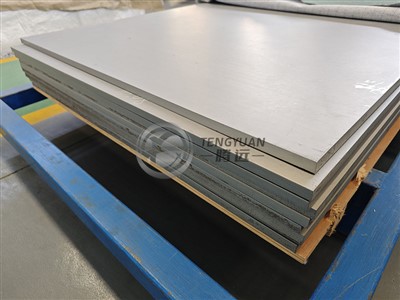
The elongation at break of H-shaped titanium profiles is a crucial mechanical property that significantly impacts their performance in various applications. As a leading supplier of H-shaped titanium profiles, we understand the importance of this characteristic and its implications for our customers. In this blog post, we will delve into the concept of elongation at break, explore its significance, and discuss how it relates to our H-shaped titanium profiles.
Understanding Elongation at Break
Elongation at break, also known as fracture elongation, is a measure of the ability of a material to deform plastically before breaking. It is expressed as a percentage of the original length of the specimen and is determined by subjecting a test piece to a tensile force until it fractures. During the test, the material initially undergoes elastic deformation, where it returns to its original shape when the load is removed. As the load increases, the material enters the plastic deformation phase, where it permanently changes shape. The elongation at break is the maximum amount of plastic deformation the material can withstand before fracturing.
The elongation at break is an important property because it provides insights into the ductility and toughness of the material. Ductility refers to the ability of a material to be drawn into a wire or deformed without breaking, while toughness is the ability of a material to absorb energy and resist fracture. Materials with high elongation at break values are generally more ductile and tougher, making them suitable for applications where deformation and energy absorption are required.
Significance of Elongation at Break in H-shaped Titanium Profiles
H-shaped titanium profiles are widely used in various industries, including the chemical, shipbuilding, and aerospace sectors, due to their excellent mechanical properties, corrosion resistance, and lightweight nature. The elongation at break of H-shaped titanium profiles plays a crucial role in determining their performance in these applications.
In the chemical industry, H-shaped titanium profiles are often used in equipment such as reactors, heat exchangers, and storage tanks. These applications require materials that can withstand high pressures, temperatures, and corrosive environments. The high elongation at break of H-shaped titanium profiles ensures that they can deform plastically under stress without fracturing, which is essential for preventing leaks and ensuring the safety and reliability of the equipment. For more information about H-shaped titanium profiles for the chemical industry, you can visit H-shaped Titanium Profile for Chemical Industry.


In the shipbuilding industry, H-shaped titanium profiles are used in the construction of hulls, decks, and other structural components. The elongation at break of these profiles is critical for ensuring the structural integrity of the ship, especially in harsh marine environments. The ability of the profiles to deform plastically under stress helps to absorb energy and prevent the propagation of cracks, which can lead to catastrophic failure. To learn more about H-shaped titanium profiles for ships, you can visit H-shaped Titanium Profile for Ships.
In the aerospace industry, H-shaped titanium profiles are used in the manufacture of aircraft frames, wings, and other components. The high strength-to-weight ratio and excellent elongation at break of these profiles make them ideal for applications where weight reduction and structural integrity are paramount. The ability of the profiles to deform plastically under stress helps to absorb energy during impact and vibration, which is essential for ensuring the safety and performance of the aircraft.
Factors Affecting the Elongation at Break of H-shaped Titanium Profiles
The elongation at break of H-shaped titanium profiles is influenced by several factors, including the chemical composition, microstructure, and manufacturing process of the profiles.
- Chemical Composition: The chemical composition of titanium profiles can have a significant impact on their elongation at break. Titanium alloys with higher levels of alloying elements, such as aluminum, vanadium, and molybdenum, generally have higher strength and lower elongation at break compared to pure titanium. However, the addition of certain alloying elements can also improve the corrosion resistance and other properties of the profiles.
- Microstructure: The microstructure of titanium profiles, which refers to the arrangement of the grains and phases in the material, can also affect their elongation at break. Fine-grained microstructures generally have higher elongation at break compared to coarse-grained microstructures, as the smaller grains provide more grain boundaries, which can impede the movement of dislocations and prevent the propagation of cracks.
- Manufacturing Process: The manufacturing process of H-shaped titanium profiles can also influence their elongation at break. Processes such as hot rolling, cold rolling, and forging can affect the microstructure and mechanical properties of the profiles. For example, hot rolling can improve the ductility and elongation at break of the profiles by refining the microstructure and reducing the internal stresses.
Our H-shaped Titanium Profiles and Elongation at Break
As a supplier of H-shaped titanium profiles, we are committed to providing our customers with high-quality products that meet their specific requirements. Our H-shaped titanium profiles are manufactured using advanced processes and strict quality control measures to ensure consistent mechanical properties, including elongation at break.
We offer a wide range of H-shaped titanium profiles, including GR2 H-shaped Titanium Profile, which is a popular grade of titanium alloy known for its excellent corrosion resistance and high elongation at break. Our GR2 H-shaped titanium profiles have an elongation at break of up to 25%, which makes them suitable for a variety of applications in the chemical, shipbuilding, and aerospace industries.
In addition to GR2, we also offer other grades of H-shaped titanium profiles, each with its own unique combination of mechanical properties and chemical composition. Our technical team can work with you to select the most suitable grade of titanium profile for your specific application based on your requirements for elongation at break, strength, corrosion resistance, and other factors.
Conclusion
The elongation at break of H-shaped titanium profiles is a critical mechanical property that plays a crucial role in determining their performance in various applications. As a leading supplier of H-shaped titanium profiles, we understand the importance of this characteristic and are committed to providing our customers with high-quality products that meet their specific requirements.
If you are interested in purchasing H-shaped titanium profiles or have any questions about their elongation at break or other properties, please do not hesitate to contact us. Our experienced sales team will be happy to assist you and provide you with more information about our products and services.
References
- ASM Handbook, Volume 2: Properties and Selection: Nonferrous Alloys and Special-Purpose Materials. ASM International, 1990.
- Titanium: A Technical Guide. Don Eylon, William F. Boyer, and David A. Koss, eds. ASM International, 1988.
- Mechanical Testing and Evaluation. ASM Handbook, Volume 8. ASM International, 2000.