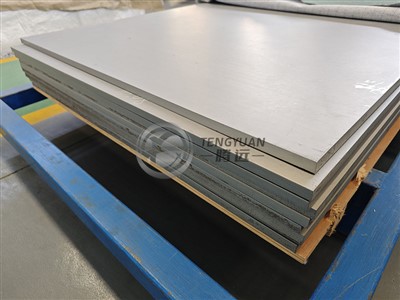
Hey there! I'm a supplier of h-shaped titanium profiles, and I've been in this business for quite a while. One question that often pops up is, "What are the standards for h-shaped titanium profiles in different countries?" Well, let's dive right into it.
Standards in the United States
In the US, the standards for h-shaped titanium profiles are mainly set by organizations like ASTM (American Society for Testing and Materials). ASTM has a series of specifications for titanium and titanium alloy products, including h-shaped profiles. These standards cover things like chemical composition, mechanical properties, dimensions, and surface quality.
For example, ASTM B348 specifies the requirements for titanium and titanium alloy bars and billets. Although it's not specifically for h-shaped profiles, the chemical and mechanical property requirements can be applied to our h-shaped products. The chemical composition of titanium alloys is crucial as it determines the material's properties such as strength, corrosion resistance, and heat resistance. Different titanium alloys have different percentages of elements like aluminum, vanadium, and iron.
In terms of mechanical properties, ASTM standards define the minimum yield strength, ultimate tensile strength, and elongation. These values ensure that the h-shaped titanium profiles can withstand the stresses they'll encounter in various applications. For instance, if an h-shaped titanium profile is used in the aerospace industry, it needs to have high strength-to-weight ratio and good fatigue resistance.
The dimensional tolerances are also strictly regulated by ASTM. This ensures that the h-shaped profiles fit precisely in the intended structures. Any deviation from the specified dimensions can lead to problems during installation and use.
Standards in Europe
In Europe, the standards for h-shaped titanium profiles are often based on the EN (European Norm) series. EN standards are developed by the European Committee for Standardization (CEN). Similar to ASTM, EN standards cover chemical composition, mechanical properties, and dimensions.
One of the key differences between European and American standards might be in the way they classify titanium alloys. European standards may have different designations for the same or similar titanium alloys. However, the overall requirements for the properties of h-shaped titanium profiles are quite similar.
For example, EN 485-2 specifies the requirements for aluminum and aluminum alloy sheets, strips, and plates. Although it's about aluminum, the concept of setting standards for material properties is the same for titanium. European standards also pay a lot of attention to environmental and safety aspects. For h-shaped titanium profiles used in construction or transportation, they need to meet certain environmental protection requirements, such as low emissions of harmful substances.
Standards in Asia
In Asia, different countries have their own standards, but there are also some regional cooperation in standard - setting. For example, in Japan, the Japanese Industrial Standards (JIS) play a major role in defining the standards for h-shaped titanium profiles. JIS standards are very detailed and specific, covering every aspect of the manufacturing and use of titanium products.
China also has its own national standards for titanium profiles. These standards are in line with international trends while also considering the domestic industrial situation. Chinese standards focus on ensuring the quality and performance of h-shaped titanium profiles for different industries, such as the H-shaped Titanium Profile for Ships, H-shaped Titanium Profile for Corrosion Resistant, and H-shaped Titanium Profile for Chemical Industry.
In the shipbuilding industry, h-shaped titanium profiles need to have excellent corrosion resistance because they are constantly in contact with seawater. Chinese standards ensure that the titanium profiles used in ships can withstand the harsh marine environment for a long time. In the chemical industry, the profiles need to be resistant to various chemicals, and the standards set strict requirements for the chemical composition and surface treatment of the profiles.
Why Standards Matter
You might be wondering why these standards are so important. Well, standards ensure the quality and interchangeability of h-shaped titanium profiles. When a manufacturer produces h-shaped titanium profiles according to a certain standard, it means that the product can be used in different applications with confidence.
For buyers, standards provide a way to compare different suppliers. If you're looking for an h-shaped titanium profile, you can check if the supplier's products meet the relevant standards. This gives you an assurance that the product will perform as expected.


Standards also promote international trade. When all countries have similar or compatible standards, it's easier for suppliers to export their h-shaped titanium profiles to different markets. It reduces the barriers and uncertainties in the trade process.
Our Company's Compliance
As a supplier of h-shaped titanium profiles, we make sure that our products comply with the relevant standards in different countries. We have a strict quality control system in place. Our production process is closely monitored to ensure that the chemical composition, mechanical properties, and dimensions of our h-shaped titanium profiles meet the requirements of ASTM, EN, JIS, and other standards.
We use advanced testing equipment to analyze the chemical composition and test the mechanical properties of our products. For example, we use spectrometers to determine the exact percentage of elements in the titanium alloy, and we use tensile testing machines to measure the strength and elongation of the profiles.
Our products are widely used in various industries, including aerospace, shipbuilding, construction, and chemical industry. Whether you need H-shaped Titanium Profile for Ships with high corrosion resistance or H-shaped Titanium Profile for Chemical Industry that can withstand harsh chemical environments, we can provide you with high - quality products that meet the standards.
Contact Us for Purchase
If you're in the market for h-shaped titanium profiles, we'd love to hear from you. We have a wide range of h-shaped titanium profiles in different sizes, alloys, and finishes. Whether you need a small quantity for a prototype or a large order for a big project, we can meet your needs.
Our team of experts can also provide you with technical support and advice on choosing the right h-shaped titanium profiles for your specific application. We understand that different industries have different requirements, and we're committed to helping you find the best solution.
So, don't hesitate to reach out to us for a quote or to discuss your project. We're looking forward to working with you and supplying you with top - notch h-shaped titanium profiles.
References
- ASTM International, "ASTM Standards for Titanium and Titanium Alloys", ASTM website.
- European Committee for Standardization (CEN), "EN Standards for Metals and Alloys", CEN website.
- Japanese Industrial Standards Committee, "JIS Standards for Titanium Products", JIS website.
- National Standards of the People's Republic of China, "Standards for Titanium Profiles", Chinese standardization authority.